A short essay argues that time alone in nature can show us truths we cannot learn from books. Walking across an empty field, Emerson feels he becomes a transparent eyeball that sees all and is nothing.
57 pages 1h 6m reading time
The founding text of American Transcendentalism.
Argues that nature is a direct path to spiritual truth, so people need not rely on churches or scripture.
Describes Emerson alone in the woods as a "transparent eyeball," feeling the divine flow through him, and urges trust in one's own intuition.
It launched the Transcendentalist movement and inspired Thoreau's Walden.
Its view of nature as sacred helped inspire American nature writing and, through Thoreau and John Muir, the conservation movement.
Published without his name
The first edition carried no author's name, though readers quickly credited it to Emerson.
Sparked by a Paris garden
A visit to the Paris botanical garden in 1833 set Emerson thinking about the hidden order of nature.
Written at the Old Manse
Emerson drafted much of it at the Old Manse in Concord, Massachusetts, a house his grandfather built.
A very slow seller
The first printing was only about 500 copies, and it took more than a decade to sell them all.


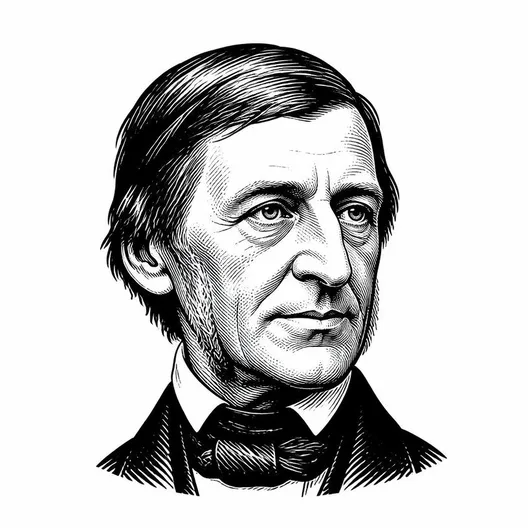 Ralph Waldo Emerson 1836