Chapter 20
A Disaster
WE lay three days in New Orleans, but the captain did not succeed in finding another pilot; so he proposed that I should stand a daylight watch, and leave the night watches to George Ealer. But I was afraid; I had never stood a watch of any sort by myself, and I believed I should be sure to get into trouble in the head of some chute, or ground the boat in a near cut through some bar or other. Brown remained in his place; but he would not travel with me. So the captain gave me an order on the captain of the 'A. T. Lacey,' for a passage to St. Louis, and said he would find a new pilot there and my steersman's berth could then be resumed. The 'Lacey' was to leave a couple of days after the 'Pennsylvania.'
We stayed in New Orleans for three days, but the captain could not find another pilot. So he proposed that I take a daytime watch and leave the night watches to George Ealer. But I was afraid. I had never stood a watch by myself, and I was sure I would get into trouble at the entrance to some chute. Or I might run the boat aground while taking a shortcut through a sandbar. Brown stayed in his position, but he refused to travel with me. So the captain gave me an order for the captain of the 'A. T. Lacey,' granting me passage to St. Louis. He said he would find a new pilot there, and I could then return to my position as steersman. The 'Lacey' was scheduled to leave a couple of days after the 'Pennsylvania.'
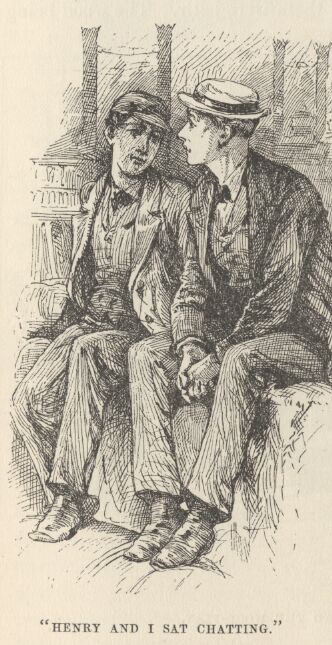
The night before the 'Pennsylvania' left, Henry and I sat chatting on a freight pile on the levee till midnight. The subject of the chat, mainly, was one which I think we had not exploited before—steamboat disasters. One was then on its way to us, little as we suspected it; the water which was to make the steam which should cause it, was washing past some point fifteen hundred miles up the river while we talked;—but it would arrive at the right time and the right place. We doubted if persons not clothed with authority were of much use in cases of disaster and attendant panic; still, they might be of some use; so we decided that if a disaster ever fell within our experience we would at least stick to the boat, and give such minor service as chance might throw in the way. Henry remembered this, afterward, when the disaster came, and acted accordingly.
The night before the 'Pennsylvania' left, Henry and I sat chatting on a pile of freight on the levee until midnight. We talked mainly about something I think we had not discussed before: steamboat disasters. One was already on its way to us, though we had no idea. As we talked, the water that would make the steam that would cause the disaster was flowing past a point fifteen hundred miles upriver. But it would arrive at the right time and the right place. We doubted that people without authority were much use during a disaster and the panic that followed. Still, they might be of some use. So we decided that if we ever faced a disaster, we would at least stay with the boat and help in whatever small ways we could. Henry remembered this decision afterward, when the disaster came, and acted accordingly.
The 'Lacey' started up the river two days behind the 'Pennsylvania.' We touched at Greenville, Mississippi, a couple of days out, and somebody shouted—
The 'Lacey' headed up the river two days behind the 'Pennsylvania.' A couple of days into the trip, we stopped at Greenville, Mississippi, and somebody shouted:
'The “Pennsylvania” is blown up at Ship Island, and a hundred and fifty lives lost!'
'The “Pennsylvania” has exploded at Ship Island, and a hundred and fifty lives were lost!'
At Napoleon, Arkansas, the same evening, we got an extra, issued by a Memphis paper, which gave some particulars. It mentioned my brother, and said he was not hurt.
That same evening in Napoleon, Arkansas, we got an extra edition of a Memphis newspaper with some details. It mentioned my brother and said he was not hurt.
Further up the river we got a later extra. My brother was again mentioned; but this time as being hurt beyond help. We did not get full details of the catastrophe until we reached Memphis. This is the sorrowful story—
Farther up the river, we got a later news bulletin. My brother was mentioned again, but this time he was said to be hurt beyond help. We did not get the full details of the disaster until we reached Memphis. This is the sorrowful story:
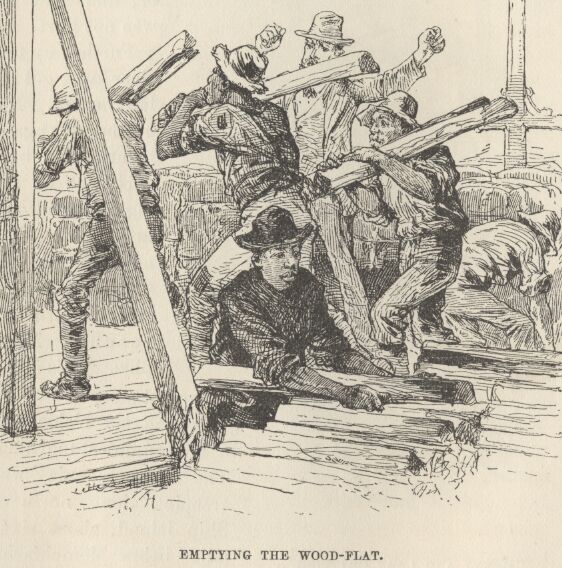
It was six o'clock on a hot summer morning. The 'Pennsylvania' was creeping along, north of Ship Island, about sixty miles below Memphis on a half-head of steam, towing a wood-flat which was fast being emptied. George Ealer was in the pilot-house-alone, I think; the second engineer and a striker had the watch in the engine room; the second mate had the watch on deck; George Black, Mr. Wood, and my brother, clerks, were asleep, as were also Brown and the head engineer, the carpenter, the chief mate, and one striker; Captain Klinefelter was in the barber's chair, and the barber was preparing to shave him. There were a good many cabin passengers aboard, and three or four hundred deck passengers—so it was said at the time—and not very many of them were astir. The wood being nearly all out of the flat now, Ealer rang to 'come ahead' full steam, and the next moment four of the eight boilers exploded with a thunderous crash, and the whole forward third of the boat was hoisted toward the sky! The main part of the mass, with the chimneys, dropped upon the boat again, a mountain of riddled and chaotic rubbish—and then, after a little, fire broke out.
It was six o'clock on a hot summer morning. The 'Pennsylvania' was creeping along north of Ship Island, about sixty miles below Memphis. It was running at half steam and towing a wood-flat that was quickly being emptied. George Ealer was in the pilot-house, alone, I think. The second engineer and a striker were on watch in the engine room. The second mate was on watch on deck. The clerks, George Black, Mr. Wood, and my brother, were asleep. Brown, the head engineer, the carpenter, the chief mate, and one striker were asleep too. Captain Klinefelter was in the barber's chair, and the barber was preparing to shave him. There were quite a few cabin passengers aboard, and three or four hundred deck passengers, so it was said at the time. Not very many of them were awake. The wood-flat was nearly empty now, so Ealer rang the signal to 'come ahead' at full steam. The next moment, four of the eight boilers exploded with a thunderous crash. The whole forward third of the boat was hurled toward the sky! Most of the wreckage, along with the chimneys, fell back onto the boat. It was a mountain of shattered, chaotic debris. Then, after a little while, fire broke out.
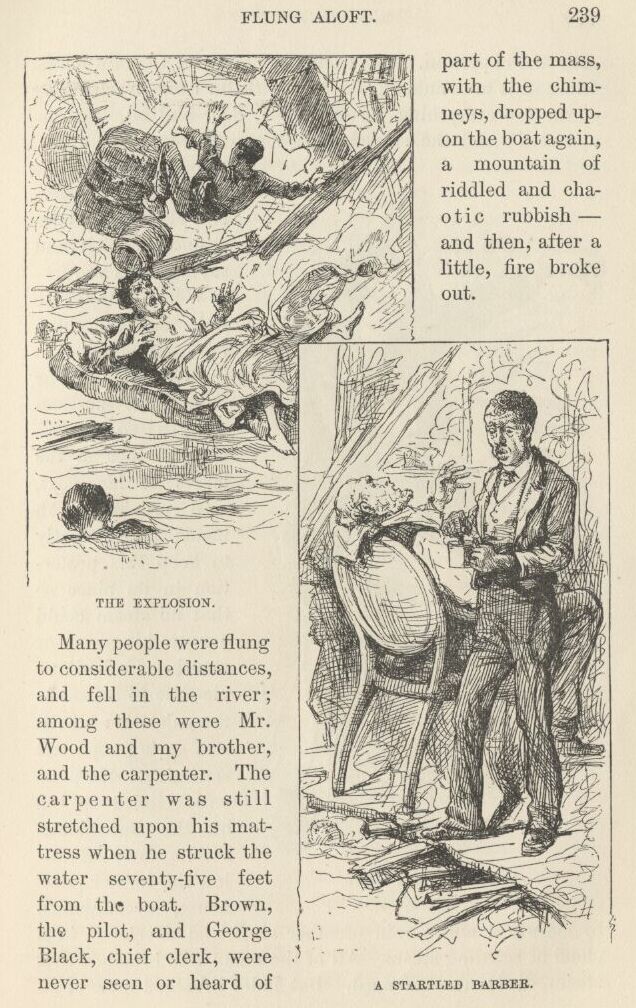
Many people were flung to considerable distances, and fell in the river; among these were Mr. Wood and my brother, and the carpenter. The carpenter was still stretched upon his mattress when he struck the water seventy-five feet from the boat. Brown, the pilot, and George Black, chief clerk, were never seen or heard of after the explosion. The barber's chair, with Captain Klinefelter in it and unhurt, was left with its back overhanging vacancy—everything forward of it, floor and all, had disappeared; and the stupefied barber, who was also unhurt, stood with one toe projecting over space, still stirring his lather unconsciously, and saying, not a word.
Many people were thrown a considerable distance and fell into the river. Among them were Mr. Wood, my brother, and the carpenter. The carpenter was still lying on his mattress when he hit the water, seventy-five feet from the boat. Brown, the pilot, and George Black, the chief clerk, were never seen or heard from after the explosion. Captain Klinefelter sat unhurt in the barber’s chair, its back hanging over empty space. Everything in front of the chair, including the floor, had disappeared. The stunned barber, also unhurt, stood with one toe sticking out over empty space. He was still stirring his lather without realizing it and saying nothing.
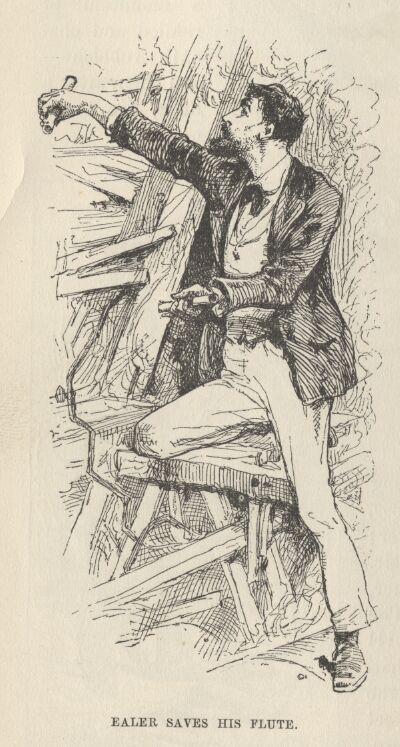
When George Ealer saw the chimneys plunging aloft in front of him, he knew what the matter was; so he muffled his face in the lapels of his coat, and pressed both hands there tightly to keep this protection in its place so that no steam could get to his nose or mouth. He had ample time to attend to these details while he was going up and returning. He presently landed on top of the unexploded boilers, forty feet below the former pilot-house, accompanied by his wheel and a rain of other stuff, and enveloped in a cloud of scalding steam. All of the many who breathed that steam, died; none escaped. But Ealer breathed none of it. He made his way to the free air as quickly as he could; and when the steam cleared away he returned and climbed up on the boilers again, and patiently hunted out each and every one of his chessmen and the several joints of his flute.
When George Ealer saw the chimneys shooting up in front of him, he knew what had happened. So he covered his face with his coat lapels and held them tightly in place with both hands. He did this to keep the steam from reaching his nose or mouth. He had plenty of time to do all this while he was going up and coming back down. He soon landed on top of the unexploded boilers, forty feet below where the pilot-house had been. His wheel and a shower of other things landed with him, and a cloud of scalding steam surrounded him. Many people breathed that steam, and all of them died. None escaped. But Ealer breathed none of it. He made his way to the open air as quickly as he could. When the steam cleared, he returned and climbed onto the boilers again. There he patiently searched for every one of his chess pieces and the separate sections of his flute.
By this time the fire was beginning to threaten. Shrieks and groans filled the air. A great many persons had been scalded, a great many crippled; the explosion had driven an iron crowbar through one man's body—I think they said he was a priest. He did not die at once, and his sufferings were very dreadful. A young French naval cadet, of fifteen, son of a French admiral, was fearfully scalded, but bore his tortures manfully. Both mates were badly scalded, but they stood to their posts, nevertheless. They drew the wood-boat aft, and they and the captain fought back the frantic herd of frightened immigrants till the wounded could be brought there and placed in safety first.
By this time, the fire was becoming a threat. Shrieks and groans filled the air. Many people had been scalded, and many had been crippled. The explosion had driven an iron crowbar through one man's body. I think they said he was a priest. He did not die at once, and his suffering was terrible. A fifteen-year-old French naval cadet, the son of a French admiral, was horribly scalded, but bore his agony bravely. Both mates were badly scalded, but they stayed at their posts. They pulled the wood-boat to the stern. Then they and the captain held back the frantic crowd of frightened immigrants until the wounded could be brought aboard and placed in safety first.
When Mr. Wood and Henry fell in the water, they struck out for shore, which was only a few hundred yards away; but Henry presently said he believed he was not hurt (what an unaccountable error!), and therefore would swim back to the boat and help save the wounded. So they parted, and Henry returned.
When Mr. Wood and Henry fell into the water, they began swimming toward shore, only a few hundred yards away. But Henry soon said he believed he was not hurt (what an inexplicable mistake!). He said he would therefore swim back to the boat and help save the wounded. So they parted, and Henry returned to the boat.
By this time the fire was making fierce headway, and several persons who were imprisoned under the ruins were begging piteously for help. All efforts to conquer the fire proved fruitless; so the buckets were presently thrown aside and the officers fell-to with axes and tried to cut the prisoners out. A striker was one of the captives; he said he was not injured, but could not free himself; and when he saw that the fire was likely to drive away the workers, he begged that some one would shoot him, and thus save him from the more dreadful death. The fire did drive the axmen away, and they had to listen, helpless, to this poor fellow's supplications till the flames ended his miseries.
By this time, the fire was spreading fiercely, and several people trapped under the wreckage were pleading desperately for help. All efforts to put out the fire failed. So the officers soon threw aside the buckets, took up axes, and tried to cut the trapped people free. One of them was a striker. He said he was not injured, but could not free himself. When he saw that the fire was likely to drive the workers away, he begged someone to shoot him and save him from a more dreadful death. The fire did drive the axmen away. They had to listen helplessly to the poor man's pleas until the flames ended his suffering.
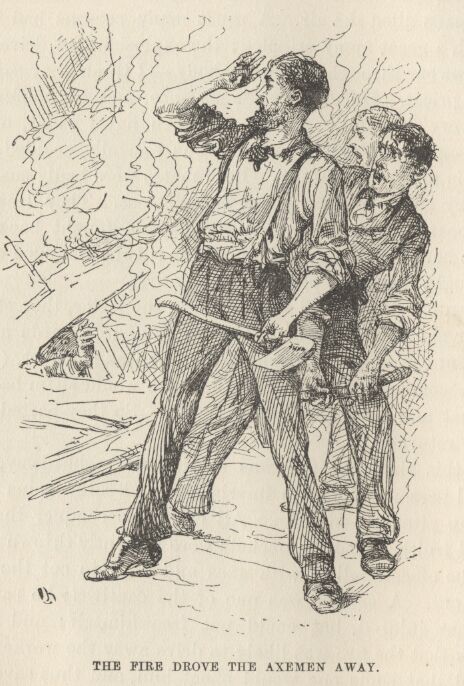
The fire drove all into the wood-flat that could be accommodated there; it was cut adrift, then, and it and the burning steamer floated down the river toward Ship Island. They moored the flat at the head of the island, and there, unsheltered from the blazing sun, the half-naked occupants had to remain, without food or stimulants, or help for their hurts, during the rest of the day. A steamer came along, finally, and carried the unfortunates to Memphis, and there the most lavish assistance was at once forthcoming. By this time Henry was insensible. The physicians examined his injuries and saw that they were fatal, and naturally turned their main attention to patients who could be saved.
The fire drove everyone who could fit onto the wood-flat. It was then cut loose, and it and the burning steamer floated downriver toward Ship Island. They tied the flat at the head of the island. For the rest of the day, its half-naked occupants had to remain there, exposed to the blazing sun. They had no food, stimulants, or help for their injuries. Finally, a steamer came along and carried the unfortunate survivors to Memphis. There, the most generous assistance was immediately offered. By then, Henry was unconscious. The doctors examined his injuries and saw that they were fatal. Naturally, they turned most of their attention to patients who could be saved.
Forty of the wounded were placed upon pallets on the floor of a great public hall, and among these was Henry. There the ladies of Memphis came every day, with flowers, fruits, and dainties and delicacies of all kinds, and there they remained and nursed the wounded. All the physicians stood watches there, and all the medical students; and the rest of the town furnished money, or whatever else was wanted. And Memphis knew how to do all these things well; for many a disaster like the 'Pennsylvania's' had happened near her doors, and she was experienced, above all other cities on the river, in the gracious office of the Good Samaritan.'
Forty of the wounded, including Henry, were laid on floor mattresses in a large public hall. Every day, the women of Memphis came with flowers, fruit, and treats of all kinds. They stayed and nursed the wounded. All the doctors and medical students took shifts there. The rest of the town provided money or whatever else was needed. Memphis knew how to do all these things well. Many disasters like the 'Pennsylvania's' had happened nearby. More than any other city on the river, Memphis knew how to carry out the kind work of the Good Samaritan.'
The sight I saw when I entered that large hall was new and strange to me. Two long rows of prostrate forms—more than forty, in all—and every face and head a shapeless wad of loose raw cotton. It was a gruesome spectacle. I watched there six days and nights, and a very melancholy experience it was. There was one daily incident which was peculiarly depressing: this was the removal of the doomed to a chamber apart. It was done in order that the morale of the other patients might not be injuriously affected by seeing one of their number in the death-agony. The fated one was always carried out with as little stir as possible, and the stretcher was always hidden from sight by a wall of assistants; but no matter: everybody knew what that cluster of bent forms, with its muffled step and its slow movement meant; and all eyes watched it wistfully, and a shudder went abreast of it like a wave.
The sight that greeted me in the large hall was new and strange to me. More than forty people lay in two long rows, each face and head a shapeless mass of loose raw cotton. It was a gruesome sight. I kept watch there for six days and nights, and it was a very sad experience. One daily event was especially depressing: the removal of those who were doomed to a separate room. This was done so that seeing someone in the agony of death would not harm the other patients’ morale. The doomed person was always carried out as quietly as possible, and a wall of assistants always hid the stretcher from view. But it made no difference. Everyone knew what that cluster of bent figures meant, with its muffled footsteps and slow movement. All eyes watched it longingly, and a shudder passed alongside it like a wave.
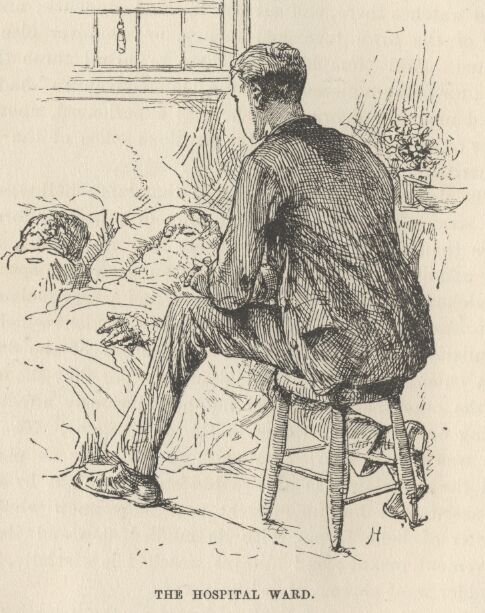
I saw many poor fellows removed to the 'death-room,' and saw them no more afterward. But I saw our chief mate carried thither more than once. His hurts were frightful, especially his scalds. He was clothed in linseed oil and raw cotton to his waist, and resembled nothing human. He was often out of his mind; and then his pains would make him rave and shout and sometimes shriek. Then, after a period of dumb exhaustion, his disordered imagination would suddenly transform the great apartment into a forecastle, and the hurrying throng of nurses into the crew; and he would come to a sitting posture and shout, 'Hump yourselves, hump yourselves, you petrifactions, snail-bellies, pall-bearers! going to be all day getting that hatful of freight out?' and supplement this explosion with a firmament-obliterating irruption or profanity which nothing could stay or stop till his crater was empty. And now and then while these frenzies possessed him, he would tear off handfuls of the cotton and expose his cooked flesh to view. It was horrible. It was bad for the others, of course—this noise and these exhibitions; so the doctors tried to give him morphine to quiet him. But, in his mind or out of it, he would not take it. He said his wife had been killed by that treacherous drug, and he would die before he would take it. He suspected that the doctors were concealing it in his ordinary medicines and in his water—so he ceased from putting either to his lips. Once, when he had been without water during two sweltering days, he took the dipper in his hand, and the sight of the limpid fluid, and the misery of his thirst, tempted him almost beyond his strength; but he mastered himself and threw it away, and after that he allowed no more to be brought near him. Three times I saw him carried to the death-room, insensible and supposed to be dying; but each time he revived, cursed his attendants, and demanded to be taken back. He lived to be mate of a steamboat again.
I saw many poor fellows taken to the “death-room,” and I never saw them again. But I saw our chief mate carried there more than once. His injuries were terrible, especially his scalds. He was covered to the waist in linseed oil and raw cotton and looked like nothing human. He was often delirious. Then his pain would make him rave and shout and sometimes scream. After a spell of silent exhaustion, his fevered imagination would suddenly turn the great room into a forecastle. The nurses rushing about became his crew. He would sit up and shout, “Get moving, get moving, you petrified lumps, snail-bellies, pallbearers! Are you going to spend all day unloading that handful of freight?” Then he would let loose an eruption of profanity that blotted out the heavens. Nothing could stop it until his crater was empty. Now and then, during these fits, he would tear off handfuls of cotton and expose his cooked flesh. It was horrible. Of course, the noise and these displays were bad for the others, so the doctors tried to give him morphine to quiet him. But whether he was in his right mind or not, he refused it. He said his wife had been killed by that treacherous drug, and he would die before taking it. He suspected the doctors were hiding morphine in his usual medicines and in his water. So he stopped taking either. Once, after two sweltering days without water, he took the dipper in his hand. The sight of the clear water and the misery of his thirst tempted him almost beyond his strength. But he mastered himself and threw the water away. After that, he allowed no more water to be brought near him. Three times I saw him carried to the death-room, unconscious and believed to be dying. But each time he revived, cursed his attendants, and demanded to be taken back. He lived to become the mate of a steamboat again.
But he was the only one who went to the death-room and returned alive. Dr. Peyton, a principal physician, and rich in all the attributes that go to constitute high and flawless character, did all that educated judgment and trained skill could do for Henry; but, as the newspapers had said in the beginning, his hurts were past help. On the evening of the sixth day his wandering mind busied itself with matters far away, and his nerveless fingers 'picked at his coverlet.' His hour had struck; we bore him to the death-room, poor boy.
But he was the only one who went to the death-room and came back alive. Dr. Peyton was a leading physician with every quality of a noble and flawless character. He did all that medical knowledge and trained skill could do for Henry. But, as the newspapers had said at the beginning, his injuries were beyond help. On the evening of the sixth day, his wandering mind turned to things far away. His lifeless fingers 'picked at his coverlet.' His time had come. We carried him to the death-room, poor boy.