A long argument, written during the English Civil War, asks why people should obey a government at all. Without one, Hobbes says, human life would be solitary, poor, nasty, brutish, and short.
764 pages 14h 49m reading time
A landmark of modern political philosophy.
Argues that without government, life would be "solitary, poor, nasty, brutish, and short," a war of every man against every man.
Holds that to escape it, people agree to give power to an absolute ruler, a social contract that makes government legitimate.
Its social contract set the terms that Locke and Rousseau answered, shaping modern theories of government.
Written in exile
Hobbes wrote it in Paris, where he had fled from England as the conflict that became the Civil War began.
A giant made of people
The famous title page shows a crowned giant whose body is made of hundreds of tiny people, holding a sword.
It angered fellow exiles
Royalist exiles and French churchmen in Paris disliked it, and Hobbes soon went home to England, partly for safety.
Burned at Oxford
Oxford University ordered it burned in 1683, after Parliament had looked into it as possibly godless.


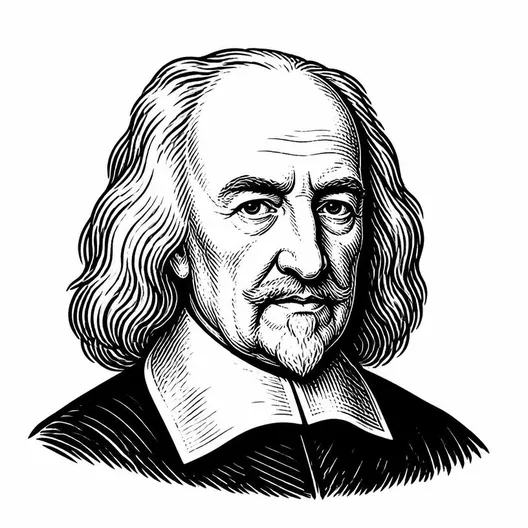 Thomas Hobbes 1651