These letters describe English religion, science, and public life through the eyes of a French visitor. A visit to the London stock exchange shows people of different faiths trading together.
131 pages 2h 32m reading time
A founding work of the French Enlightenment, the 18th century movement that put reason and freedom at the center of public life.
Argues that England's religious tolerance, limited royal power, and respect for trade made it freer and richer than France.
Presents the ideas of Isaac Newton and John Locke as models of clear thinking, and praises the English practice of protecting people from smallpox by deliberately giving them a mild case.
Brought Newton's science and Locke's thought to a wide French audience and helped them spread across Europe.
Set a pattern for later Enlightenment writers, who praised another country's freedoms as a way to criticize the rulers and church at home.
Burned by the hangman
In 1734 a Paris court ordered the French edition torn up and burned in public as dangerous to religion.
Born from a stay abroad
Voltaire wrote it after about two years in England, where he went after a short stay in prison.
English came first
It appeared in English in London a year before the French version, which was printed without official permission.
Author forced to hide
A warrant went out for Voltaire's arrest, so he fled Paris, and his French printer was jailed.


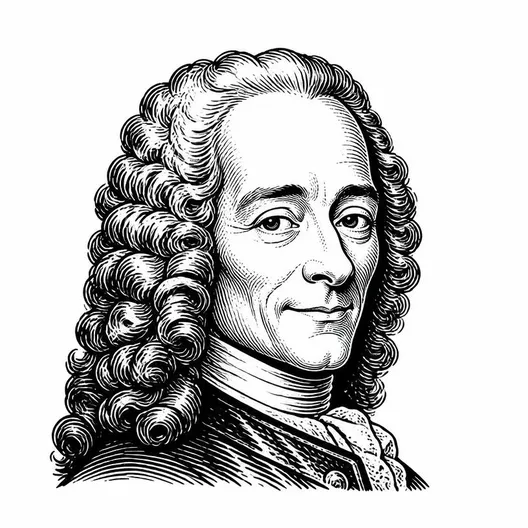 Voltaire 1733