This guide examines how people think and how schools can teach careful reasoning. One example turns bubbles on a washed glass into a small investigation.
220 pages 4h 16m reading time
A founding book on teaching thinking, still read by teachers and education students more than a century later.
Argues that real thinking begins when we hit a problem or feel puzzled, and then moves through steps: defining the problem, suggesting possible answers, reasoning them out, and testing them.
Argues that schools should train curiosity and careful judgment, rather than just asking students to memorize facts.
Its step-by-step account of problem solving shaped the "scientific method" lessons and problem-based teaching used in many classrooms.
Its idea of "reflective thinking" (thinking carefully about your beliefs and the reasons for them) is a major root of the modern teaching of critical thinking.
Rewritten decades later
More than twenty years after it first appeared, Dewey rewrote much of the book for a new 1933 version.
Rooted in an experimental school
Dewey drew on years of running his own experimental school for children at the University of Chicago.
Inspired by his wife
In the preface, Dewey credits his wife with inspiring the book's ideas, which were tested in practice at that school.
Written for working teachers
A Boston publisher of school textbooks first brought it out, aiming it at teachers rather than philosophers.
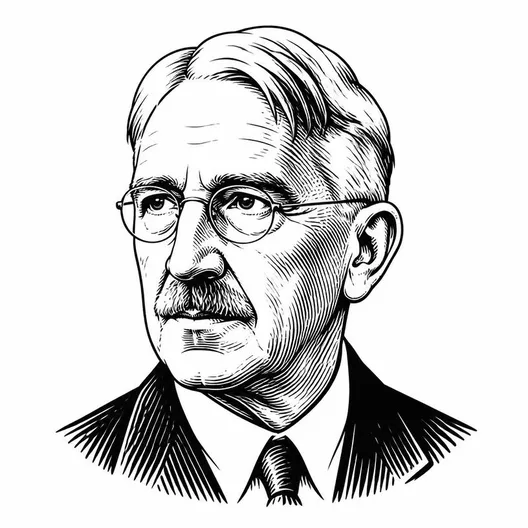 John Dewey 1910

