These twelve essays examine how people think, form friendships, and find meaning in everyday experience. Self-Reliance turns the command "Trust thyself" into a challenge to accepted opinions.
283 pages 5h 30m reading time
A founding work of American thought and of the movement known as Transcendentalism.
Argues that each person can find truth directly through their own mind and conscience, without needing churches, traditions, or experts to explain it.
Holds that nature, the soul, and God are deeply connected, so that a person can sense something divine in ordinary life and in the natural world.
Shaped the thinking of Henry David Thoreau, whose life at Walden Pond and writing on civil disobedience grew from these ideas.
Helped form a lasting American belief in individualism and independent thinking, and its lines on consistency and nonconformity are still widely quoted.
Came after a scandal
It appeared three years after a Harvard speech so shocking that Emerson was not invited back for decades.
Built from private journals
Emerson took many passages from years of personal journals, which he called his "savings bank" of ideas.
First heard as lectures
Much of the material began as talks Emerson gave to paying audiences in Boston before he shaped it into essays.
Carlyle introduced it abroad
His friend Thomas Carlyle, the Scottish writer, helped publish it in Britain and wrote its preface there.


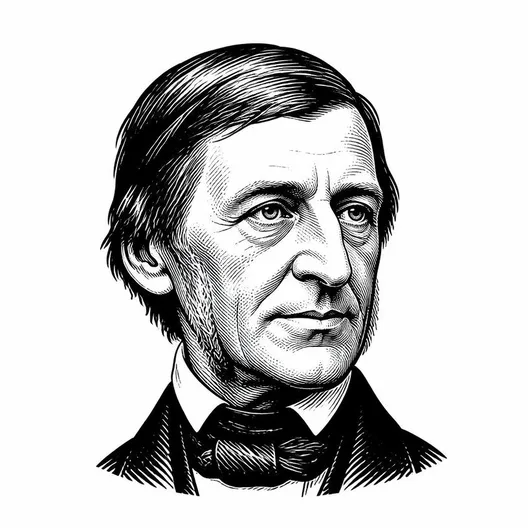 Ralph Waldo Emerson 1841