This autobiography presents Nietzsche's account of his life and the books he wrote. A chapter called "Why I Am So Wise" shows his deliberately boastful approach to telling his story.
136 pages 2h 39m reading time
Nietzsche's last original book, and one of the strangest and boldest autobiographies ever written.
Takes as its motto "how one becomes what one is," arguing that a person grows into their true self by fully accepting their own life, including its pain and mistakes.
Calls this acceptance "amor fati" (love of fate) and describes Nietzsche himself as a "destiny," a thinker whose attack on Christian morality would split history in two.
Gave readers Nietzsche's own guide to his earlier books, and it remains a standard starting point for understanding how he saw his life's work.
Its closing line, "Dionysus versus the Crucified," became one of the best-known summaries of his challenge to Christianity, often quoted by later writers and critics.
Written just before collapse
Nietzsche wrote it in late 1888, weeks before his mental breakdown in Turin in January 1889.
Written in three weeks
He drafted the book quickly, starting on his 44th birthday, and kept revising it until his collapse.
Held back for twenty years
His sister and his friends delayed publication, fearing its wild claims would harm his reputation.
Pages cut and destroyed
His sister removed and destroyed some passages, including harsh words about her and their mother.


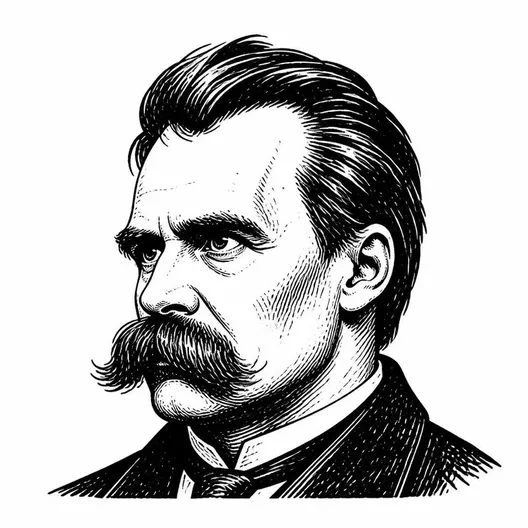 Friedrich Nietzsche 1908