This novel follows a poor student in Saint Petersburg as he struggles with guilt after committing murder. His tense conversations with the investigator Porfiry turn ordinary questions into a battle of nerves.
743 pages 14h 26m reading time
One of the most famous novels ever written, and a cornerstone of Russian literature.
Imagines a young man who believes that a few "extraordinary" people have the right to break moral laws, even to kill, for the greater good, and then shows that idea falling apart.
Argues that guilt works like a punishment of its own, and that real change comes through confession, suffering, and love rather than through clever reasoning.
Helped create the psychological crime novel, where the drama lies inside the criminal's mind rather than in the mystery of who did it, an approach later used by many crime writers and filmmakers.
Shaped the thinking of later writers and philosophers, including Friedrich Nietzsche and Albert Camus, who took up its questions about morality and meaning.
Two novels at once
Midway through, he paused to dictate another novel, The Gambler, in 26 days to avoid losing rights to his work.
Born of gambling debts
He pitched the idea to a magazine while stuck in a German spa town, broke after losing at roulette.
Burned the first draft
He first wrote it as the killer's own confession, then burned it and started over as a story told from outside.
Published in monthly parts
It first appeared in twelve parts in a Russian magazine, and readers eagerly followed it throughout the year.


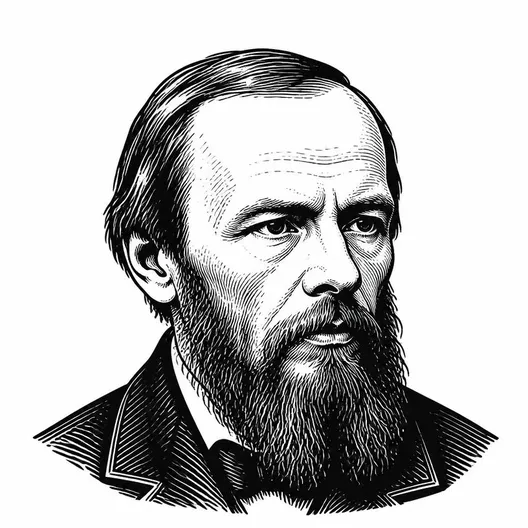 Fyodor Dostoyevsky 1866