Chapter 15
A Happy Return
Before I left Miss Matty at Cranford everything had been comfortably arranged for her. Even Mrs Jamieson’s approval of her selling tea had been gained. That oracle had taken a few days to consider whether by so doing Miss Matty would forfeit her right to the privileges of society in Cranford. I think she had some little idea of mortifying Lady Glenmire by the decision she gave at last; which was to this effect: that whereas a married woman takes her husband’s rank by the strict laws of precedence, an unmarried woman retains the station her father occupied. So Cranford was allowed to visit Miss Matty; and, whether allowed or not, it intended to visit Lady Glenmire.
Before I left Miss Matty in Cranford, everything had been comfortably arranged for her. Even Mrs Jamieson’s approval of her selling tea had been obtained. That oracle had taken a few days to consider whether selling tea would cost Miss Matty her place in Cranford society. I think Mrs Jamieson had some small wish to embarrass Lady Glenmire with her final decision. Her decision was that, under the strict rules of social rank, a married woman takes her husband’s rank. An unmarried woman, however, keeps the rank her father held. So Cranford was allowed to visit Miss Matty. And whether allowed to or not, Cranford intended to visit Lady Glenmire.
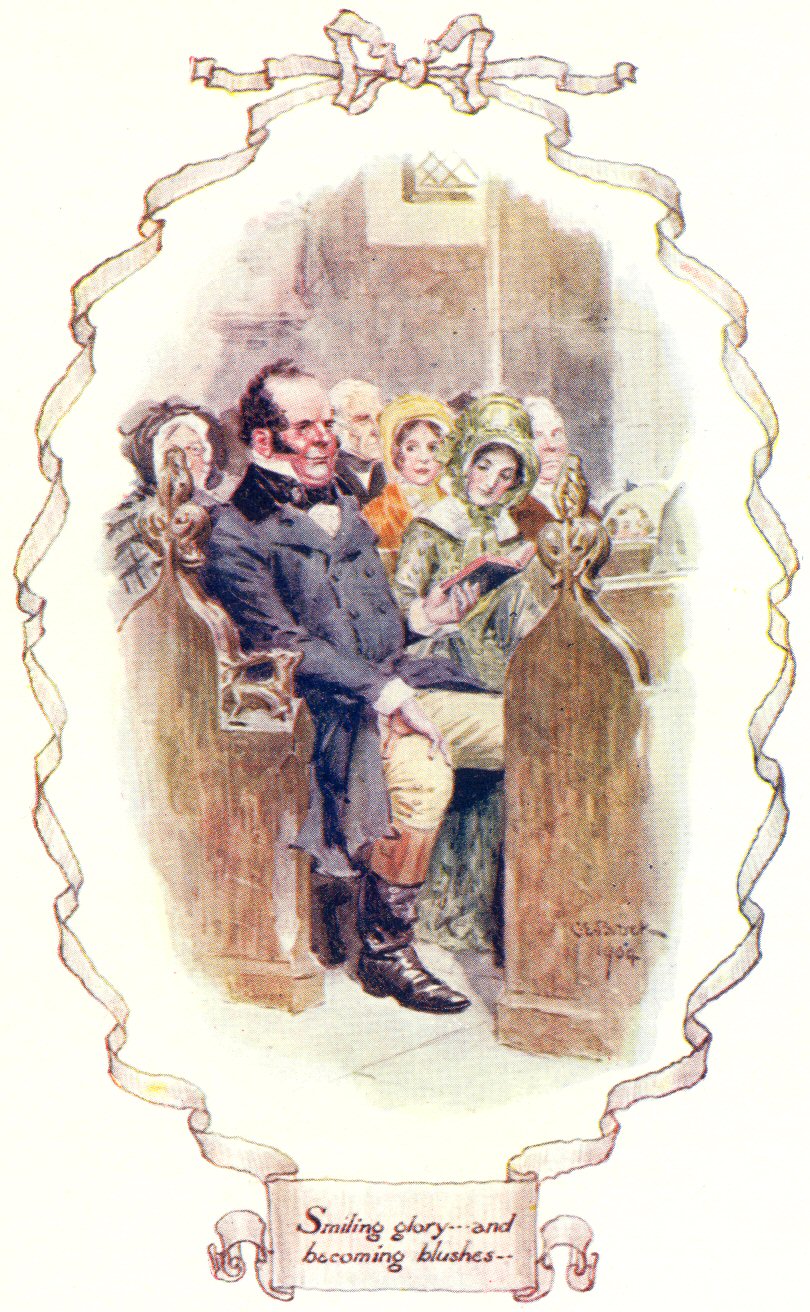
But what was our surprise—our dismay—when we learnt that Mr and Mrs Hoggins were returning on the following Tuesday! Mrs Hoggins! Had she absolutely dropped her title, and so, in a spirit of bravado, cut the aristocracy to become a Hoggins! She, who might have been called Lady Glenmire to her dying day! Mrs Jamieson was pleased. She said it only convinced her of what she had known from the first, that the creature had a low taste. But “the creature” looked very happy on Sunday at church; nor did we see it necessary to keep our veils down on that side of our bonnets on which Mr and Mrs Hoggins sat, as Mrs Jamieson did; thereby missing all the smiling glory of his face, and all the becoming blushes of hers. I am not sure if Martha and Jem looked more radiant in the afternoon, when they, too, made their first appearance. Mrs Jamieson soothed the turbulence of her soul by having the blinds of her windows drawn down, as if for a funeral, on the day when Mr and Mrs Hoggins received callers; and it was with some difficulty that she was prevailed upon to continue the St James’s Chronicle, so indignant was she with its having inserted the announcement of the marriage.
But how surprised, how dismayed we were to learn that Mr and Mrs Hoggins were returning the following Tuesday! Mrs Hoggins! Had she really given up her title and, in a spirit of defiance, turned her back on the aristocracy to become a Hoggins? She could have been called Lady Glenmire until her dying day! Mrs Jamieson was pleased. She said the news only confirmed what she had known from the start: the creature had low tastes. But “the creature” looked very happy at church on Sunday. Unlike Mrs Jamieson, we saw no need to keep our veils down on the side facing Mr and Mrs Hoggins. Mrs Jamieson therefore missed all the smiling glory of his face and all her becoming blushes. I am not sure that Martha and Jem looked any more radiant that afternoon, when they too appeared for the first time. Mrs Jamieson calmed her troubled soul by having her window blinds drawn, as if for a funeral, on the day Mr and Mrs Hoggins received callers. She was so angry that the St James’s Chronicle had published the marriage announcement that she was persuaded to keep her subscription only with some difficulty.
Miss Matty’s sale went off famously. She retained the furniture of her sitting-room and bedroom; the former of which she was to occupy till Martha could meet with a lodger who might wish to take it; and into this sitting-room and bedroom she had to cram all sorts of things, which were (the auctioneer assured her) bought in for her at the sale by an unknown friend. I always suspected Mrs Fitz-Adam of this; but she must have had an accessory, who knew what articles were particularly regarded by Miss Matty on account of their associations with her early days. The rest of the house looked rather bare, to be sure; all except one tiny bedroom, of which my father allowed me to purchase the furniture for my occasional use in case of Miss Matty’s illness.
Miss Matty’s sale went wonderfully well. She kept the furniture in her sitting room and bedroom. She was to use the sitting room until Martha found a lodger who wanted it. Miss Matty had to cram all sorts of things into these two rooms. The auctioneer assured her that an unknown friend had bought them at the sale for her. I always suspected Mrs Fitz-Adam had done this. But she must have had someone helping her who knew which things Miss Matty especially valued because they reminded her of her early days. The rest of the house did look rather bare, I must admit. The one exception was a tiny bedroom. My father allowed me to buy its furniture so I could use the room from time to time if Miss Matty fell ill.
I had expended my own small store in buying all manner of comfits and lozenges, in order to tempt the little people whom Miss Matty loved so much to come about her. Tea in bright green canisters, and comfits in tumblers—Miss Matty and I felt quite proud as we looked round us on the evening before the shop was to be opened. Martha had scoured the boarded floor to a white cleanness, and it was adorned with a brilliant piece of oil-cloth, on which customers were to stand before the table-counter. The wholesome smell of plaster and whitewash pervaded the apartment. A very small “Matilda Jenkyns, licensed to sell tea,” was hidden under the lintel of the new door, and two boxes of tea, with cabalistic inscriptions all over them, stood ready to disgorge their contents into the canisters.
I had spent my own small savings on all kinds of sweets and lozenges. I wanted to tempt the children Miss Matty loved so much to come and visit her. Tea sat in bright green canisters, and sweets filled the tumblers. Miss Matty and I felt quite proud as we looked around on the evening before the shop opened. Martha had scrubbed the wooden floor until it was clean and white. A brilliant piece of oilcloth decorated the floor, where customers would stand in front of the table serving as a counter. The wholesome smell of plaster and whitewash filled the room. A very small sign reading “Matilda Jenkyns, licensed to sell tea,” was hidden under the lintel of the new door. Two boxes of tea, covered in mysterious markings, stood ready to be emptied into the canisters.
Miss Matty, as I ought to have mentioned before, had had some scruples of conscience at selling tea when there was already Mr Johnson in the town, who included it among his numerous commodities; and, before she could quite reconcile herself to the adoption of her new business, she had trotted down to his shop, unknown to me, to tell him of the project that was entertained, and to inquire if it was likely to injure his business. My father called this idea of hers “great nonsense,” and “wondered how tradespeople were to get on if there was to be a continual consulting of each other’s interests, which would put a stop to all competition directly.” And, perhaps, it would not have done in Drumble, but in Cranford it answered very well; for not only did Mr Johnson kindly put at rest all Miss Matty’s scruples and fear of injuring his business, but I have reason to know he repeatedly sent customers to her, saying that the teas he kept were of a common kind, but that Miss Jenkyns had all the choice sorts. And expensive tea is a very favourite luxury with well-to-do tradespeople and rich farmers’ wives, who turn up their noses at the Congou and Souchong prevalent at many tables of gentility, and will have nothing else than Gunpowder and Pekoe for themselves.
I should have mentioned before that Miss Matty felt uneasy about selling tea. Mr Johnson already sold it in town, along with many other goods. Before she could feel entirely comfortable starting her new business, she trotted down to his shop without my knowing. She told him about the plan and asked whether it was likely to harm his business. My father called her concern “great nonsense.” He “wondered how tradespeople were to get on if they were always considering each other’s interests. That would immediately put a stop to all competition.” Perhaps such consideration would not have worked in Drumble, but it worked very well in Cranford. Mr Johnson kindly put all Miss Matty’s worries about harming his business to rest. I also have reason to know that he repeatedly sent customers to her. He told them that his own teas were ordinary, but that Miss Jenkyns had all the finest kinds. Expensive tea is a favorite luxury among prosperous tradespeople and rich farmers’ wives. They look down on the Congou and Souchong served at many genteel tables. They will have nothing but Gunpowder and Pekoe for themselves.
But to return to Miss Matty. It was really very pleasant to see how her unselfishness and simple sense of justice called out the same good qualities in others. She never seemed to think any one would impose upon her, because she should be so grieved to do it to them. I have heard her put a stop to the asseverations of the man who brought her coals by quietly saying, “I am sure you would be sorry to bring me wrong weight;” and if the coals were short measure that time, I don’t believe they ever were again. People would have felt as much ashamed of presuming on her good faith as they would have done on that of a child. But my father says “such simplicity might be very well in Cranford, but would never do in the world.” And I fancy the world must be very bad, for with all my father’s suspicion of every one with whom he has dealings, and in spite of all his many precautions, he lost upwards of a thousand pounds by roguery only last year.
But to return to Miss Matty. It was really very pleasant to see how her unselfishness and simple sense of justice brought out the same qualities in others. She never seemed to think anyone would take advantage of her. She would have been so upset to do the same to them. I have heard her stop the coal delivery man’s repeated assurances by quietly saying, “I am sure you would be sorry to bring me less than the right weight.” If he delivered too little coal that time, I don’t believe he ever did again. People would have felt as ashamed of taking advantage of her trust as they would have of a child’s. But my father says “such simplicity might be fine in Cranford, but would never do in the world.” And I imagine the world must be very bad. My father suspects everyone he deals with and takes many precautions. Yet he lost more than a thousand pounds to dishonesty just last year.
I just stayed long enough to establish Miss Matty in her new mode of life, and to pack up the library, which the rector had purchased. He had written a very kind letter to Miss Matty, saying “how glad he should be to take a library, so well selected as he knew that the late Mr Jenkyns’s must have been, at any valuation put upon them.” And when she agreed to this, with a touch of sorrowful gladness that they would go back to the rectory and be arranged on the accustomed walls once more, he sent word that he feared that he had not room for them all, and perhaps Miss Matty would kindly allow him to leave some volumes on her shelves. But Miss Matty said that she had her Bible and “Johnson’s Dictionary,” and should not have much time for reading, she was afraid; still, I retained a few books out of consideration for the rector’s kindness.
I stayed only long enough to help Miss Matty settle into her new way of life and to pack up the library. The rector had bought it. He had written a very kind letter to Miss Matty. He said “how glad he would be to buy the library, which he knew the late Mr Jenkyns must have chosen so well, at whatever value was placed on the books.” Miss Matty agreed, feeling a mixture of sadness and happiness. The books would return to the rectory and be arranged on the familiar walls once more. Then the rector sent word that he feared he did not have room for all the books. Perhaps Miss Matty would kindly allow him to leave some volumes on her shelves. But Miss Matty said she had her Bible and “Johnson’s Dictionary.” She was afraid she would not have much time for reading. Still, I kept a few books out of consideration for the rector’s kindness.
The money which he had paid, and that produced by the sale, was partly expended in the stock of tea, and part of it was invested against a rainy day—i.e. old age or illness. It was but a small sum, it is true; and it occasioned a few evasions of truth and white lies (all of which I think very wrong indeed—in theory—and would rather not put them in practice), for we knew Miss Matty would be perplexed as to her duty if she were aware of any little reserve-fund being made for her while the debts of the bank remained unpaid. Moreover, she had never been told of the way in which her friends were contributing to pay the rent. I should have liked to tell her this, but the mystery of the affair gave a piquancy to their deed of kindness which the ladies were unwilling to give up; and at first Martha had to shirk many a perplexed question as to her ways and means of living in such a house, but by-and-by Miss Matty’s prudent uneasiness sank down into acquiescence with the existing arrangement.
Some of the money he had paid, along with the money raised by the sale, was spent on a stock of tea. Some was invested for a rainy day, i.e., for old age or illness. It was only a small sum, it is true. Keeping it secret led to a few evasions of the truth and white lies. (I think all of these are very wrong indeed, in theory, and would rather not put them into practice.) We knew Miss Matty would be unsure of her duty if she knew of a small reserve fund being made for her while the bank’s debts remained unpaid. Moreover, she had never been told how her friends were helping to pay the rent. I would have liked to tell her. But the secrecy gave their kindness a special appeal that the ladies were unwilling to give up. At first, Martha had to dodge many puzzled questions about how she could afford to live in such a house. But in time, Miss Matty’s prudent worries gave way to acceptance of the arrangement.
I left Miss Matty with a good heart. Her sales of tea during the first two days had surpassed my most sanguine expectations. The whole country round seemed to be all out of tea at once. The only alteration I could have desired in Miss Matty’s way of doing business was, that she should not have so plaintively entreated some of her customers not to buy green tea—running it down as a slow poison, sure to destroy the nerves, and produce all manner of evil. Their pertinacity in taking it, in spite of all her warnings, distressed her so much that I really thought she would relinquish the sale of it, and so lose half her custom; and I was driven to my wits’ end for instances of longevity entirely attributable to a persevering use of green tea. But the final argument, which settled the question, was a happy reference of mine to the train-oil and tallow candles which the Esquimaux not only enjoy but digest. After that she acknowledged that “one man’s meat might be another man’s poison,” and contented herself thence-forward with an occasional remonstrance when she thought the purchaser was too young and innocent to be acquainted with the evil effects green tea produced on some constitutions, and an habitual sigh when people old enough to choose more wisely would prefer it.
I left Miss Matty feeling encouraged. Her tea sales during the first two days had exceeded my most hopeful expectations. Everyone in the surrounding country seemed to have run out of tea at once. There was only one change I would have wished for in Miss Matty’s way of doing business. I wished she would not beg some customers so plaintively not to buy green tea. She condemned it as a slow poison, certain to destroy the nerves and cause all kinds of harm. Despite her warnings, they insisted on buying it. This distressed her so much that I truly thought she would stop selling green tea and lose half her customers. I was at my wits’ end trying to think of people who had lived long lives entirely because they kept drinking green tea. But the final argument that settled the question was a fortunate example I brought up. The Esquimaux not only enjoy train oil and tallow candles but can digest them. After that, she acknowledged that “one man’s meat might be another man’s poison.” From then on, she was content to give an occasional warning. She did this when she thought a buyer was too young and innocent to know how green tea harmed some people. And she usually sighed when people old enough to choose more wisely preferred green tea.
I went over from Drumble once a quarter at least to settle the accounts, and see after the necessary business letters. And, speaking of letters, I began to be very much ashamed of remembering my letter to the Aga Jenkyns, and very glad I had never named my writing to any one. I only hoped the letter was lost. No answer came. No sign was made.
I went over from Drumble at least once every three months to settle the accounts and handle necessary business letters. Speaking of letters, I began to feel very ashamed whenever I remembered my letter to the Aga Jenkyns. I was very glad I had never told anyone I had written it. I could only hope the letter was lost. No answer came. There was no sign at all.
About a year after Miss Matty set up shop, I received one of Martha’s hieroglyphics, begging me to come to Cranford very soon. I was afraid that Miss Matty was ill, and went off that very afternoon, and took Martha by surprise when she saw me on opening the door. We went into the kitchen as usual, to have our confidential conference, and then Martha told me she was expecting her confinement very soon—in a week or two; and she did not think Miss Matty was aware of it, and she wanted me to break the news to her, “for indeed, miss,” continued Martha, crying hysterically, “I’m afraid she won’t approve of it, and I’m sure I don’t know who is to take care of her as she should be taken care of when I am laid up.”
About a year after Miss Matty opened her shop, I received one of Martha’s hieroglyphics, begging me to come to Cranford very soon. I was afraid Miss Matty was ill, so I left that very afternoon. When Martha opened the door and saw me, she was surprised. As usual, we went into the kitchen for a private talk. Martha then told me she was expecting to give birth very soon, in a week or two. She did not think Miss Matty knew, and she wanted me to break the news to her. “For really, miss,” Martha continued, crying hysterically, “I’m afraid she won’t approve of it. And I’m sure I don’t know who will take proper care of her when I’m laid up.”
I comforted Martha by telling her I would remain till she was about again, and only wished she had told me her reason for this sudden summons, as then I would have brought the requisite stock of clothes. But Martha was so tearful and tender-spirited, and unlike her usual self, that I said as little as possible about myself, and endeavoured rather to comfort Martha under all the probable and possible misfortunes which came crowding upon her imagination.
I comforted Martha by telling her I would stay until she was up and about again. I only wished she had told me why she had sent for me so suddenly. Then I could have brought enough clothes. But Martha was tearful and easily upset, so unlike her usual self. So I said as little as possible about myself. Instead, I tried to comfort Martha as she imagined all the misfortunes that might probably or possibly happen.
I then stole out of the house-door, and made my appearance as if I were a customer in the shop, just to take Miss Matty by surprise, and gain an idea of how she looked in her new situation. It was warm May weather, so only the little half-door was closed; and Miss Matty sat behind the counter, knitting an elaborate pair of garters; elaborate they seemed to me, but the difficult stitch was no weight upon her mind, for she was singing in a low voice to herself as her needles went rapidly in and out. I call it singing, but I dare say a musician would not use that word to the tuneless yet sweet humming of the low worn voice. I found out from the words, far more than from the attempt at the tune, that it was the Old Hundredth she was crooning to herself; but the quiet continuous sound told of content, and gave me a pleasant feeling, as I stood in the street just outside the door, quite in harmony with that soft May morning. I went in. At first she did not catch who it was, and stood up as if to serve me; but in another minute watchful pussy had clutched her knitting, which was dropped in eager joy at seeing me. I found, after we had had a little conversation, that it was as Martha said, and that Miss Matty had no idea of the approaching household event. So I thought I would let things take their course, secure that when I went to her with the baby in my arms, I should obtain that forgiveness for Martha which she was needlessly frightening herself into believing that Miss Matty would withhold, under some notion that the new claimant would require attentions from its mother that it would be faithless treason to Miss Matty to render.
I then slipped out of the house and appeared in the shop as if I were a customer. I wanted to surprise Miss Matty and see how she looked in her new situation. It was a warm May day, so only the little half-door was closed. Miss Matty sat behind the counter, knitting a pair of elaborate garters. They seemed elaborate to me, but the difficult stitch did not trouble her. She was singing softly to herself as her needles moved rapidly in and out. I call it singing, but I dare say a musician would not use that word for the tuneless but sweet humming of her low, worn voice. The words, far more than her attempt at the tune, told me she was crooning the Old Hundredth to herself. But the quiet, continuous sound spoke of contentment. As I stood in the street just outside the door, it gave me a pleasant feeling, perfectly in keeping with that soft May morning. I went in. At first she did not recognize me, and she stood up as if to serve me. But a moment later she saw who I was and dropped her knitting in eager delight. The watchful cat promptly grabbed it. After we had talked a little, I found that Martha was right. Miss Matty had no idea that a baby was on the way. So I thought I would let things take their course. I was sure that when I went to Miss Matty with the baby in my arms, I could secure her forgiveness for Martha. Martha had needlessly frightened herself into believing that Miss Matty would refuse to forgive her. She thought Miss Matty might consider it a betrayal for a mother to give the new arrival the attention it would need.
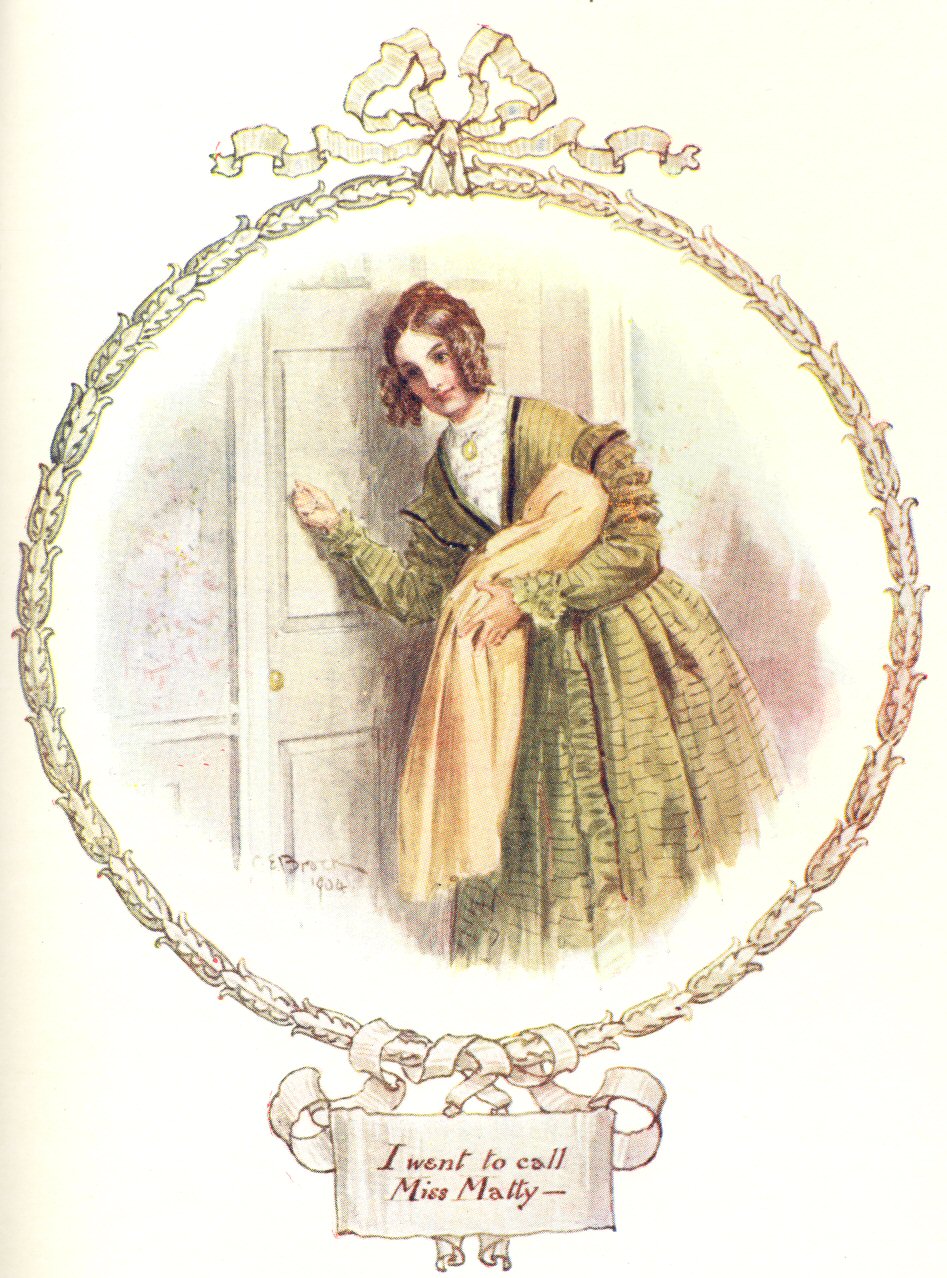
But I was right. I think that must be an hereditary quality, for my father says he is scarcely ever wrong. One morning, within a week after I arrived, I went to call Miss Matty, with a little bundle of flannel in my arms. She was very much awestruck when I showed her what it was, and asked for her spectacles off the dressing-table, and looked at it curiously, with a sort of tender wonder at its small perfection of parts. She could not banish the thought of the surprise all day, but went about on tiptoe, and was very silent. But she stole up to see Martha and they both cried with joy, and she got into a complimentary speech to Jem, and did not know how to get out of it again, and was only extricated from her dilemma by the sound of the shop-bell, which was an equal relief to the shy, proud, honest Jem, who shook my hand so vigorously when I congratulated him, that I think I feel the pain of it yet.
But I was right. I think that must be a quality I inherited, because my father says he is hardly ever wrong. One morning, within a week of my arrival, I went to wake Miss Matty, carrying a little bundle of flannel in my arms. She was filled with awe when I showed her what the bundle contained. She asked for her glasses from the dressing table and looked at it curiously, with a kind of tender wonder at the tiny perfection of every part. She could not stop thinking about the surprise all day. She walked on tiptoe and was very quiet. But she slipped upstairs to see Martha, and they both cried with joy. Then she began making a complimentary speech to Jem and did not know how to end it. Only the sound of the shop bell got her out of her difficulty. It was just as much a relief to shy, proud, honest Jem. When I congratulated him, he shook my hand so vigorously that I think I can still feel the pain.
I had a busy life while Martha was laid up. I attended on Miss Matty, and prepared her meals; I cast up her accounts, and examined into the state of her canisters and tumblers. I helped her, too, occasionally, in the shop; and it gave me no small amusement, and sometimes a little uneasiness, to watch her ways there. If a little child came in to ask for an ounce of almond-comfits (and four of the large kind which Miss Matty sold weighed that much), she always added one more by “way of make-weight,” as she called it, although the scale was handsomely turned before; and when I remonstrated against this, her reply was, “The little things like it so much!” There was no use in telling her that the fifth comfit weighed a quarter of an ounce, and made every sale into a loss to her pocket. So I remembered the green tea, and winged my shaft with a feather out of her own plumage. I told her how unwholesome almond-comfits were, and how ill excess in them might make the little children. This argument produced some effect; for, henceforward, instead of the fifth comfit, she always told them to hold out their tiny palms, into which she shook either peppermint or ginger lozenges, as a preventive to the dangers that might arise from the previous sale. Altogether the lozenge trade, conducted on these principles, did not promise to be remunerative; but I was happy to find she had made more than twenty pounds during the last year by her sales of tea; and, moreover, that now she was accustomed to it, she did not dislike the employment, which brought her into kindly intercourse with many of the people round about. If she gave them good weight, they, in their turn, brought many a little country present to the “old rector’s daughter”; a cream cheese, a few new-laid eggs, a little fresh ripe fruit, a bunch of flowers. The counter was quite loaded with these offerings sometimes, as she told me.
I was busy while Martha was laid up. I looked after Miss Matty and prepared her meals. I added up her accounts and checked her canisters and tumblers. I also helped her in the shop from time to time. Watching her there amused me a great deal, though it sometimes made me a little uneasy. A little child might come in and ask for an ounce of almond-comfits. Four of the large ones Miss Matty sold weighed an ounce. Even though the scales already showed a generous weight, she always added one more. She called it a “make-weight.” When I objected, she replied, “The little things like it so much!” There was no use telling her that the fifth comfit weighed a quarter of an ounce. Every sale cost her money. So I remembered the green tea and used one of her own arguments against her. I told her how unhealthy almond-comfits were. I said that eating too many might make the little children ill. This argument had some effect. From then on, instead of giving them a fifth comfit, she always told them to hold out their tiny palms. She shook peppermint or ginger lozenges into their hands to prevent any harm from the comfits she had just sold them. All in all, the lozenge trade, conducted on these principles, did not promise to make her any money. But I was happy to find that she had made more than twenty pounds selling tea during the past year. Now that she was used to the work, she did not dislike it. It brought her into friendly contact with many people in the neighborhood. She gave them generous weight, and they, in turn, brought many a little country gift to the “old rector’s daughter.” They brought a cream cheese, a few fresh eggs, some fresh ripe fruit, or a bunch of flowers. Sometimes, she told me, the counter was quite loaded with these gifts.
As for Cranford in general, it was going on much as usual. The Jamieson and Hoggins feud still raged, if a feud it could be called, when only one side cared much about it. Mr and Mrs Hoggins were very happy together, and, like most very happy people, quite ready to be friendly; indeed, Mrs Hoggins was really desirous to be restored to Mrs Jamieson’s good graces, because of the former intimacy. But Mrs Jamieson considered their very happiness an insult to the Glenmire family, to which she had still the honour to belong, and she doggedly refused and rejected every advance. Mr Mulliner, like a faithful clansman, espoused his mistress’s side with ardour. If he saw either Mr or Mrs Hoggins, he would cross the street, and appear absorbed in the contemplation of life in general, and his own path in particular, until he had passed them by. Miss Pole used to amuse herself with wondering what in the world Mrs Jamieson would do, if either she, or Mr Mulliner, or any other member of her household was taken ill; she could hardly have the face to call in Mr Hoggins after the way she had behaved to them. Miss Pole grew quite impatient for some indisposition or accident to befall Mrs Jamieson or her dependents, in order that Cranford might see how she would act under the perplexing circumstances.
As for Cranford in general, life went on much as usual. The feud between the Jamiesons and the Hogginses still raged, if it could be called a feud when only one side cared much about it. Mr and Mrs Hoggins were very happy together and, like most very happy people, quite ready to be friendly. Indeed, Mrs Hoggins really wanted to regain Mrs Jamieson’s favor because they had once been close. But Mrs Jamieson considered their very happiness an insult to the Glenmire family, to which she still had the honor of belonging. She stubbornly rejected every attempt at friendship. Mr Mulliner, like a faithful clansman, eagerly took his mistress’s side. If he saw either Mr or Mrs Hoggins, he would cross the street. Until he had passed them, he would seem absorbed in contemplating life in general and his own path in particular. Miss Pole used to amuse herself by wondering what on earth Mrs Jamieson would do if she, Mr Mulliner, or anyone else in her household fell ill. After the way she had treated the Hogginses, she could hardly have the nerve to call in Mr Hoggins. Miss Pole grew quite impatient for an illness or accident to befall Mrs Jamieson or someone in her household. Then Cranford could see how she would act in such a predicament.
Martha was beginning to go about again, and I had already fixed a limit, not very far distant, to my visit, when one afternoon, as I was sitting in the shop-parlour with Miss Matty—I remember the weather was colder now than it had been in May, three weeks before, and we had a fire and kept the door fully closed—we saw a gentleman go slowly past the window, and then stand opposite to the door, as if looking out for the name which we had so carefully hidden. He took out a double eyeglass and peered about for some time before he could discover it. Then he came in. And, all on a sudden, it flashed across me that it was the Aga himself! For his clothes had an out-of-the-way foreign cut about them, and his face was deep brown, as if tanned and re-tanned by the sun. His complexion contrasted oddly with his plentiful snow-white hair, his eyes were dark and piercing, and he had an odd way of contracting them and puckering up his cheeks into innumerable wrinkles when he looked earnestly at objects. He did so to Miss Matty when he first came in. His glance had first caught and lingered a little upon me, but then turned, with the peculiar searching look I have described, to Miss Matty. She was a little fluttered and nervous, but no more so than she always was when any man came into her shop. She thought that he would probably have a note, or a sovereign at least, for which she would have to give change, which was an operation she very much disliked to perform. But the present customer stood opposite to her, without asking for anything, only looking fixedly at her as he drummed upon the table with his fingers, just for all the world as Miss Jenkyns used to do. Miss Matty was on the point of asking him what he wanted (as she told me afterwards), when he turned sharp to me: “Is your name Mary Smith?”
Martha was beginning to move about again, and I had already set a date to end my visit. It was not far off. One afternoon, I was sitting with Miss Matty in the parlour behind the shop. I remember that the weather was colder now than it had been three weeks before, in May. We had a fire burning and kept the door fully closed. We saw a gentleman walk slowly past the window, then stand opposite the door. He seemed to be looking for the name we had hidden so carefully. He took out a pair of eyeglasses and peered around for some time before he found it. Then he came in. All at once, it flashed across my mind that he was the Aga himself! His clothes had an unusual foreign cut, and his face was deep brown, as if tanned and tanned again by the sun. His complexion contrasted oddly with his thick, snow-white hair. His eyes were dark and piercing. When he looked closely at something, he had a strange way of narrowing his eyes and puckering his cheeks into countless wrinkles. He did this to Miss Matty when he first came in. He had looked at me first, and his glance had lingered a little. Then he turned to Miss Matty, with that peculiar, searching look I have described. She was a little flustered and nervous, but no more than she always was when a man came into her shop. She thought he would probably have a banknote, or at least a sovereign, and she would have to give him change. She very much disliked doing that. But this customer stood opposite her without asking for anything. He only stared at her while drumming his fingers on the table, exactly as Miss Jenkyns used to do. Miss Matty was on the point of asking him what he wanted, as she told me afterwards. Then he turned sharply to me: “Is your name Mary Smith?”
“Yes!” said I.
“Yes!” I said.
All my doubts as to his identity were set at rest, and I only wondered what he would say or do next, and how Miss Matty would stand the joyful shock of what he had to reveal. Apparently he was at a loss how to announce himself, for he looked round at last in search of something to buy, so as to gain time, and, as it happened, his eye caught on the almond-comfits, and he boldly asked for a pound of “those things.” I doubt if Miss Matty had a whole pound in the shop, and, besides the unusual magnitude of the order, she was distressed with the idea of the indigestion they would produce, taken in such unlimited quantities. She looked up to remonstrate. Something of tender relaxation in his face struck home to her heart. She said, “It is—oh, sir! can you be Peter?” and trembled from head to foot. In a moment he was round the table and had her in his arms, sobbing the tearless cries of old age. I brought her a glass of wine, for indeed her colour had changed so as to alarm me and Mr Peter too. He kept saying, “I have been too sudden for you, Matty—I have, my little girl.”
All my doubts about who he was were settled. I only wondered what he would say or do next, and how Miss Matty would bear the joyful shock of his news. Apparently, he did not know how to tell her who he was. At last, he looked around for something to buy, so he could gain time. His eye happened to fall on the almond-comfits, and he boldly asked for a pound of “those things.” I doubt Miss Matty had a whole pound in the shop. Besides being surprised by such a large order, she was distressed at the thought of the indigestion they would cause if eaten in such unlimited quantities. She looked up to protest. Something tender in his relaxed expression touched her heart. She said, “It is, oh, sir! Can you be Peter?” and trembled from head to foot. In a moment, he was around the table, holding her in his arms as she sobbed the tearless sobs of old age. I brought her a glass of wine, for the change in her color had alarmed both Mr Peter and me. He kept saying, “I have been too sudden for you, Matty. I have, my little girl.”
I proposed that she should go at once up into the drawing-room and lie down on the sofa there. She looked wistfully at her brother, whose hand she had held tight, even when nearly fainting; but on his assuring her that he would not leave her, she allowed him to carry her upstairs.
I suggested that she go upstairs to the drawing room at once and lie down on the sofa. She looked longingly at her brother. She had held his hand tightly, even when she nearly fainted. But he assured her that he would not leave her, so she let him carry her upstairs.
I thought that the best I could do was to run and put the kettle on the fire for early tea, and then to attend to the shop, leaving the brother and sister to exchange some of the many thousand things they must have to say. I had also to break the news to Martha, who received it with a burst of tears which nearly infected me. She kept recovering herself to ask if I was sure it was indeed Miss Matty’s brother, for I had mentioned that he had grey hair, and she had always heard that he was a very handsome young man. Something of the same kind perplexed Miss Matty at tea-time, when she was installed in the great easy-chair opposite to Mr Jenkyns in order to gaze her fill. She could hardly drink for looking at him, and as for eating, that was out of the question.
I thought the best thing I could do was run and put the kettle on the fire for an early tea. Then I could tend the shop, leaving the brother and sister to share some of the thousands of things they must have had to say. I also had to tell Martha the news. She burst into tears, and I nearly joined her. She kept pulling herself together to ask if I was sure he really was Miss Matty’s brother. I had mentioned his grey hair, and she had always heard that he was a very handsome young man. Something similar puzzled Miss Matty at tea-time. She had settled into the large easy chair opposite Mr Jenkyns so she could gaze at him as much as she liked. She could hardly drink because she was so busy looking at him, and eating was out of the question.
“I suppose hot climates age people very quickly,” said she, almost to herself. “When you left Cranford you had not a grey hair in your head.”
“I suppose hot climates make people age very quickly,” she said, almost to herself. “When you left Cranford, you didn’t have a single gray hair.”
“But how many years ago is that?” said Mr Peter, smiling.
“But how many years ago was that?” Mr Peter asked, smiling.
“Ah, true! yes, I suppose you and I are getting old. But still I did not think we were so very old! But white hair is very becoming to you, Peter,” she continued—a little afraid lest she had hurt him by revealing how his appearance had impressed her.
“Ah, true! Yes, I suppose you and I are getting old. But I didn't think we were quite so old! Still, white hair looks very good on you, Peter,” she continued. She was a little afraid she had hurt him by revealing how his appearance had struck her.
“I suppose I forgot dates too, Matty, for what do you think I have brought for you from India? I have an Indian muslin gown and a pearl necklace for you somewhere in my chest at Portsmouth.” He smiled as if amused at the idea of the incongruity of his presents with the appearance of his sister; but this did not strike her all at once, while the elegance of the articles did. I could see that for a moment her imagination dwelt complacently on the idea of herself thus attired; and instinctively she put her hand up to her throat—that little delicate throat which (as Miss Pole had told me) had been one of her youthful charms; but the hand met the touch of folds of soft muslin in which she was always swathed up to her chin, and the sensation recalled a sense of the unsuitableness of a pearl necklace to her age. She said, “I’m afraid I’m too old; but it was very kind of you to think of it. They are just what I should have liked years ago—when I was young.”
“I suppose I forgot dates too, Matty. What do you think I brought you from India? Somewhere in my chest at Portsmouth, I have an Indian muslin gown and a pearl necklace for you.” He smiled as if amused by how unsuitable his presents were for his sister’s appearance. But she did not notice that at first. She noticed how elegant they were. I could see that, for a moment, she imagined herself wearing them with pleasure. She instinctively raised her hand to her throat. Miss Pole had told me that her small, delicate throat had been one of her youthful charms. But her hand touched the folds of soft muslin that she always wore wrapped up to her chin. The touch reminded her that a pearl necklace was not suitable for someone her age. She said, “I’m afraid I’m too old, but it was very kind of you to think of it. They are just what I would have liked years ago, when I was young.”
“So I thought, my little Matty. I remembered your tastes; they were so like my dear mother’s.” At the mention of that name the brother and sister clasped each other’s hands yet more fondly, and, although they were perfectly silent, I fancied they might have something to say if they were unchecked by my presence, and I got up to arrange my room for Mr Peter’s occupation that night, intending myself to share Miss Matty’s bed. But at my movement, he started up. “I must go and settle about a room at the ‘George.’ My carpet-bag is there too.”
“So I thought, my little Matty. I remembered your tastes. They were so like my dear mother’s.” At the mention of their mother, the brother and sister clasped hands even more fondly. Although they said nothing, I thought they might want to talk if I were not there. So I got up to prepare my room for Mr Peter to use that night. I intended to share Miss Matty’s bed. But when I moved, he jumped up. “I must go and arrange for a room at the ‘George.’ My carpet-bag is there too.”
“No!” said Miss Matty, in great distress—“you must not go; please, dear Peter—pray, Mary—oh! you must not go!”
“No!” said Miss Matty, deeply distressed. “You must not go. Please, dear Peter, please, Mary, oh! You must not go!”
She was so much agitated that we both promised everything she wished. Peter sat down again and gave her his hand, which for better security she held in both of hers, and I left the room to accomplish my arrangements.
She was so upset that we both promised to do everything she wanted. Peter sat down again and gave her his hand. To make sure he stayed, she held it in both of hers. I left the room to make my arrangements.
Long, long into the night, far, far into the morning, did Miss Matty and I talk. She had much to tell me of her brother’s life and adventures, which he had communicated to her as they had sat alone. She said all was thoroughly clear to her; but I never quite understood the whole story; and when in after days I lost my awe of Mr Peter enough to question him myself, he laughed at my curiosity, and told me stories that sounded so very much like Baron Munchausen’s, that I was sure he was making fun of me. What I heard from Miss Matty was that he had been a volunteer at the siege of Rangoon; had been taken prisoner by the Burmese; and somehow obtained favour and eventual freedom from knowing how to bleed the chief of the small tribe in some case of dangerous illness; that on his release from years of captivity he had had his letters returned from England with the ominous word “Dead” marked upon them; and, believing himself to be the last of his race, he had settled down as an indigo planter, and had proposed to spend the remainder of his life in the country to whose inhabitants and modes of life he had become habituated, when my letter had reached him; and, with the odd vehemence which characterised him in age as it had done in youth, he had sold his land and all his possessions to the first purchaser, and come home to the poor old sister, who was more glad and rich than any princess when she looked at him. She talked me to sleep at last, and then I was awakened by a slight sound at the door, for which she begged my pardon as she crept penitently into bed; but it seems that when I could no longer confirm her belief that the long-lost was really here—under the same roof—she had begun to fear lest it was only a waking dream of hers; that there never had been a Peter sitting by her all that blessed evening—but that the real Peter lay dead far away beneath some wild sea-wave, or under some strange eastern tree. And so strong had this nervous feeling of hers become, that she was fain to get up and go and convince herself that he was really there by listening through the door to his even, regular breathing—I don’t like to call it snoring, but I heard it myself through two closed doors—and by-and-by it soothed Miss Matty to sleep.
Miss Matty and I talked long into the night, and far into the morning. She had much to tell me about her brother’s life and adventures, which he had shared with her while they sat alone. She said it was all perfectly clear to her, but I never quite understood the whole story. In later days, I lost enough of my awe of Mr Peter to question him myself. He laughed at my curiosity and told me stories that sounded so much like Baron Munchausen’s that I was sure he was making fun of me. Miss Matty told me that he had volunteered at the siege of Rangoon and had been taken prisoner by the Burmese. Somehow, he gained favor and eventually his freedom because he knew how to bleed the chief of the small tribe during a dangerous illness. After years in captivity, he was released, only to have his letters returned from England with the ominous word “Dead” written on them. Believing himself to be the last of his family, he settled down as an indigo planter. He intended to spend the rest of his life in the country, having grown accustomed to its people and their way of life. Then my letter reached him. With the same odd intensity that had marked him in youth and still marked him in old age, he sold his land and all his possessions to the first buyer. He came home to his poor old sister, who felt happier and richer than any princess when she looked at him. At last, she talked me to sleep. Then a slight sound at the door woke me, and she begged my pardon as she crept guiltily into bed. It seemed that, once I could no longer reassure her that her long-lost brother was really there, under the same roof, she had begun to fear it was only a waking dream. Perhaps Peter had not sat beside her all that blessed evening. Perhaps the real Peter lay dead far away beneath some wild sea wave or under some strange eastern tree. This anxious feeling had grown so strong that she had to get up and make sure he was really there. She listened through his door to his steady, regular breathing. I don’t like to call it snoring, but I heard it myself through two closed doors. Before long, the sound soothed Miss Matty to sleep.
I don’t believe Mr Peter came home from India as rich as a nabob; he even considered himself poor, but neither he nor Miss Matty cared much about that. At any rate, he had enough to live upon “very genteelly” at Cranford; he and Miss Matty together. And a day or two after his arrival, the shop was closed, while troops of little urchins gleefully awaited the shower of comfits and lozenges that came from time to time down upon their faces as they stood up-gazing at Miss Matty’s drawing-room windows. Occasionally Miss Matty would say to them (half-hidden behind the curtains), “My dear children, don’t make yourselves ill;” but a strong arm pulled her back, and a more rattling shower than ever succeeded. A part of the tea was sent in presents to the Cranford ladies; and some of it was distributed among the old people who remembered Mr Peter in the days of his frolicsome youth. The Indian muslin gown was reserved for darling Flora Gordon (Miss Jessie Brown’s daughter). The Gordons had been on the Continent for the last few years, but were now expected to return very soon; and Miss Matty, in her sisterly pride, anticipated great delight in the joy of showing them Mr Peter. The pearl necklace disappeared; and about that time many handsome and useful presents made their appearance in the households of Miss Pole and Mrs Forrester; and some rare and delicate Indian ornaments graced the drawing-rooms of Mrs Jamieson and Mrs Fitz-Adam. I myself was not forgotten. Among other things, I had the handsomest-bound and best edition of Dr Johnson’s works that could be procured; and dear Miss Matty, with tears in her eyes, begged me to consider it as a present from her sister as well as herself. In short, no one was forgotten; and, what was more, every one, however insignificant, who had shown kindness to Miss Matty at any time, was sure of Mr Peter’s cordial regard.
I don’t believe Mr Peter came home from India as rich as a nabob. He even considered himself poor, but neither he nor Miss Matty cared much about that. In any case, he had enough for the two of them to live “very genteelly” in Cranford. A day or two after his arrival, the shop closed. Crowds of little children waited eagerly outside Miss Matty’s drawing-room windows, gazing up. From time to time, sweets and lozenges showered down on their faces. Occasionally, Miss Matty would say to them from behind the curtains, where she was half-hidden, “My dear children, don’t make yourselves ill.” But a strong arm pulled her back, and an even noisier shower followed. Some of the tea was sent as gifts to the Cranford ladies. Some was given to the older people who remembered Mr Peter from his playful youth. The Indian muslin gown was set aside for darling Flora Gordon, Miss Jessie Brown’s daughter. The Gordons had been on the Continent for the past few years, but were expected back very soon. Miss Matty was proud of her brother and looked forward to the great pleasure of showing Mr Peter to them. The pearl necklace disappeared. Around that time, many handsome and useful presents appeared in the homes of Miss Pole and Mrs Forrester. Rare and delicate Indian ornaments also graced the drawing rooms of Mrs Jamieson and Mrs Fitz-Adam. I was not forgotten either. Among other things, I received the best edition of Dr Johnson’s works that could be found, with the finest binding. Dear Miss Matty, with tears in her eyes, begged me to consider the books a gift from her sister as well as herself. In short, no one was forgotten. What was more, everyone who had ever shown kindness to Miss Matty, however insignificant they might be, could be sure of Mr Peter’s warm regard.