Chapter 13
Payments Stopped
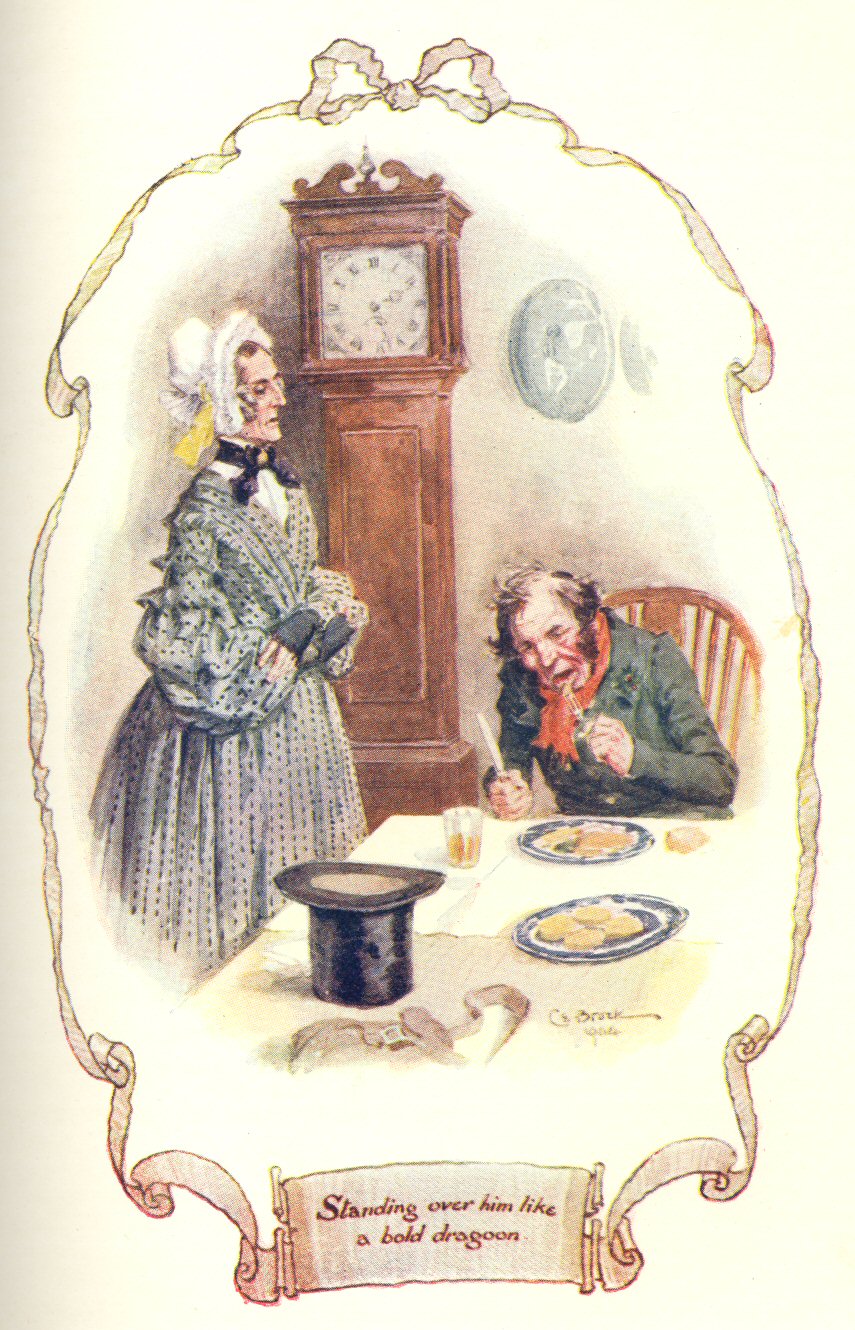
The very Tuesday morning on which Mr Johnson was going to show the fashions, the post-woman brought two letters to the house. I say the post-woman, but I should say the postman’s wife. He was a lame shoemaker, a very clean, honest man, much respected in the town; but he never brought the letters round except on unusual occasions, such as Christmas Day or Good Friday; and on those days the letters, which should have been delivered at eight in the morning, did not make their appearance until two or three in the afternoon, for every one liked poor Thomas, and gave him a welcome on these festive occasions. He used to say, “He was welly stawed wi’ eating, for there were three or four houses where nowt would serve ’em but he must share in their breakfast;” and by the time he had done his last breakfast, he came to some other friend who was beginning dinner; but come what might in the way of temptation, Tom was always sober, civil, and smiling; and, as Miss Jenkyns used to say, it was a lesson in patience, that she doubted not would call out that precious quality in some minds, where, but for Thomas, it might have lain dormant and undiscovered. Patience was certainly very dormant in Miss Jenkyns’s mind. She was always expecting letters, and always drumming on the table till the post-woman had called or gone past. On Christmas Day and Good Friday she drummed from breakfast till church, from church-time till two o’clock—unless when the fire wanted stirring, when she invariably knocked down the fire-irons, and scolded Miss Matty for it. But equally certain was the hearty welcome and the good dinner for Thomas; Miss Jenkyns standing over him like a bold dragoon, questioning him as to his children—what they were doing—what school they went to; upbraiding him if another was likely to make its appearance, but sending even the little babies the shilling and the mince-pie which was her gift to all the children, with half-a-crown in addition for both father and mother. The post was not half of so much consequence to dear Miss Matty; but not for the world would she have diminished Thomas’s welcome and his dole, though I could see that she felt rather shy over the ceremony, which had been regarded by Miss Jenkyns as a glorious opportunity for giving advice and benefiting her fellow-creatures. Miss Matty would steal the money all in a lump into his hand, as if she were ashamed of herself. Miss Jenkyns gave him each individual coin separate, with a “There! that’s for yourself; that’s for Jenny,” etc. Miss Matty would even beckon Martha out of the kitchen while he ate his food: and once, to my knowledge, winked at its rapid disappearance into a blue cotton pocket-handkerchief. Miss Jenkyns almost scolded him if he did not leave a clean plate, however heaped it might have been, and gave an injunction with every mouthful.
On the very Tuesday morning when Mr Johnson was going to show the fashions, the postwoman brought two letters to the house. I say the postwoman, but I should say the postman’s wife. Her husband was a lame shoemaker, a very clean, honest man who was much respected in the town. But he never delivered the letters except on unusual occasions, such as Christmas Day or Good Friday. On those days, letters due at eight in the morning did not appear until two or three in the afternoon. Everyone liked poor Thomas and welcomed him on these festive occasions. He used to say, “I’m nearly stuffed with eating. There are three or four houses where nothing will do but that I share their breakfast.” By the time he had finished his last breakfast, he would reach another friend who was beginning dinner. But whatever temptations came his way, Tom was always sober, polite, and smiling. As Miss Jenkyns used to say, he was a lesson in patience. She had no doubt that he would bring out that precious quality in some people. Without Thomas, it might have lain dormant and undiscovered in them. Patience was certainly very dormant in Miss Jenkyns’s mind. She was always expecting letters and always drumming on the table until the postwoman had called or gone past. On Christmas Day and Good Friday, she drummed from breakfast until church, and from church time until two o’clock. She stopped only when the fire needed stirring. Then she invariably knocked down the fire irons and scolded Miss Matty for it. But a hearty welcome and a good dinner for Thomas were equally certain. Miss Jenkyns would stand over him like a bold dragoon, asking about his children. She wanted to know what they were doing and what school they attended. She scolded him if another child was likely to arrive. Yet she sent even the little babies a shilling and a mince pie, her gift to all the children. She also gave half a crown each to their father and mother. The post mattered much less to dear Miss Matty. But she would not for the world have given Thomas a lesser welcome or a smaller gift. Still, I could see that she felt rather shy about the ceremony. Miss Jenkyns had regarded it as a glorious opportunity to give advice and help her fellow creatures. Miss Matty would slip all the money into his hand at once, as if she were ashamed of herself. Miss Jenkyns gave him each coin separately, saying, “There! that’s for yourself; that’s for Jenny,” and so on. Miss Matty would even beckon Martha out of the kitchen while Thomas ate. Once, to my knowledge, she pretended not to notice as the food quickly disappeared into a blue cotton handkerchief. Miss Jenkyns almost scolded him if he did not clear his plate, however high it had been piled. She gave him an instruction with every mouthful.
I have wandered a long way from the two letters that awaited us on the breakfast-table that Tuesday morning. Mine was from my father. Miss Matty’s was printed. My father’s was just a man’s letter; I mean it was very dull, and gave no information beyond that he was well, that they had had a good deal of rain, that trade was very stagnant, and there were many disagreeable rumours afloat. He then asked me if I knew whether Miss Matty still retained her shares in the Town and County Bank, as there were very unpleasant reports about it; though nothing more than he had always foreseen, and had prophesied to Miss Jenkyns years ago, when she would invest their little property in it—the only unwise step that clever woman had ever taken, to his knowledge (the only time she ever acted against his advice, I knew). However, if anything had gone wrong, of course I was not to think of leaving Miss Matty while I could be of any use, etc.
I have wandered a long way from the two letters waiting for us on the breakfast table that Tuesday morning. Mine was from my father. Miss Matty’s was printed. My father’s was just a man’s letter. I mean, it was very dull. It told me only that he was well, that they had had a lot of rain, that trade was very slow, and that many unpleasant rumours were going around. He then asked if I knew whether Miss Matty still held her shares in the Town and County Bank, as there were very unpleasant reports about it. Those reports were nothing more than he had always foreseen. Years ago, he had warned Miss Jenkyns this would happen when she insisted on investing their small fortune in the bank. As far as he knew, this was the only unwise step that clever woman had ever taken. I knew it was the only time she had ever acted against his advice. However, if anything had gone wrong, of course I was not to think of leaving Miss Matty as long as I could be of any use, and so on.
“Who is your letter from, my dear? Mine is a very civil invitation, signed ‘Edwin Wilson,’ asking me to attend an important meeting of the shareholders of the Town and County Bank, to be held in Drumble, on Thursday the twenty-first. I am sure, it is very attentive of them to remember me.”
“Who is your letter from, my dear? Mine is a very polite invitation, signed ‘Edwin Wilson.’ It asks me to attend an important meeting of the shareholders of the Town and County Bank. The meeting will be held in Drumble on Thursday the twenty-first. I’m sure it’s very thoughtful of them to remember me.”
I did not like to hear of this “important meeting,” for, though I did not know much about business, I feared it confirmed what my father said: however, I thought, ill news always came fast enough, so I resolved to say nothing about my alarm, and merely told her that my father was well, and sent his kind regards to her. She kept turning over and admiring her letter. At last she spoke—
I did not like hearing about this “important meeting.” Though I knew little about business, I feared the meeting confirmed what my father had said. But I thought bad news always came soon enough, so I decided not to mention my alarm. I simply told her that my father was well and sent his kind regards. She kept turning her letter over and admiring it. At last she spoke:
“I remember their sending one to Deborah just like this; but that I did not wonder at, for everybody knew she was so clear-headed. I am afraid I could not help them much; indeed, if they came to accounts, I should be quite in the way, for I never could do sums in my head. Deborah, I know, rather wished to go, and went so far as to order a new bonnet for the occasion: but when the time came she had a bad cold; so they sent her a very polite account of what they had done. Chosen a director, I think it was. Do you think they want me to help them to choose a director? I am sure I should choose your father at once!”
“I remember they sent Deborah one just like this. But I was not surprised, because everyone knew she was so clear-headed. I’m afraid I couldn’t help them much. In fact, if they came to the accounts, I would only be in the way. I could never do sums in my head. I know Deborah rather wanted to go, and she even ordered a new bonnet for the occasion. But when the time came, she had a bad cold. So they sent her a very polite account of what they had done. I think they had chosen a director. Do you think they want me to help them choose a director? I’m sure I would choose your father at once!”
“My father has no shares in the bank,” said I.
“My father has no shares in the bank,” I said.
“Oh, no! I remember. He objected very much to Deborah’s buying any, I believe. But she was quite the woman of business, and always judged for herself; and here, you see, they have paid eight per cent. all these years.”
“Oh, no! I remember. I believe he strongly objected to Deborah buying any. But she was a capable businesswoman and always made her own decisions. And, as you can see, they have paid eight percent all these years.”
It was a very uncomfortable subject to me, with my half-knowledge; so I thought I would change the conversation, and I asked at what time she thought we had better go and see the fashions. “Well, my dear,” she said, “the thing is this: it is not etiquette to go till after twelve; but then, you see, all Cranford will be there, and one does not like to be too curious about dress and trimmings and caps with all the world looking on. It is never genteel to be over-curious on these occasions. Deborah had the knack of always looking as if the latest fashion was nothing new to her; a manner she had caught from Lady Arley, who did see all the new modes in London, you know. So I thought we would just slip down this morning, soon after breakfast—for I do want half-a-pound of tea—and then we could go up and examine the things at our leisure, and see exactly how my new silk gown must be made; and then, after twelve, we could go with our minds disengaged, and free from thoughts of dress.”
I knew only half the story, so the subject made me very uncomfortable. I decided to change the conversation. I asked what time she thought we should go and see the fashions. “Well, my dear,” she said, “the thing is, etiquette says we shouldn’t go until after twelve. But then all Cranford will be there. And one doesn’t like to seem too curious about dresses, trimmings, and caps with everyone watching. It’s never genteel to be too curious on these occasions. Deborah had a knack for always looking as if the latest fashion were nothing new to her. She had picked up that manner from Lady Arley, who did see all the new fashions in London, you know. So I thought we could slip down this morning, soon after breakfast. I do want half a pound of tea. Then we could go upstairs and examine the things at our leisure. We could see exactly how my new silk gown should be made. Then, after twelve, we could go with clear minds, free from thoughts of dress.”
We began to talk of Miss Matty’s new silk gown. I discovered that it would be really the first time in her life that she had had to choose anything of consequence for herself: for Miss Jenkyns had always been the more decided character, whatever her taste might have been; and it is astonishing how such people carry the world before them by the mere force of will. Miss Matty anticipated the sight of the glossy folds with as much delight as if the five sovereigns, set apart for the purchase, could buy all the silks in the shop; and (remembering my own loss of two hours in a toyshop before I could tell on what wonder to spend a silver threepence) I was very glad that we were going early, that dear Miss Matty might have leisure for the delights of perplexity.
We began to talk about Miss Matty’s new silk gown. I discovered that this would really be the first time in her life she had chosen anything important for herself. Miss Jenkyns had always been the more decisive one, whatever her taste might have been. It is astonishing how such people get their way by sheer force of will. Miss Matty looked forward to seeing the glossy folds with delight. She was as pleased as if the five sovereigns set aside for the purchase could buy all the silks in the shop. I remembered spending two hours in a toyshop myself, unable to decide which marvel to buy with a silver threepence. So I was very glad we were going early, so that dear Miss Matty could take her time and enjoy the difficulty of choosing.
If a happy sea-green could be met with, the gown was to be sea-green: if not, she inclined to maize, and I to silver gray; and we discussed the requisite number of breadths until we arrived at the shop-door. We were to buy the tea, select the silk, and then clamber up the iron corkscrew stairs that led into what was once a loft, though now a fashion show-room.
If we could find a pleasing sea-green, the dress would be sea-green. If not, she preferred maize, while I preferred silver gray. We discussed how many widths of fabric we would need until we reached the shop door. We were to buy the tea and choose the silk. Then we would climb the iron spiral stairs to the fashion showroom, which had once been a loft.
The young men at Mr Johnson’s had on their best looks; and their best cravats, and pivoted themselves over the counter with surprising activity. They wanted to show us upstairs at once; but on the principle of business first and pleasure afterwards, we stayed to purchase the tea. Here Miss Matty’s absence of mind betrayed itself. If she was made aware that she had been drinking green tea at any time, she always thought it her duty to lie awake half through the night afterward (I have known her take it in ignorance many a time without such effects), and consequently green tea was prohibited the house; yet to-day she herself asked for the obnoxious article, under the impression that she was talking about the silk. However, the mistake was soon rectified; and then the silks were unrolled in good truth. By this time the shop was pretty well filled, for it was Cranford market-day, and many of the farmers and country people from the neighbourhood round came in, sleeking down their hair, and glancing shyly about, from under their eyelids, as anxious to take back some notion of the unusual gaiety to the mistress or the lasses at home, and yet feeling that they were out of place among the smart shopmen and gay shawls and summer prints. One honest-looking man, however, made his way up to the counter at which we stood, and boldly asked to look at a shawl or two. The other country folk confined themselves to the grocery side; but our neighbour was evidently too full of some kind intention towards mistress, wife or daughter, to be shy; and it soon became a question with me, whether he or Miss Matty would keep their shopmen the longest time. He thought each shawl more beautiful than the last; and, as for Miss Matty, she smiled and sighed over each fresh bale that was brought out; one colour set off another, and the heap together would, as she said, make even the rainbow look poor.
The young men at Mr Johnson’s wore their best expressions and their best cravats. They spun around behind the counter with surprising speed. They wanted to show us upstairs at once. But, believing in business first and pleasure afterward, we stayed to buy the tea. Here Miss Matty showed how absent-minded she could be. If she knew she had drunk green tea, she always felt obliged to lie awake for half the night afterward. I had known her drink it unknowingly many times without any such effect. So green tea was forbidden in the house. Yet today she asked for the offending tea herself, thinking she was talking about the silk. The mistake was soon corrected, however, and then the silks really were unrolled. By this time the shop was quite full, because it was market day in Cranford. Many farmers and country people from the surrounding area came in. They smoothed down their hair and glanced shyly around from under their eyelids. They wanted to take home some idea of the unusual excitement to the mistress or the girls at home. Yet they felt out of place among the smartly dressed shopmen, bright shawls, and summer prints. One honest-looking man, however, made his way to the counter where we stood. He boldly asked to see a shawl or two. The other country people stayed on the grocery side of the shop. But our neighbor was clearly too full of some kind intention toward a mistress, wife, or daughter to be shy. I soon began to wonder whether he or Miss Matty would keep their shopman longer. He thought each shawl more beautiful than the last. Miss Matty, meanwhile, smiled and sighed over each new bale brought out. One color set off another, and the whole pile, she said, would make even the rainbow look dull.
“I am afraid,” said she, hesitating, “whichever I choose I shall wish I had taken another. Look at this lovely crimson! it would be so warm in winter. But spring is coming on, you know. I wish I could have a gown for every season,” said she, dropping her voice—as we all did in Cranford whenever we talked of anything we wished for but could not afford. “However,” she continued in a louder and more cheerful tone, “it would give me a great deal of trouble to take care of them if I had them; so, I think, I’ll only take one. But which must it be, my dear?”
“I’m afraid,” she said hesitantly, “that whatever I choose, I’ll wish I’d chosen something else. Look at this lovely crimson! It would be so warm in winter. But spring is coming, you know. I wish I could have a dress for every season,” she said, lowering her voice. We all did that in Cranford whenever we talked about something we wanted but couldn’t afford. “Still,” she continued in a louder, more cheerful voice, “if I had all those dresses, they would be a lot of trouble to take care of. So I think I’ll take just one. But which one should it be, my dear?”
And now she hovered over a lilac with yellow spots, while I pulled out a quiet sage-green that had faded into insignificance under the more brilliant colours, but which was nevertheless a good silk in its humble way. Our attention was called off to our neighbour. He had chosen a shawl of about thirty shillings’ value; and his face looked broadly happy, under the anticipation, no doubt, of the pleasant surprise he would give to some Molly or Jenny at home; he had tugged a leathern purse out of his breeches-pocket, and had offered a five-pound note in payment for the shawl, and for some parcels which had been brought round to him from the grocery counter; and it was just at this point that he attracted our notice. The shopman was examining the note with a puzzled, doubtful air.
She was now considering a lilac silk with yellow spots. Meanwhile, I pulled out a quiet sage-green silk, faded into insignificance beside the brighter colours. Still, it was a good silk in its humble way. Then our neighbour caught our attention. He had chosen a shawl worth about thirty shillings. His face looked broadly happy, no doubt as he imagined the pleasant surprise he would give some Molly or Jenny at home. He had pulled a leather purse from his breeches pocket. He had offered a five-pound note to pay for the shawl and some parcels brought to him from the grocery counter. It was just then that he caught our attention. The shop assistant was examining the note with a puzzled, doubtful look.
“Town and County Bank! I am not sure, sir, but I believe we have received a warning against notes issued by this bank only this morning. I will just step and ask Mr Johnson, sir; but I’m afraid I must trouble you for payment in cash, or in a note of a different bank.”
“Town and County Bank! I’m not sure, sir, but I believe we received a warning about notes from this bank this morning. I’ll go and ask Mr Johnson, sir. But I’m afraid I must ask you to pay in cash or with a note from another bank.”
I never saw a man’s countenance fall so suddenly into dismay and bewilderment. It was almost piteous to see the rapid change.
I had never seen a man’s face change so suddenly to dismay and confusion. The rapid change was almost painful to watch.
“Dang it!” said he, striking his fist down on the table, as if to try which was the harder, “the chap talks as if notes and gold were to be had for the picking up.”
“Damn it!” he said, slamming his fist on the table, as if testing which was harder, his fist or the table. “The fellow talks as if banknotes and gold were just lying around for the taking.”
Miss Matty had forgotten her silk gown in her interest for the man. I don’t think she had caught the name of the bank, and in my nervous cowardice I was anxious that she should not; and so I began admiring the yellow-spotted lilac gown that I had been utterly condemning only a minute before. But it was of no use.
Miss Matty was so interested in the man that she forgot about her silk gown. I don’t think she had caught the bank’s name. In my nervous cowardice, I hoped she wouldn’t. So I began praising the yellow-spotted lilac gown that I had completely condemned just a minute before. But it was no use.
“What bank was it? I mean, what bank did your note belong to?”
“What bank was it? I mean, which bank issued your note?”
“Town and County Bank.”
“Town and County Bank.”
“Let me see it,” said she quietly to the shopman, gently taking it out of his hand, as he brought it back to return it to the farmer.
“Let me see it,” she said quietly to the shop assistant. She gently took it from his hand as he brought it back to return it to the farmer.
Mr Johnson was very sorry, but, from information he had received, the notes issued by that bank were little better than waste paper.
Mr Johnson was very sorry, but he had learned that the bank's notes were little better than waste paper.
“I don’t understand it,” said Miss Matty to me in a low voice. “That is our bank, is it not?—the Town and County Bank?”
“I don’t understand it,” Miss Matty said to me quietly. “That’s our bank, isn’t it? The Town and County Bank?”
“Yes,” said I. “This lilac silk will just match the ribbons in your new cap, I believe,” I continued, holding up the folds so as to catch the light, and wishing that the man would make haste and be gone, and yet having a new wonder, that had only just sprung up, how far it was wise or right in me to allow Miss Matty to make this expensive purchase, if the affairs of the bank were really so bad as the refusal of the note implied.
“Yes,” I said. “I believe this lilac silk will match the ribbons in your new cap,” I continued, holding up the folds to catch the light. I wished the man would hurry and leave. Yet I had just begun to wonder whether I was wise or right to let Miss Matty make such an expensive purchase. The bank’s affairs might really be as bad as the refusal of the note suggested.
But Miss Matty put on the soft dignified manner, peculiar to her, rarely used, and yet which became her so well, and laying her hand gently on mine, she said—
But Miss Matty adopted a gentle, dignified manner that was uniquely hers. She rarely used it, though it suited her so well. She laid her hand gently on mine and said:
“Never mind the silks for a few minutes, dear. I don’t understand you, sir,” turning now to the shopman, who had been attending to the farmer. “Is this a forged note?”
“Never mind the silks for a few minutes, dear. I don’t understand you, sir.” She turned to the shop assistant, who had been helping the farmer. “Is this a forged banknote?”
“Oh, no, ma’am. It is a true note of its kind; but you see, ma’am, it is a joint-stock bank, and there are reports out that it is likely to break. Mr Johnson is only doing his duty, ma’am, as I am sure Mr Dobson knows.”
“Oh, no, ma’am. It is a genuine banknote. But, you see, ma’am, it comes from a joint-stock bank, and there are reports that the bank is likely to fail. Mr Johnson is only doing his duty, ma’am, as I am sure Mr Dobson knows.”
But Mr Dobson could not respond to the appealing bow by any answering smile. He was turning the note absently over in his fingers, looking gloomily enough at the parcel containing the lately-chosen shawl.
But Mr Dobson could not smile back at the pleading bow. He turned the note absently in his fingers, looking gloomy as he watched the parcel containing the shawl that had just been chosen.
“It’s hard upon a poor man,” said he, “as earns every farthing with the sweat of his brow. However, there’s no help for it. You must take back your shawl, my man; Lizzle must go on with her cloak for a while. And yon figs for the little ones—I promised them to ’em—I’ll take them; but the ’bacco, and the other things”—
“It’s hard on a poor man,” he said, “who earns every penny by the sweat of his brow. But there’s no help for it. You must take back your shawl, my man. Lizzle must keep wearing her cloak for a while. And I’ll take those figs for the little ones. I promised them the figs. But the tobacco and the other things...”
“I will give you five sovereigns for your note, my good man,” said Miss Matty. “I think there is some great mistake about it, for I am one of the shareholders, and I’m sure they would have told me if things had not been going on right.”
“I’ll give you five sovereigns for your note, sir,” said Miss Matty. “I think there must be some serious mistake about it. I’m one of the shareholders, and I’m sure they would have told me if things weren’t going well.”
The shopman whispered a word or two across the table to Miss Matty. She looked at him with a dubious air.
The shopkeeper whispered a word or two to Miss Matty across the table. She looked at him doubtfully.
“Perhaps so,” said she. “But I don’t pretend to understand business; I only know that if it is going to fail, and if honest people are to lose their money because they have taken our notes—I can’t explain myself,” said she, suddenly becoming aware that she had got into a long sentence with four people for audience; “only I would rather exchange my gold for the note, if you please,” turning to the farmer, “and then you can take your wife the shawl. It is only going without my gown a few days longer,” she continued, speaking to me. “Then, I have no doubt, everything will be cleared up.”
“Perhaps so,” she said. “But I don’t claim to understand business. I only know that if it is going to fail, and honest people are going to lose money because they accepted our notes, I can’t explain myself.” She had suddenly realized she was in the middle of a long sentence, with four people listening. “I would just rather exchange my gold for the note, if you please,” she said, turning to the farmer. “Then you can take the shawl to your wife. I’ll only have to wait a few more days for my gown,” she continued, speaking to me. “Then, I’m sure, everything will be cleared up.”
“But if it is cleared up the wrong way?” said I.
“But what if it is cleared up the wrong way?” I said.
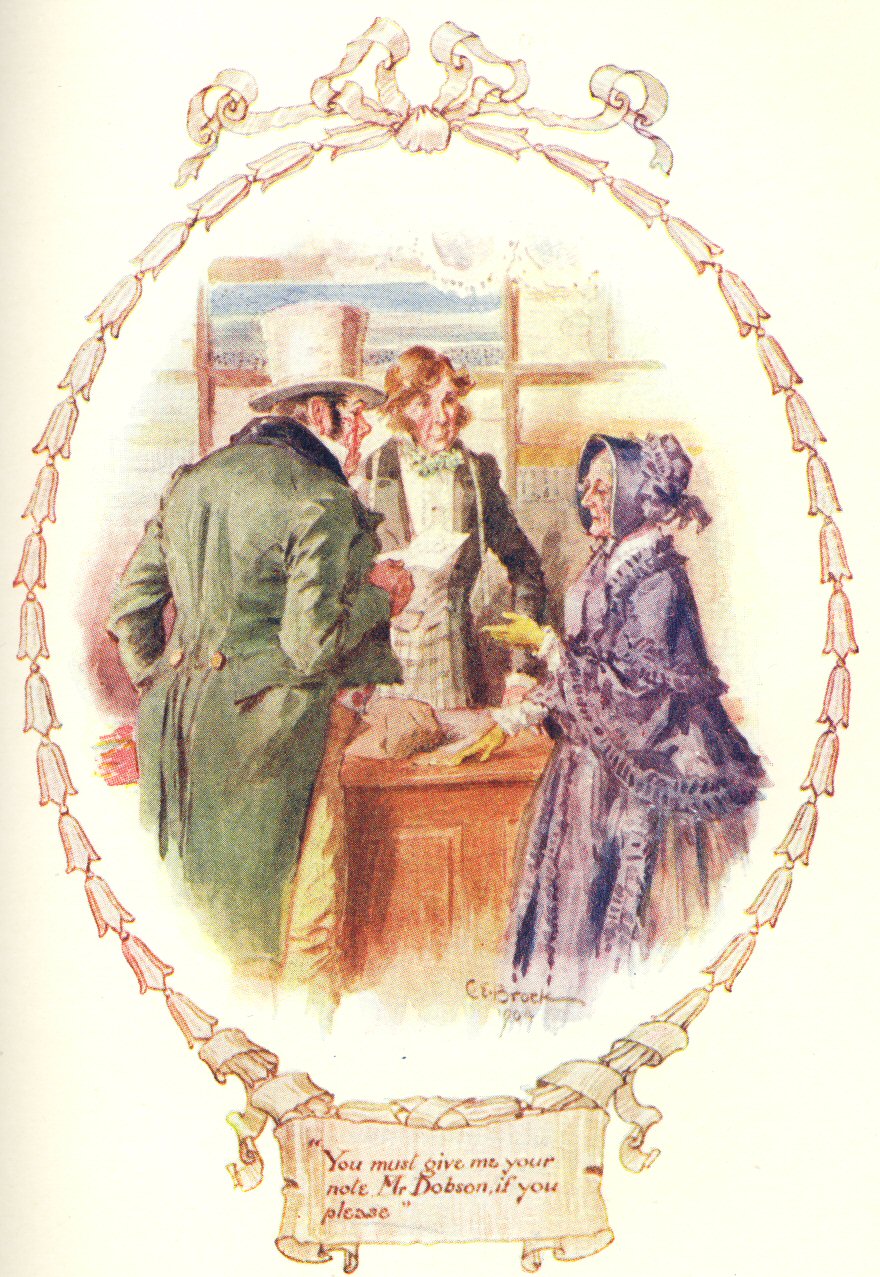
“Why, then it will only have been common honesty in me, as a shareholder, to have given this good man the money. I am quite clear about it in my own mind; but, you know, I can never speak quite as comprehensibly as others can, only you must give me your note, Mr Dobson, if you please, and go on with your purchases with these sovereigns.”
“Why, then, as a shareholder, I have only done the honest thing by giving this good man the money. I am quite sure of that in my own mind. But, you know, I can never explain myself as clearly as others can. Please give me your note, Mr Dobson, and go on with your purchases using these sovereigns.”
The man looked at her with silent gratitude—too awkward to put his thanks into words; but he hung back for a minute or two, fumbling with his note.
The man looked at her with silent gratitude, too awkward to put his thanks into words. But he lingered for a minute or two, fumbling with his note.
“I’m loth to make another one lose instead of me, if it is a loss; but, you see, five pounds is a deal of money to a man with a family; and, as you say, ten to one in a day or two the note will be as good as gold again.”
“I’m reluctant to let someone else take the loss instead of me, if there is a loss. But five pounds is a lot of money for a man with a family. And, as you say, the note will most likely be as good as gold again in a day or two.”
“No hope of that, my friend,” said the shopman.
“No chance of that, my friend,” said the shopkeeper.
“The more reason why I should take it,” said Miss Matty quietly. She pushed her sovereigns towards the man, who slowly laid his note down in exchange. “Thank you. I will wait a day or two before I purchase any of these silks; perhaps you will then have a greater choice. My dear, will you come upstairs?”
“That’s all the more reason for me to take it,” said Miss Matty quietly. She pushed her sovereigns towards the man. He slowly put down his note in exchange. “Thank you. I’ll wait a day or two before I buy any of these silks. Perhaps you’ll have a wider selection then. My dear, will you come upstairs?”
We inspected the fashions with as minute and curious an interest as if the gown to be made after them had been bought. I could not see that the little event in the shop below had in the least damped Miss Matty’s curiosity as to the make of sleeves or the sit of skirts. She once or twice exchanged congratulations with me on our private and leisurely view of the bonnets and shawls; but I was, all the time, not so sure that our examination was so utterly private, for I caught glimpses of a figure dodging behind the cloaks and mantles; and, by a dexterous move, I came face to face with Miss Pole, also in morning costume (the principal feature of which was her being without teeth, and wearing a veil to conceal the deficiency), come on the same errand as ourselves. But she quickly took her departure, because, as she said, she had a bad headache, and did not feel herself up to conversation.
We studied the fashions with the same close, curious interest as if the fabric for a dress based on them had already been bought. The little incident in the shop downstairs had not, as far as I could see, dampened Miss Matty’s curiosity about sleeve styles or the fit of skirts. Once or twice she congratulated us on having a private, leisurely look at the bonnets and shawls. But I was never quite sure that we were looking in complete privacy. I caught glimpses of a figure dodging behind the cloaks and mantles. With a clever move, I came face to face with Miss Pole, who had come on the same errand as we had. She too was dressed for the morning. The main feature of her appearance was that she had no teeth and wore a veil to hide the fact. But she left quickly because, as she said, she had a bad headache and did not feel up to conversation.
As we came down through the shop, the civil Mr Johnson was awaiting us; he had been informed of the exchange of the note for gold, and with much good feeling and real kindness, but with a little want of tact, he wished to condole with Miss Matty, and impress upon her the true state of the case. I could only hope that he had heard an exaggerated rumour for he said that her shares were worse than nothing, and that the bank could not pay a shilling in the pound. I was glad that Miss Matty seemed still a little incredulous; but I could not tell how much of this was real or assumed, with that self-control which seemed habitual to ladies of Miss Matty’s standing in Cranford, who would have thought their dignity compromised by the slightest expression of surprise, dismay, or any similar feeling to an inferior in station, or in a public shop. However, we walked home very silently. I am ashamed to say, I believe I was rather vexed and annoyed at Miss Matty’s conduct in taking the note to herself so decidedly. I had so set my heart upon her having a new silk gown, which she wanted sadly; in general she was so undecided anybody might turn her round; in this case I had felt that it was no use attempting it, but I was not the less put out at the result.
As we came down through the shop, the courteous Mr Johnson was waiting for us. He had been told that the banknote had been exchanged for gold. With genuine warmth and kindness, but rather little tact, he wanted to offer Miss Matty his sympathy. He also wanted to make sure she understood the situation. I could only hope that the rumour he had heard was exaggerated. He said her shares were worse than worthless, and that the bank could not pay even a shilling for each pound it owed. I was glad that Miss Matty still seemed a little doubtful. But I could not tell how much of her doubt was genuine and how much she was pretending. Ladies of Miss Matty’s standing in Cranford seemed accustomed to controlling themselves. They would have thought it beneath their dignity to show the slightest surprise, dismay, or similar feeling to someone of lower social standing, or in a public shop. We walked home very silently. I am ashamed to say that I believe I was rather annoyed with Miss Matty. She had decided so firmly to keep the banknote for herself. I had set my heart on her having a new silk gown, which she badly needed. Usually she was so indecisive that anyone could make her change her mind. In this case, I had felt there was no use trying, but I was no less upset by the result.
Somehow, after twelve o’clock, we both acknowledged to a sated curiosity about the fashions, and to a certain fatigue of body (which was, in fact, depression of mind) that indisposed us to go out again. But still we never spoke of the note; till, all at once, something possessed me to ask Miss Matty if she would think it her duty to offer sovereigns for all the notes of the Town and County Bank she met with? I could have bitten my tongue out the minute I had said it. She looked up rather sadly, and as if I had thrown a new perplexity into her already distressed mind; and for a minute or two she did not speak. Then she said—my own dear Miss Matty—without a shade of reproach in her voice—
Somehow, after twelve o’clock, we both admitted that we had seen enough of the fashions. We also felt physically tired (though we were really low in spirits), so we did not want to go out again. But we still never spoke of the note. Then, all at once, something prompted me to ask Miss Matty a question. Would she think it her duty to offer sovereigns for all the Town and County Bank notes she came across? I could have bitten my tongue out as soon as I said it. She looked up rather sadly, as if I had added a new worry to her already troubled mind. For a minute or two, she said nothing. Then my own dear Miss Matty spoke, without a trace of reproach in her voice:
“My dear, I never feel as if my mind was what people call very strong; and it’s often hard enough work for me to settle what I ought to do with the case right before me. I was very thankful to—I was very thankful, that I saw my duty this morning, with the poor man standing by me; but it’s rather a strain upon me to keep thinking and thinking what I should do if such and such a thing happened; and, I believe, I had rather wait and see what really does come; and I don’t doubt I shall be helped then if I don’t fidget myself, and get too anxious beforehand. You know, love, I’m not like Deborah. If Deborah had lived, I’ve no doubt she would have seen after them, before they had got themselves into this state.”
“My dear, I never feel that my mind is what people call very strong. It’s often hard enough for me to decide what I ought to do about the situation right in front of me. I was very thankful to, I was very thankful that I saw my duty this morning, with the poor man standing beside me. But it’s rather a strain to keep thinking about what I should do if this or that happened. I believe I’d rather wait and see what really happens. And I don’t doubt I’ll be helped then, if I don’t worry myself and become too anxious beforehand. You know, love, I’m not like Deborah. If Deborah had lived, I’ve no doubt she would have looked after them before they got themselves into this state.”
We had neither of us much appetite for dinner, though we tried to talk cheerfully about indifferent things. When we returned into the drawing-room, Miss Matty unlocked her desk and began to look over her account-books. I was so penitent for what I had said in the morning, that I did not choose to take upon myself the presumption to suppose that I could assist her; I rather left her alone, as, with puzzled brow, her eye followed her pen up and down the ruled page. By-and-by she shut the book, locked the desk, and came and drew a chair to mine, where I sat in moody sorrow over the fire. I stole my hand into hers; she clasped it, but did not speak a word. At last she said, with forced composure in her voice, “If that bank goes wrong, I shall lose one hundred and forty-nine pounds thirteen shillings and fourpence a year; I shall only have thirteen pounds a year left.” I squeezed her hand hard and tight. I did not know what to say. Presently (it was too dark to see her face) I felt her fingers work convulsively in my grasp; and I knew she was going to speak again. I heard the sobs in her voice as she said, “I hope it’s not wrong—not wicked—but, oh! I am so glad poor Deborah is spared this. She could not have borne to come down in the world—she had such a noble, lofty spirit.”
Neither of us had much appetite for dinner, though we tried to talk cheerfully about unimportant things. When we returned to the drawing room, Miss Matty unlocked her desk and began looking over her account books. I was so sorry for what I had said that morning that I did not presume I could help her. Instead, I left her alone as she frowned, following her pen up and down the lined page. After a while, she closed the book, locked the desk, and pulled a chair up beside mine. I sat by the fire, deep in sorrow. I slipped my hand into hers. She clasped it but said nothing. At last she spoke, her voice forcedly calm. “If that bank fails, I shall lose one hundred and forty-nine pounds thirteen shillings and fourpence a year. I shall have only thirteen pounds a year left.” I squeezed her hand tightly. I did not know what to say. Soon I felt her fingers twitch in my grasp. It was too dark to see her face, but I knew she was going to speak again. I could hear her sobbing as she said, “I hope it’s not wrong, not wicked, but, oh! I am so glad poor Deborah was spared this. She could not have borne the loss of her standing in the world. She had such a noble, proud spirit.”
This was all she said about the sister who had insisted upon investing their little property in that unlucky bank. We were later in lighting the candle than usual that night, and until that light shamed us into speaking, we sat together very silently and sadly.
That was all she said about the sister who had insisted on investing their small savings in that ill-fated bank. We lit the candle later than usual that night. Until its light made us feel ashamed enough to speak, we sat together in sad silence.
However, we took to our work after tea with a kind of forced cheerfulness (which soon became real as far as it went), talking of that never-ending wonder, Lady Glenmire’s engagement. Miss Matty was almost coming round to think it a good thing.
However, after tea we returned to our work with a kind of forced cheerfulness. Before long, our cheerfulness became genuine, as far as it went. We talked about the subject that never ceased to amaze us, Lady Glenmire’s engagement. Miss Matty was almost beginning to think the engagement was a good thing.
“I don’t mean to deny that men are troublesome in a house. I don’t judge from my own experience, for my father was neatness itself, and wiped his shoes on coming in as carefully as any woman; but still a man has a sort of knowledge of what should be done in difficulties, that it is very pleasant to have one at hand ready to lean upon. Now, Lady Glenmire, instead of being tossed about, and wondering where she is to settle, will be certain of a home among pleasant and kind people, such as our good Miss Pole and Mrs Forrester. And Mr Hoggins is really a very personable man; and as for his manners, why, if they are not very polished, I have known people with very good hearts and very clever minds too, who were not what some people reckoned refined, but who were both true and tender.”
“I don’t mean to deny that men can be troublesome in a house. I don’t say that from my own experience, because my father was perfectly neat. He wiped his shoes when he came in as carefully as any woman. But a man does have a kind of knowledge about what to do in difficult situations. It is very pleasant to have one nearby to rely on. Now Lady Glenmire will no longer be pushed about, wondering where she will settle. She can be sure of a home among pleasant, kind people, such as our good Miss Pole and Mrs Forrester. And Mr Hoggins is really a very presentable man. As for his manners, well, if they are not very polished, I have known people who were not considered refined by some. Yet they had very good hearts and very clever minds, and they were both true and tender.”
She fell off into a soft reverie about Mr Holbrook, and I did not interrupt her, I was so busy maturing a plan I had had in my mind for some days, but which this threatened failure of the bank had brought to a crisis. That night, after Miss Matty went to bed, I treacherously lighted the candle again, and sat down in the drawing-room to compose a letter to the Aga Jenkyns, a letter which should affect him if he were Peter, and yet seem a mere statement of dry facts if he were a stranger. The church clock pealed out two before I had done.
She drifted into a gentle daydream about Mr Holbrook, and I did not interrupt her. I was too busy developing a plan I had been considering for some days. The bank’s threatened failure had now brought the matter to a crisis. That night, after Miss Matty went to bed, I secretly relit the candle. I sat down in the drawing-room to write a letter to the Aga Jenkyns. I wanted the letter to move him if he were Peter, but seem like a dry statement of facts if he were a stranger. The church clock struck two before I had finished.
The next morning news came, both official and otherwise, that the Town and County Bank had stopped payment. Miss Matty was ruined.
The next morning, news came from official and unofficial sources that the Town and County Bank had stopped making payments. Miss Matty was ruined.
She tried to speak quietly to me; but when she came to the actual fact that she would have but about five shillings a week to live upon, she could not restrain a few tears.
She tried to speak calmly to me. But when she came to the fact that she would have only about five shillings a week to live on, she could not hold back a few tears.
“I am not crying for myself, dear,” said she, wiping them away; “I believe I am crying for the very silly thought of how my mother would grieve if she could know; she always cared for us so much more than for herself. But many a poor person has less, and I am not very extravagant, and, thank God, when the neck of mutton, and Martha’s wages, and the rent are paid, I have not a farthing owing. Poor Martha! I think she’ll be sorry to leave me.”
“I’m not crying for myself, dear,” she said, wiping away her tears. “I think I’m crying over a very silly thought. My mother would grieve if she knew. She always cared so much more for us than for herself. But many poor people have less, and I’m not very extravagant. Thank God, once I’ve paid for the neck of mutton, Martha’s wages, and the rent, I don’t owe a penny. Poor Martha! I think she’ll be sorry to leave me.”
Miss Matty smiled at me through her tears, and she would fain have had me see only the smile, not the tears.
Miss Matty smiled at me through her tears. She wished I would see only the smile, not the tears.