12
Maturity and Old Age
Because the community makes no distinction between unmarried girls and the wives of untitled men in the demands which it makes upon them, and because there is seldom any difference in sex experience between the two groups, the dividing line falls not between married and unmarried but between grown women and growing girls in industrial activity and between the wives of matais and their less important sisters in ceremonial affairs. The girl of twenty-two or twenty-three who is still unmarried loses her laissez faire attitude. Family pressure is an effective cause in bringing about this change. She is an adult, as able as her married sisters and her brothers’ young wives; she is expected to contribute as heavily as they to household undertakings. She lives among a group of contemporaries upon whom the responsibilities of marriage are making increased demands. Rivalry and emulation enter in. And also she may be becoming a little anxious about her own marital chances. The first preoccupation with sex experimentation has worn itself out and she settles down to increase her value as a wife. In native theory a girl knows how to sew thatch, but doesn’t really make thatch until she is married. In actual practice the adult unmarried girls perform household and agricultural tasks identical with those performed by their married sisters, except that whereas pregnancy and nursing children tie the young married women to the house, the unmarried girls are free to go off on long fishing expeditions, or far inland in search of weaving materials.
The community makes the same demands on unmarried girls as on the wives of men without titles. The two groups also seldom differ in sexual experience. So the dividing line in work falls between grown women and girls still growing up, not between married and unmarried women. In ceremonial matters, the divide is between the wives of matais and their less important sisters. An unmarried girl of twenty-two or twenty-three loses her carefree attitude. Family pressure helps bring about this change. She is an adult, as capable as her married sisters and her brothers’ young wives. She is expected to contribute as much as these women to household work. She lives among people her own age who face growing demands from the responsibilities of marriage. Competition and the desire to match others play a part. She may also be growing a little anxious about her own chances of marriage. Her initial preoccupation with sexual experimentation has faded, and she settles down to increase her value as a wife. In the local view, a girl knows how to sew thatch but does not really make thatch until she marries. In practice, adult unmarried girls do the same household and farming tasks as their married sisters. But pregnancy and nursing children keep young married women close to home. Unmarried girls, by contrast, are free to take long fishing trips or travel far inland to find weaving materials.
A married couple may live either in the household of the girl or of the boy, choice being made on the basis of rank, or the industrial needs of the two households. The change of residence makes much less difference to the girl than to the boy. A married woman’s life is lived in such a narrow sphere that her only associates are the women of her household. Residence in her husband’s village instead of her own does not narrow her life, for her participation in village affairs will remain slight and unimportant until her husband assumes a title which confers status upon her also. If her husband’s household is in her own village, her responsibilities will be increased somewhat because she will be subject to continual demands from her own near relatives as well as from those of her husband.
A married couple may live with either the wife’s household or the husband’s. The choice depends on rank or the work needs of the two households. The change of home makes much less difference to the woman than to the man. A married woman’s life is so restricted that she associates only with the women of her household. Living in her husband’s village rather than her own does not further restrict her life. This is because her role in village affairs will remain small and unimportant until her husband takes a title. His title gives her status too. If her husband’s household is in her own village, her responsibilities will increase somewhat. This is because she will face constant demands from her own close relatives as well as her husband’s.
There is no expectation of conflict between daughter-in-law and mother-in-law. The mother-in-law must be respected because she is an elder of the household and an insolent daughter-in-law is no more tolerated than an insubordinate daughter or niece. But tales of the traditional lack of harmony which exists in our civilisation were treated by the Samoans with contemptuous amusement. Where the emotional ties between parents and children are so weak, it was impossible to make them see it as an issue between a man’s mother and man’s wife, in which jealousy played a part. They saw it simply as failure on the part of the young and unimportant person to pay proper respect to the old, granting of course that there were always irascible old people from whom it was expedient to move away. The same thing holds true for the young man, if he goes to live in his father-in-law’s house. If the father-in-law is the matai, he has complete authority over his daughter’s husband; if he is only an untitled old man, he must still be treated with respect.
No one expects conflict between a daughter-in-law and her mother-in-law. The mother-in-law must be respected because she is an elder in the household. A rude daughter-in-law is no more tolerated than a disobedient daughter or niece. But Samoans greeted stories of the familiar discord in our society with scornful amusement. Because emotional ties between parents and children were so weak, Samoans could not understand such conflict as jealousy. They could not see it as a rivalry between a man’s mother and his wife. Samoans saw the conflict simply as a young, unimportant person failing to show proper respect for an older person. They acknowledged, of course, that some old people were always bad-tempered and best moved away from. The same applies to a young man if he goes to live in his father-in-law’s house. If the father-in-law is the matai, he has complete authority over his daughter’s husband. If the father-in-law is only an old man without a title, he must still be treated with respect.
But change of village for the young man makes a great difference, because he must take his place in a new Aumaga, and work with strangers instead of with the boys with whom he has worked and played since childhood. Very often he never becomes as thoroughly assimilated to the new group as he was to the old. He stands more upon his dignity. He works with his new companions but does not play with them. The social life of the Aumaga centres about the group courtesies which they pay to visiting girls. In his own village a man will accompany the younger boys on these occasions for many years after he is married. But in his wife’s village, such behaviour becomes suddenly less appropriate. Random amatory adventures are also more hazardous when he is living as a member of his wife’s household. And although his transition from the status of a young man to the status of a matai is easier, he ages more quickly; although he may earn great respect in his adopted village, he commands less of its affection.
But moving to another village makes a great difference for a young man. He must join a new Aumaga and work with strangers instead of his childhood companions in work and play. Very often, he never fits into the new group as fully as he did the old one. He is more concerned with maintaining his dignity. He works with his new companions but does not play with them. The social life of the Aumaga centres on the courtesies the group offers to visiting girls. In his own village, a man will join the younger boys on these occasions for many years after marrying. But in his wife’s village, such behaviour suddenly becomes less appropriate. Casual romantic adventures are also riskier when he lives as a member of his wife’s household. And although his transition from young man to matai is easier, he ages more quickly. Although he may earn great respect in his adopted village, he receives less affection from its people.
In most marriages there is no sense of setting up a new and separate establishment. The change is felt in the change of residence for either husband or wife and in the reciprocal relations which spring up between the two families. But the young couple live in the main household, simply receiving a bamboo pillow, a mosquito net and a pile of mats for their bed. Only for the chief or the chief’s son is a new house built. The wife works with all the women of the household and waits upon all the men. The husband shares the enterprises of the other men and boys. Neither in personal service given or received are the two marked off as a unit. Nor does marriage of either brother or sister slacken the avoidance rules; it merely adds another individual, the new sister or brother-in-law, to whom the whole series of avoidances must be applied. In the sexual relation alone are the two treated as one. For even in the care of the young children and in the decisions as to their future, the uncles and aunts and grandparents participate as fully as the parents. It is only when a man is matai as well as father, that he has control over his own children; and when this is so, the relationship is blurred in opposite fashion, for he has the same control over many other young people who are less closely related to him. The pregnant young wife is surrounded by a multitude of taboos, most of which are prohibitions against solitary activities. She must not walk alone, sit alone, dance alone, gather food alone, eat alone, or when only her husband is present. All of these taboos are explained by the amiable doctrine that only things which are wrong are done in solitude and that any wrong deed committed by the expectant mother will injure the child. It seems simpler to prohibit solitary acts than wrong ones. There are also ghosts which are particularly likely to injure the pregnant woman, and she is warned against walking in ghost-ridden places. She is warned against doing too heavy work and against getting chilled or overheated. While pregnancy is not treated with anything like the consideration which is often given it here, her first pregnancy gives a woman a certain amount of social prominence. This prominence is in direct proportion to her rank, and the young wife whose child is the presumptive heir to some high title is watched over with great solicitude. Relatives gather from great distances for the confinement and birth feast, which is described as the mother’s feast, rather than the feast in honour of either child or father.
In most marriages, there is no sense of starting a new, separate household. The change is felt when either husband or wife moves, and through the mutual ties formed between their families. But the young couple live in the main household. They receive only a bamboo pillow, a mosquito net, and a pile of mats for their bed. A new house is built only for the chief or the chief’s son. The wife works with all the household’s women and serves all the men. The husband joins in the activities of the other men and boys. The personal services the couple give and receive do not set them apart as a unit. Nor does a brother’s or sister’s marriage relax the rules requiring certain relatives to avoid one another. Marriage simply adds another person, the new sister-in-law or brother-in-law, to whom all these rules apply. Only in their sexual relationship are the couple treated as one. Even in caring for young children and deciding their future, uncles, aunts, and grandparents participate as fully as parents. Only when a man is both matai and father does he have authority over his own children. Even then, the father’s role is blurred in the opposite way. He has the same authority over many other young people who are less closely related to him. The pregnant young wife is surrounded by many taboos, most of which forbid doing things alone. She must not walk alone, sit alone, dance alone, gather food alone, or eat alone or with only her husband present. All these taboos are explained by the pleasant belief that only wrong things are done alone. According to this belief, any wrong act by the expectant mother will harm the child. It seems simpler to forbid solitary acts than wrong ones. There are also ghosts especially likely to harm pregnant women. A pregnant woman is warned against walking in places haunted by ghosts. She is also warned against working too hard and getting chilled or overheated. Although pregnancy receives nothing like the consideration often given to it here, a woman’s first pregnancy brings some social prominence. This prominence is directly proportional to her rank. A young wife whose child is expected to inherit a high title is watched over with great care. Relatives travel great distances to be present for the birth and the birth feast. The feast is described as the mother’s feast, rather than a feast honoring either the child or the father.
After the birth of the first child, the other children arrive frequently and with small remark. Old gossips count them and comment on the number living, dead or miscarried in previous births. A pig is roasted for the birth feast to which only the near relatives are invited. The mother of many children is rather taken for granted than praised. The barren woman is mildly execrated and her misfortune attributed to loose living. There were three barren older women on Taū; all three were midwives and reputed to be very wise. Now well past the child-bearing age, they were reaping the reward of the greater application to the intricacies of their calling with which they had compensated for their barrenness.
After the first child is born, more children arrive frequently and attract little comment. Old gossips count them and discuss how many from earlier pregnancies are living, dead, or were miscarried. A pig is roasted for the birth feast, and only close relatives are invited. A mother of many children is taken for granted rather than praised. A woman who cannot have children is mildly condemned, and her misfortune is blamed on loose living. There were three older women on Taū who could not have children. All three were midwives and were thought to be very wise. Now well past childbearing age, these women were reaping the rewards of their greater attention to their work's complexities. They had devoted this extra effort to their work to compensate for their inability to have children.
The young married women of twenty to thirty are a busy, cheerful group. They become church members and wear hats to church. When they have not a baby at the breast, they are doing heavy work on the plantations, fishing or making tapa. No other important event will ever happen to them again. If their husbands die, they will probably take new husbands, and those of lower rank. If their husbands become matais, they will also acquire a place in the fono of the women. But it is only the woman with a flair for political wire-pulling and the luck to have either important relatives or an important husband who gets any real satisfaction out of the social organisation of the village.
Young married women aged twenty to thirty are a busy, cheerful group. They become church members and wear hats to church. When they are not breastfeeding a baby, they do heavy work on the plantations, fish, or make tapa. No other important event will ever happen to them again. If their husbands die, they will probably marry again, choosing husbands of lower rank. If their husbands become matais, the women will also gain a place in the women’s fono. But only certain women get any real satisfaction from the village’s social organization. These women have a talent for behind-the-scenes political maneuvering and the luck to have important relatives or an important husband.
The young men do not settle as early into a groove. What her first child is to a woman his title is to a man, and while each new child is less of an event in her life, a new title is always a higher one and a greater event in his. A man rarely attains his first title before he is thirty, often not before he is forty. All the years between his entrance into the Aumaga and his entrance into the Fono are years of striving. He cannot acquire a reputation and then rest upon it or another claimant to the same title will take advantage of his indolence and pass him in the race. One good catch of fish does not make him a fisherman nor one housebeam neatly adzed, a carpenter; the whole emphasis is upon a steady demonstration of increasing skill which will be earnest of the necessary superiority over his fellows. Only the lazy, the shiftless, the ambitionless fail to respond to this competition. The one exception to this is in the case of the son or heir of the high chief who may be made the manaia at twenty. But here his high rank has already subjected him to more rigorous discipline and careful training than the other youths, and as manaia, he is the titular head of the Aumaga, and must lead it well or lose his prestige.
Young men do not settle into a routine as early. A man's title means as much to him as a woman's first child means to her. But while each new child is less of an event in her life, each new title is a higher one. Each new title is also a greater event in his life. A man rarely gains his first title before thirty, and often not before forty. All the years between his entry into the Aumaga and his entry into the Fono are years of striving. He cannot build a reputation and then rest on it. If he does, another contender for the same title will take advantage of his idleness and overtake him. One good catch of fish does not make him a fisherman. Nor does shaping one house beam neatly with an adze make him a carpenter. The emphasis is entirely on steadily showing increasing skill as evidence of the necessary superiority over his peers. Only the lazy, the irresponsible, and those without ambition fail to respond to this competition. The one exception is the son or heir of the high chief, who may become the manaia at twenty. But his high rank has already subjected him to stricter discipline and more careful training than other young men receive. As manaia, he is the official head of the Aumaga and must lead the group well or lose his prestige.
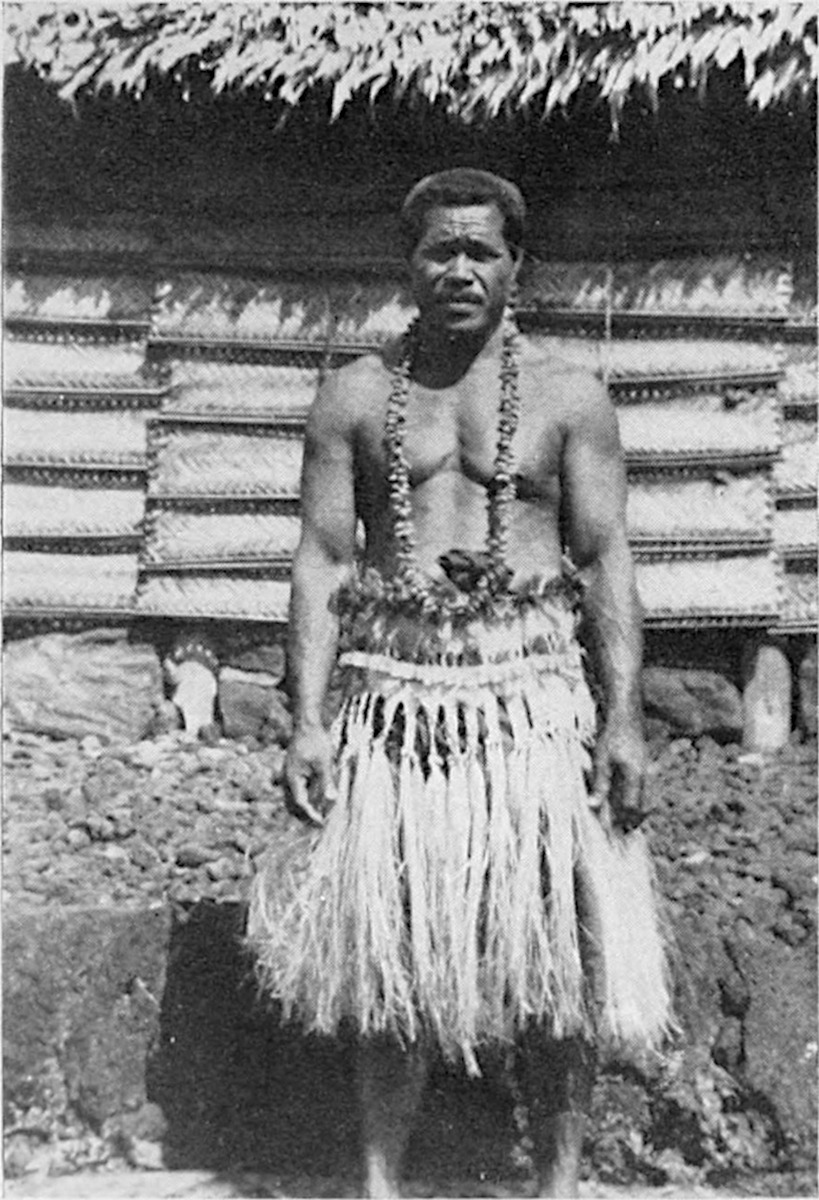
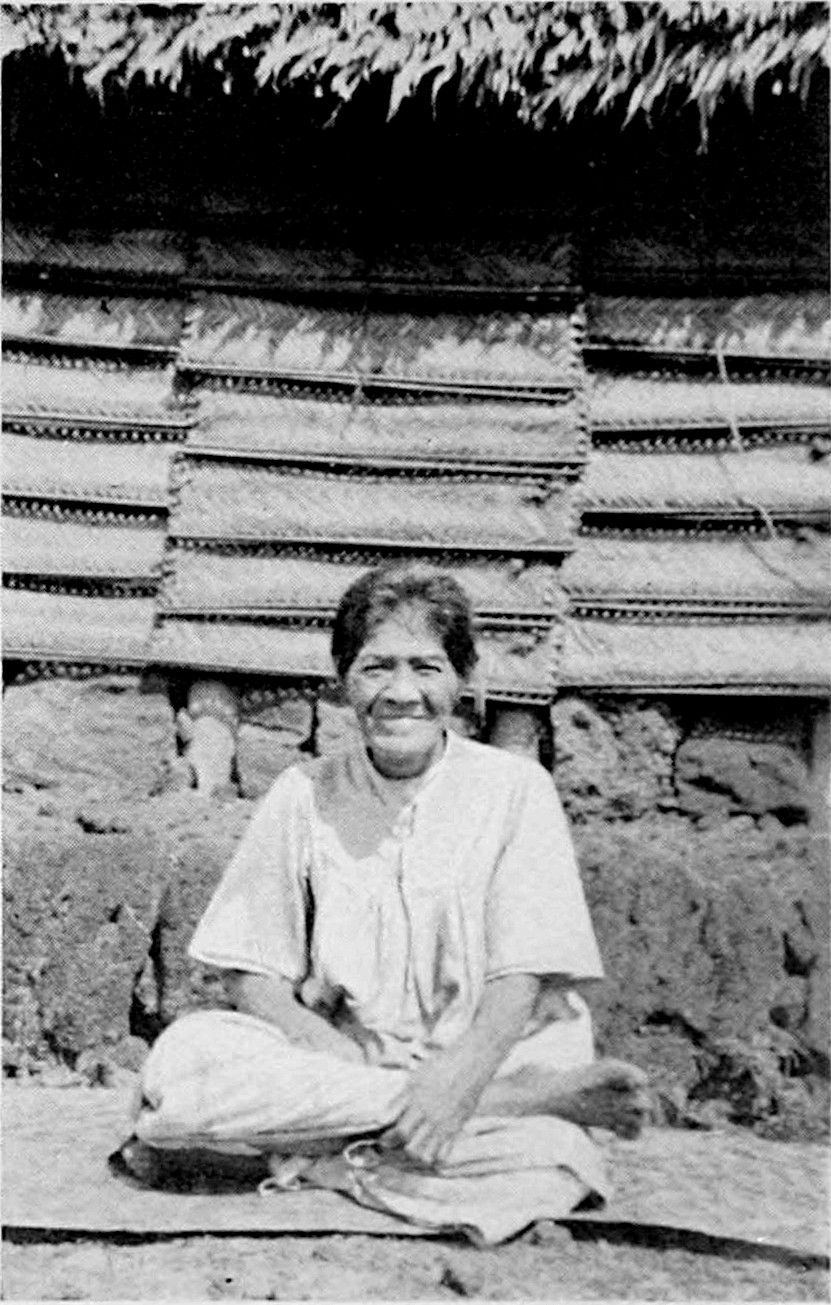
Once having acquired a matai name and entered the Fono, differences in temperament prevail. The matai name he receives may be a very small one, carrying with it no right to a post in the council house, or other prerogatives. It may be so small that matai though he is, he does not try to command a household, but lives instead in the shadow of some more important relative. But he will be a member of the Fono, classed with the elders of the village, and removed forever from the hearty group activities of the young men. Should he become a widower and wish to court a new wife, he can only do so by laying aside his matai name and entering her house under the fiction that he is still a youth. His main preoccupation is the affairs of the village; his main diversion, hours spent in ceremonious argument in some meeting. He always carries his bundle of beaten cocoanut fibre and as he talks, he rolls the fibres together on his bare thigh.
Once a man has acquired a matai name and joined the Fono, differences in temperament take over. The matai name he receives may be a very minor one. It may carry no right to a place at a post in the council house or other privileges. The name may be so minor that, although he is a matai, he does not try to lead a household. Instead, he lives in the shadow of some more important relative. But he will be a member of the Fono, counted among the village elders. He will be forever separated from the young men’s lively group activities. If he becomes a widower and wishes to court a new wife, he can only do so by setting aside his matai name. He must enter her house under the pretense that he is still a young man. His main concern is village affairs. His main recreation is spending hours in formal debate at meetings. He always carries his bundle of beaten coconut fiber. As he talks, he rolls the fibers together on his bare thigh.
The less ambitious rest upon this achievement. The more ambitious continue the game, for higher titles, for greater prestige as craftsmen or orators, for the control of more strings in the political game. At last the preference for the most able, the very preference which, in defiance of laws of primogeniture or direct descent, may have given a man his title, takes it away from him. For should he live beyond his prime, fifty-five or sixty, his name is taken from him and given to another, and he is given a “little matai name,” so that he may still sit with the other matais and drink his kava. These old men stay at home, guard the house while the others go inland to the plantations, superintend the children, braid cinet and give advice, or in a final perverse assertion of authority, fail to give it. One young chief who had been given his father’s name during his father’s lifetime, complained to me: “I had no old man to help me. My father was angry that his title was given to me and he would tell me nothing. My mother was wise but she came from another island and did not know well the ancient ways of our village. There was no old one in the house to sit with me in the evening and fill my ears with the things from the olden time. A young matai should always have an old man beside him, who, even though he is deaf and cannot always hear his questions, can still tell him many things.”
The less ambitious are content with this achievement. The more ambitious keep playing the game, seeking higher titles and greater standing as craftsmen or speakers. They also seek to pull more strings in politics. In the end, the preference for the most capable takes a man’s title away. That same preference may have earned him the title, despite rules favoring firstborn sons or direct descendants. For if he lives beyond his prime, past fifty-five or sixty, his name is taken away and given to another. He receives a “little matai name,” so he can still sit with the other matais and drink his kava. These old men stay home and guard the house while the others go inland to the plantations. They watch over the children, braid cinet, and give advice. Or, in a final, contrary show of authority, they refuse to give advice. One young chief had received his father’s name while his father was still alive. He complained to me: “I had no old man to help me. My father was angry that his title had been given to me, and he would tell me nothing. My mother was wise, but she came from another island and did not know our village’s ancient customs well. There was no old person in the house to sit with me in the evening. No one could fill my ears with stories and knowledge from long ago. A young matai should always have an old man beside him. Even if the old man is deaf and cannot always hear his questions, he can still tell him many things.”
The women’s lives pursue a more even tenor. The wives of chiefs and talking chiefs have to give some time to the mastery of ceremonial. The old women who become midwives or doctors pursue their professions but seldom and in a furtive, private fashion. The menopause is marked by some slight temperamental instability, irritability, finickiness about food, a tendency to sudden whims and inexplicable fancies. Once past the menopause and relieved of child-bearing, a woman turns her attention again to the heavy work of the plantations. The hardest work of the village is done by women between forty-five and fifty-five. Then, as age approaches, she settles down to performing the skilled tasks in the household, to weaving and tapa making.
The women’s lives follow a steadier course. The wives of chiefs and talking chiefs must spend some time learning ceremonial practices. Older women who become midwives or doctors practice only rarely, and in a secretive, private way. Menopause brings some mild mood instability, irritability, fussiness about food, and a tendency toward sudden whims and unexplained fancies. Once past menopause and free from childbearing, a woman turns her attention back to heavy work on the plantations. Women between forty-five and fifty-five do the village’s hardest work. Then, as old age approaches, a woman settles into skilled household tasks, weaving and making tapa.
Where a man is disqualified from active work by rheumatism, elephantiasis, or general feebleness, his rôle as a teacher is diminished. He can teach the aspirant young fisherman the lore of fishing but not the technique. The old woman on the other hand is mistress of housebound crafts and to her must go the girl who is ambitious to become a skilled weaver. Another can gather the herbs which she needs for her medicines, while she keeps the secret of compounding them. The ceremonial burning of the candle-nut to obtain black dye is in the hands of very old women. And also these old women are usually more of a power within the household than the old men. The men rule partly by the authority conferred by their titles, but their wives and sisters rule by force of personality and knowledge of human nature. A life-long preoccupation within the smaller group makes them omniscient and tyrannical. They suffer no diminution of prestige except such as is inherent in the complete loss of their faculties.
When rheumatism, elephantiasis, or general weakness prevents a man from doing active work, his role as a teacher shrinks. He can teach a young man who wants to become a fisherman the lore of fishing, but not its techniques. An old woman, on the other hand, is an expert in crafts done at home. A girl who wants to become a skilled weaver must go to her. Someone else can gather the herbs the old woman needs for her medicines, while she keeps their preparation secret. Very old women oversee the ceremonial burning of candlenuts to make black dye. These old women also usually have more power within the household than old men. The men rule partly through the authority their titles give them. But their wives and sisters rule through force of personality and knowledge of human nature. A lifetime spent focused on the smaller group makes these women all-knowing and tyrannical. They lose no standing except through the complete loss of their faculties.
The feeling for generation is retained until death, and the very old people sit in the sun and talk softly without regard for taboo or sex.
The sense of belonging to a generation lasts until death. The very old sit in the sun and talk quietly, without regard for taboos or sex.