Nine chapters of short, numbered sections question the ideas of truth and morality that most people take for granted. One line warns that whoever fights monsters should take care not to become a monster.
230 pages 4h 28m reading time
One of Nietzsche's major works and a classic of modern philosophy.
Argues that morality is not a set of universal truths, and that values grow out of human drives, cultures and power.
Holds that every philosophy reflects the perspective and drives of its maker, so no one can claim a purely objective truth.
It shaped existentialism, psychoanalysis and later thinkers such as Michel Foucault.
Paid for it himself
No publisher would take it, so Nietzsche paid to print it, and only about 114 copies sold in a year.
Called a dangerous book
A Swiss review titled "Nietzsche's Dangerous Book" compared it to dynamite, which pleased Nietzsche.
Written in mountains and seaside
He wrote much of it in 1885 in the Swiss Alpine village of Sils-Maria and in Nice, by the sea.
A clearer second try
Readers had ignored "Thus Spoke Zarathustra," so he wrote this book partly to explain its ideas more plainly.


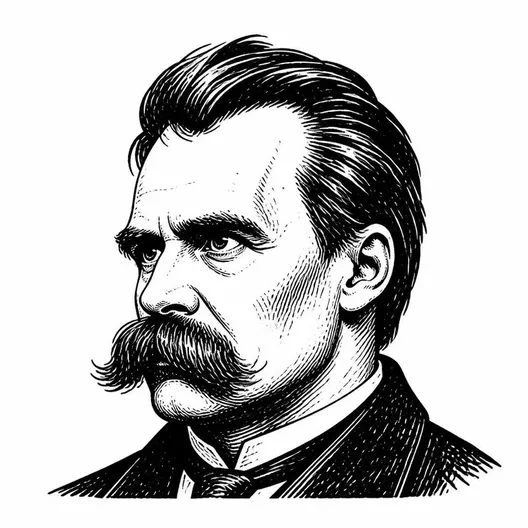 Friedrich Nietzsche 1886