Chapter 8
India’s Great Scientist, J.C. Bose
“Jagadis Chandra Bose’s wireless inventions antedated those of Marconi.”
“Jagadis Chandra Bose’s wireless inventions came before Marconi’s.”
Overhearing this provocative remark, I walked closer to a sidewalk group of professors engaged in scientific discussion. If my motive in joining them was racial pride, I regret it. I cannot deny my keen interest in evidence that India can play a leading part in physics, and not metaphysics alone.
After overhearing this provocative remark, I moved closer to a group of professors discussing science on the sidewalk. If racial pride was my reason for joining them, I regret it. I cannot deny my strong interest in evidence that India can lead in physics, not just metaphysics.
“What do you mean, sir?”
“What do you mean, sir?”
The professor obligingly explained. “Bose was the first one to invent a wireless coherer and an instrument for indicating the refraction of electric waves. But the Indian scientist did not exploit his inventions commercially. He soon turned his attention from the inorganic to the organic world. His revolutionary discoveries as a plant physiologist are outpacing even his radical achievements as a physicist.”
The professor readily explained. “Bose was the first to invent a wireless coherer and an instrument showing the refraction of electric waves. But the Indian scientist did not use his inventions for commercial gain. He soon shifted his attention from nonliving matter to living things. His groundbreaking discoveries in plant physiology are surpassing even his revolutionary achievements in physics.”
I politely thanked my mentor. He added, “The great scientist is one of my brother professors at Presidency College.”
I politely thanked my mentor. He added, “The great scientist is a fellow professor at Presidency College.”
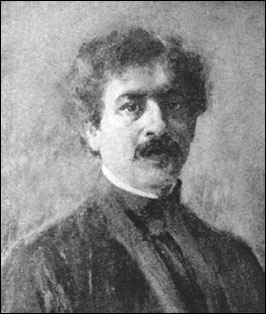
I paid a visit the next day to the sage at his home, which was close to mine on Gurpar Road. I had long admired him from a respectful distance. The grave and retiring botanist greeted me graciously. He was a handsome, robust man in his fifties, with thick hair, broad forehead, and the abstracted eyes of a dreamer. The precision in his tones revealed the lifelong scientific habit.
The next day, I visited the sage at his home, close to mine on Gurpar Road. I had long admired him from a respectful distance. The serious, reserved botanist welcomed me warmly. He was a handsome, sturdy man in his fifties. He had thick hair, a broad forehead, and the faraway eyes of a dreamer. His precise way of speaking reflected a lifetime of scientific practice.
“I have recently returned from an expedition to scientific societies of the West. Their members exhibited intense interest in delicate instruments of my invention which demonstrate the indivisible unity of all life. [^8] The Bose crescograph has the enormity of ten million magnifications. The microscope enlarges only a few thousand times; yet it brought vital impetus to biological science. The crescograph opens incalculable vistas.”
“I have recently returned from a trip to scientific societies in the West. Their members showed intense interest in delicate instruments I invented that demonstrate the indivisible unity of all life. [^8] The Bose crescograph magnifies ten million times. The microscope magnifies only a few thousand times, yet it gave biological science a vital boost. The crescograph opens up immeasurable possibilities.”
“You have done much, sir, to hasten the embrace of East and West in the impersonal arms of science.”
“You have done much, sir, to bring East and West together faster through the impersonal work of science.”
“I was educated at Cambridge. How admirable is the Western method of submitting all theory to scrupulous experimental verification! That empirical procedure has gone hand in hand with the gift for introspection which is my Eastern heritage. Together they have enabled me to sunder the silences of natural realms long uncommunicative. The telltale charts of my crescograph [^8] are evidence for the most skeptical that plants have a sensitive nervous system and a varied emotional life. Love, hate, joy, fear, pleasure, pain, excitability, stupor, and countless appropriate responses to stimuli are as universal in plants as in animals.”
“I was educated at Cambridge. How admirable is the Western practice of testing all theories through careful experiments! That scientific approach has worked alongside my gift for looking inward, part of my Eastern heritage. Together, these methods have enabled me to break the silence of parts of nature that had long remained uncommunicative. The revealing charts from my crescograph [^8] offer evidence even to the greatest skeptics. They show that plants have a sensitive nervous system and a varied emotional life. Love, hate, joy, fear, pleasure, pain, excitability, stupor, and countless appropriate responses to stimuli are as universal in plants as in animals.”
“The unique throb of life in all creation could seem only poetic imagery before your advent, Professor! A saint I once knew would never pluck flowers. ‘Shall I rob the rosebush of its pride in beauty? Shall I cruelly affront its dignity by my rude divestment?’ His sympathetic words are verified literally through your discoveries!”
“Before you came along, Professor, the unique pulse of life in all creation could seem like nothing more than poetry! A saint I once knew would never pick flowers. ‘Should I rob the rosebush of its pride in its beauty? Should I cruelly insult its dignity by roughly stripping away its flowers?’ Your discoveries confirm the literal truth of his compassionate words!”
“The poet is intimate with truth, while the scientist approaches awkwardly. Come someday to my laboratory and see the unequivocable testimony of the crescograph.”
“The poet knows truth closely, while the scientist approaches it awkwardly. Come to my laboratory someday and see the clear, undeniable evidence from the crescograph.”
Gratefully I accepted the invitation, and took my departure. I heard later that the botanist had left Presidency College, and was planning a research center in Calcutta.
I gratefully accepted the invitation and left. I later heard that the botanist had left Presidency College and was planning a research center in Calcutta.
When the Bose Institute was opened, I attended the dedicatory services. Enthusiastic hundreds strolled over the premises. I was charmed with the artistry and spiritual symbolism of the new home of science. Its front gate, I noted, was a centuried relic from a distant shrine. Behind the lotus [^8] fountain, a sculptured female figure with a torch conveyed the Indian respect for woman as the immortal light-bearer. The garden held a small temple consecrated to the Noumenon beyond phenomena. Thought of the divine incorporeity was suggested by absence of any altar-image.
When the Bose Institute opened, I attended the dedication ceremony. Hundreds of enthusiastic visitors strolled around the grounds. I was charmed by the artistry and spiritual symbolism of this new home of science. I noticed that the front gate was a centuries-old relic from a distant shrine. Behind the lotus [^8] fountain stood a sculpture of a woman holding a torch. The figure expressed India’s respect for woman as the immortal bearer of light. The garden held a small temple dedicated to the Noumenon, the reality beyond appearances. The absence of any image on the altar suggested the divine’s formless nature.
Bose’s speech on this great occasion might have issued from the lips of one of the inspired ancient rishis.
Bose’s speech on this great occasion could have come from one of the inspired ancient rishis.
“I dedicate today this Institute as not merely a laboratory but a temple.” His reverent solemnity stole like an unseen cloak over the crowded auditorium. “In the pursuit of my investigations I was unconsciously led into the border region of physics and physiology. To my amazement, I found boundary lines vanishing, and points of contact emerging, between the realms of the living and the non-living. Inorganic matter was perceived as anything but inert; it was athrill under the action of multitudinous forces.
“Today I dedicate this Institute not just as a laboratory but as a temple.” His reverent solemnity spread like an unseen cloak over the crowded auditorium. “As I pursued my research, I was led without realizing it to the boundary between physics and physiology. To my amazement, I found the boundaries between the living and the non-living disappearing, while connections between them emerged. Inorganic matter proved to be anything but inactive. It vibrated under the influence of countless forces.
“A universal reaction seemed to bring metal, plant and animal under a common law. They all exhibited essentially the same phenomena of fatigue and depression, with possibilities of recovery and of exaltation, as well as the permanent irresponsiveness associated with death. Filled with awe at this stupendous generalization, it was with great hope that I announced my results before the Royal Society- results demonstrated by experiments. But the physiologists present advised me to confine myself to physical investigations, in which my success had been assured, rather than encroach on their preserves. I had unwittingly strayed into the domain of an unfamiliar caste system and so offended its etiquette.
“A universal response seemed to bring metal, plants, and animals under a common law. All showed essentially the same signs of fatigue and depression, with the possibility of recovery and heightened activity. All also showed the permanent loss of responsiveness associated with death. I was awed by this sweeping conclusion and presented my results to the Royal Society with great hope. Experiments had demonstrated these results. But the physiologists present advised me to stick to physical research, where my success was assured. They told me not to intrude on their territory. Without realizing it, I had wandered into an unfamiliar caste system and broken its rules of etiquette.
“An unconscious theological bias was also present, which confounds ignorance with faith. It is often forgotten that He who surrounded us with this ever-evolving mystery of creation has also implanted in us the desire to question and understand. Through many years of miscomprehension, I came to know that the life of a devotee of science is inevitably filled with unending struggle. It is for him to cast his life as an ardent offering-regarding gain and loss, success and failure, as one.
“An unconscious religious bias was also present, confusing ignorance with faith. People often forget that he who surrounded us with creation’s ever-evolving mystery also gave us the desire to question and understand. Through many years of being misunderstood, I learned that a life devoted to science inevitably involves endless struggle. The scientist must make his life a passionate offering, treating gain and loss, success and failure, as one.
“In time the leading scientific societies of the world accepted my theories and results, and recognized the importance of the Indian contribution to science. [^8] Can anything small or circumscribed ever satisfy the mind of India? By a continuous living tradition, and a vital power of rejuvenescence, this land has readjusted itself through unnumbered transformations. Indians have always arisen who, discarding the immediate and absorbing prize of the hour, have sought for the realization of the highest ideals in life-not through passive renunciation, but through active struggle. The weakling who has refused the conflict, acquiring nothing, has had nothing to renounce. He alone who has striven and won can enrich the world by bestowing the fruits of his victorious experience.
“In time, the world’s leading scientific societies accepted my theories and results. They also recognized the importance of India’s contribution to science. [^8] Can anything small or limited ever satisfy the mind of India? Through an unbroken, living tradition and a powerful capacity for renewal, this land has adapted through countless transformations. Indians have always risen above the immediate, all-consuming rewards of the moment to pursue life’s highest ideals. They have pursued those ideals not through passive renunciation, but through active struggle. The weak person who has refused the struggle has gained nothing and therefore has had nothing to give up. Only someone who has struggled and won can enrich the world by sharing the fruits of his victorious experience.
“The work already carried out in the Bose laboratory on the response of matter, and the unexpected revelations in plant life, have opened out very extended regions of inquiry in physics, in physiology, in medicine, in agriculture, and even in psychology. Problems hitherto regarded as insoluble have now been brought within the sphere of experimental investigation.
“Research already done in the Bose laboratory on how matter responds has opened up vast new areas of study. Unexpected discoveries about plant life have done the same. These areas include physics, physiology, medicine, agriculture, and even psychology. Problems once considered impossible to solve can now be investigated through experiments.
“But high success is not to be obtained without rigid exactitude. Hence the long battery of super-sensitive instruments and apparatus of my design, which stand before you today in their cases in the entrance hall. They tell you of the protracted efforts to get behind the deceptive seeming into the reality that remains unseen, of the continuous toil and persistence and resourcefulness called forth to overcome human limitations. All creative scientists know that the true laboratory is the mind, where behind illusions they uncover the laws of truth.
“But great success requires strict precision. That is why I designed the many highly sensitive instruments and devices displayed before you today in the entrance hall. They stand in cases. These instruments reflect the long effort to see past deceptive appearances and reach the reality that remains unseen. They reflect the constant work, persistence, and resourcefulness needed to overcome human limitations. All creative scientists know that the mind is the true laboratory. There, scientists look beyond illusions to uncover the laws of truth.
“The lectures given here will not be mere repetitions of second-hand knowledge. They will announce new discoveries, demonstrated for the first time in these halls. Through regular publication of the work of the Institute, these Indian contributions will reach the whole world. They will become public property. No patents will ever be taken. The spirit of our national culture demands that we should forever be free from the desecration of utilizing knowledge only for personal gain.
“The lectures given here will not simply repeat second-hand knowledge. They will announce new discoveries, demonstrated for the first time in these halls. By regularly publishing the Institute’s work, we will bring these Indian contributions to the whole world. These contributions will become public property. No patents will ever be taken out. The spirit of our national culture demands that we never dishonor knowledge by using it only for personal gain.
“It is my further wish that the facilities of this Institute be available, so far as possible, to workers from all countries. In this I am attempting to carry on the traditions of my country. So far back as twenty-five centuries, India welcomed to its ancient universities, at Nalanda and Taxila, scholars from all parts of the world.
“I also want this Institute’s facilities to be available, as far as possible, to workers from all countries. By opening these facilities to them, I am trying to continue my country’s traditions. As far back as twenty-five centuries ago, India welcomed scholars from all parts of the world to its ancient universities. These universities were at Nalanda and Taxila.
“Although science is neither of the East nor of the West but rather international in its universality, yet India is specially fitted to make great contributions. [^8] The burning Indian imagination, which can extort new order out of a mass of apparently contradictory facts, is held in check by the habit of concentration. This restraint confers the power to hold the mind to the pursuit of truth with an infinite patience.”
“Although science belongs neither to the East nor to the West but to the whole world, India is especially well suited to make great contributions. [^8] The habit of concentration keeps the intense Indian imagination in check. Yet this imagination can draw new order from a mass of seemingly contradictory facts. Such restraint gives the mind the power to pursue truth with infinite patience.”
Tears stood in my eyes at the scientist’s concluding words. Is “patience” not indeed a synonym of India, confounding Time and the historians alike?
Tears filled my eyes as the scientist finished speaking. Isn’t “patience” truly another name for India, baffling both Time and historians?
I visited the research center again, soon after the day of opening. The great botanist, mindful of his promise, took me to his quiet laboratory.
I visited the research center again soon after it opened. The great botanist remembered his promise and took me to his quiet laboratory.
“I will attach the crescograph to this fern; the magnification is tremendous. If a snail’s crawl were enlarged in the same proportion, the creature would appear to be traveling like an express train!”
“I’ll attach the crescograph to this fern. The magnification is enormous. If a snail’s crawl were magnified just as much, the snail would appear to move like an express train!”
My gaze was fixed eagerly on the screen which reflected the magnified fern-shadow. Minute life-movements were now clearly perceptible; the plant was growing very slowly before my fascinated eyes. The scientist touched the tip of the fern with a small metal bar. The developing pantomime came to an abrupt halt, resuming the eloquent rhythms as soon as the rod was withdrawn.
I watched eagerly as the screen showed the fern’s magnified shadow. Tiny movements of life were now clearly visible. Before my fascinated eyes, the plant was growing very slowly. The scientist touched the fern’s tip with a small metal bar. The silent display of growth stopped abruptly, then resumed its expressive rhythms as soon as the bar was removed.
“You saw how any slight outside interference is detrimental to the sensitive tissues,” Bose remarked. “Watch; I will now administer chloroform, and then give an antidote.”
“You saw how even slight outside interference harms the sensitive tissues,” Bose said. “Watch. I’ll now give chloroform, followed by an antidote.”
The effect of the chloroform discontinued all growth; the antidote was revivifying. The evolutionary gestures on the screen held me more raptly than a “movie” plot. My companion (here in the role of villain) thrust a sharp instrument through a part of the fern; pain was indicated by spasmodic flutters. When he passed a razor partially through the stem, the shadow was violently agitated, then stilled itself with the final punctuation of death.
The chloroform stopped all growth. The antidote restored life. The movements unfolding on the screen fascinated me more than a “movie” plot. My companion (now playing the villain) pushed a sharp instrument through part of the fern. Spasmodic tremors indicated pain. When he cut partway through the stem with a razor, the shadow shook violently. Then the shadow grew still, with death providing the final punctuation.
“By first chloroforming a huge tree, I achieved a successful transplantation. Usually, such monarchs of the forest die very quickly after being moved.” Jagadis smiled happily as he recounted the life- saving maneuver. “Graphs of my delicate apparatus have proved that trees possess a circulatory system; their sap movements correspond to the blood pressure of animal bodies. The ascent of sap is not explicable on the mechanical grounds ordinarily advanced, such as capillary attraction. The phenomenon has been solved through the crescograph as the activity of living cells. Peristaltic waves issue from a cylindrical tube which extends down a tree and serves as an actual heart! The more deeply we perceive, the more striking becomes the evidence that a uniform plan links every form in manifold nature.”
“By first putting a huge tree under chloroform, I successfully transplanted it. Usually, such giants of the forest die very quickly after being moved.” Jagadis smiled happily as he described the lifesaving procedure. “Graphs from my sensitive instruments have proved that trees have a circulatory system. The movement of their sap corresponds to blood pressure in animal bodies. The usual mechanical explanations, such as capillary attraction, cannot explain how sap rises. The crescograph has shown that living cells cause sap to rise. Waves of muscular contraction come from a cylindrical tube extending down the tree. The tube serves as an actual heart! The more deeply we look, the more striking the evidence becomes. One common plan links every form in nature’s great variety.”
The great scientist pointed to another Bose instrument.
The great scientist pointed to another Bose instrument.
“I will show you experiments on a piece of tin. The life-force in metals responds adversely or beneficially to stimuli. Ink markings will register the various reactions.”
“I will show you experiments on a piece of tin. The life-force in metals responds negatively or positively to stimuli. Ink markings will record the different reactions.”
Deeply engrossed, I watched the graph which recorded the characteristic waves of atomic structure. When the professor applied chloroform to the tin, the vibratory writings stopped. They recommenced as the metal slowly regained its normal state. My companion dispensed a poisonous chemical. Simultaneous with the quivering end of the tin, the needle dramatically wrote on the chart a death-notice.
Deeply absorbed, I watched the graph recording the distinctive waves of atomic structure. When the professor applied chloroform to the tin, the wave traces stopped. The traces began again as the metal slowly returned to its normal state. My companion applied a poisonous chemical. As the tin gave its final tremor, the needle dramatically traced a death notice on the chart.
“Bose instruments have demonstrated that metals, such as the steel used in scissors and machinery, are subject to fatigue, and regain efficiency by periodic rest. The life-pulse in metals is seriously harmed or even extinguished through the application of electric currents or heavy pressure.”
“Bose instruments have shown that metals, such as the steel used in scissors and machinery, suffer from fatigue. These metals regain efficiency with regular rest. Electric currents or heavy pressure seriously harm or even extinguish the life-pulse in metals.”
I looked around the room at the numerous inventions, eloquent testimony of a tireless ingenuity.
I looked around the room at the many inventions, clear evidence of tireless creativity.
“Sir, it is lamentable that mass agricultural development is not speeded by fuller use of your marvelous mechanisms. Would it not be easily possible to employ some of them in quick laboratory experiments to indicate the influence of various types of fertilizers on plant growth?”
“Sir, it is a shame your remarkable devices are not used more widely to speed up large-scale agricultural development. Couldn’t some of them easily be used in quick laboratory experiments to show how different fertilizers affect plant growth?”
“You are right. Countless uses of Bose instruments will be made by future generations. The scientist seldom knows contemporaneous reward; it is enough to possess the joy of creative service.”
“You are right. Future generations will find countless uses for Bose instruments. Scientists seldom receive rewards at the time of their work. The joy of serving through creative work is enough.”
With expressions of unreserved gratitude to the indefatigable sage, I took my leave. “Can the astonishing fertility of his genius ever be exhausted?” I thought.
I thanked the tireless sage with complete gratitude and said goodbye. “Could his genius ever run out of astonishing ideas?” I thought.
No diminution came with the years. Inventing an intricate instrument, the “Resonant Cardiograph,” Bose then pursued extensive researches on innumerable Indian plants. An enormous unsuspected pharmacopoeia of useful drugs was revealed. The cardiograph is constructed with an unerring accuracy by which a one-hundredth part of a second is indicated on a graph. Resonant records measure infinitesimal pulsations in plant, animal and human structure. The great botanist predicted that use of his cardiograph will lead to vivisection on plants instead of animals.
There was no decline over the years. Bose invented a complex instrument, the “Resonant Cardiograph,” then carried out extensive research on countless Indian plants. His research revealed a vast, previously unsuspected range of useful drugs. The cardiograph is built with unfailing precision, recording intervals of one-hundredth of a second on a graph. Its resonance recordings measure extremely small pulsations in the structures of plants, animals, and humans. The great botanist predicted that his cardiograph would lead to vivisection on plants instead of animals.
“Side by side recordings of the effects of a medicine given simultaneously to a plant and an animal have shown astounding unanimity in result,” he pointed out. “Everything in man has been foreshadowed in the plant. Experimentation on vegetation will contribute to lessening of human suffering.”
“We recorded side by side how a plant and an animal responded to the same medicine given at the same time,” he pointed out. “The results showed astonishing agreement. Everything in humans has appeared in an earlier form in plants. Experiments on plants will help reduce human suffering.”
Years later Bose’s pioneer plant findings were substantiated by other scientists. Work done in 1938 at Columbia University was reported by The New York Times as follows:
Years later, other scientists confirmed Bose’s pioneering findings about plants. The New York Times reported on research done in 1938 at Columbia University as follows:
It has been determined within the past few years that when the nerves transmit messages between the brain and other parts of the body, tiny electrical impulses are being generated. These impulses have been measured by delicate galvanometers and magnified millions of times by modern amplifying apparatus. Until now no satisfactory method had been found to study the passages of the impulses along the nerve fibers in living animals or man because of the great speed with which these impulses travel.
In the past few years, researchers have found that nerves generate tiny electrical impulses when transmitting messages. These messages travel between the brain and other parts of the body. Sensitive galvanometers have measured these impulses, and modern amplifying equipment has magnified the impulses millions of times. Until now, no satisfactory method had been found to study how these impulses travel along nerve fibers in living animals or humans. This was because the impulses travel so fast.
Drs. K. S. Cole and H. J. Curtis reported having discovered that the long single cells of the fresh-water plant nitella, used frequently in goldfish bowls, are virtually identical with those of single nerve fibers. Furthermore, they found that nitella fibers, on being excited, propagate electrical waves that are similar in every way, except velocity, to those of the nerve fibers in animals and man. The electrical nerve impulses in the plant were found to be much slower than those in animals. This discovery was therefore seized upon by the Columbia workers as a means for taking slow motion pictures of the passage of the electrical impulses in nerves.
Drs. K. S. Cole and H. J. Curtis reported a discovery about nitella, a freshwater plant often used in goldfish bowls. Its long, single cells are virtually identical to individual nerve fibers. They also found that, when stimulated, nitella fibers transmit electrical waves like those in animal and human nerve fibers. The waves are similar in every way except speed. The plant’s electrical nerve impulses were found to travel much more slowly than those in animals. So the Columbia researchers seized on this discovery as a way to film electrical impulses traveling through nerves in slow motion.
The nitella plant thus may become a sort of Rosetta stone for deciphering the closely guarded secrets close to the very borderland of mind and matter.
The nitella plant may thus become a kind of Rosetta stone. The plant may help decipher closely guarded secrets near the boundary between mind and matter.
The poet Rabindranath Tagore was a stalwart friend of India’s idealistic scientist. To him, the sweet Bengali singer addressed the following lines: [^8]
The poet Rabindranath Tagore was a loyal friend of India’s idealistic scientist. The sweet-voiced Bengali singer wrote the following lines to the scientist: [^8]
O Hermit, call thou in the authentic words Of that old hymn called sama; “Rise! Awake!” Call to the man who boasts his shastric lore From vain pedantic wranglings profitless, Call to that foolish braggart to come forth Out on the face of nature, this broad earth, Send forth this call unto thy scholar band; Together round thy sacrifice of fire Let them all gather. So may our India, Our ancient land unto herself return O once again return to steadfast work, To duty and devotion, to her trance Of earnest meditation; let her sit Once more unruffled, greedless, strifeless, pure, O once again upon her lofty seat And platform, teacher of all lands.
O Hermit, call out with the authentic words Of the ancient hymn called sama: “Rise! Awake!” Call to the man who boasts of his shastric knowledge To leave his vain and pointless scholarly arguments. Call that foolish braggart to come out Into nature, onto this wide earth. Send this call to your band of scholars. Around your sacrificial fire, Let them all gather together. So may our India, Our ancient land, return to herself. Oh, may she return once again to steady work, To duty and devotion, to her trance Of deep meditation. Let her sit Once more, calm, free of greed and conflict, pure. Oh, let her sit once again on her high seat And platform, the teacher of all lands.
8-1: “All science is transcendental or else passes away. Botany is now acquiring the right theory-the avatars of Brahma will presently be the textbooks of natural history.”-Emerson.
8-1: “All science reaches beyond the physical world or else fades away. Botany is now developing the right theory. The avatars of Brahma will soon be the textbooks of natural history.” Emerson.
8-2: From the Latin root, crescere, to increase. For his crescograph and other inventions, Bose was knighted in 1917.
8-2: From the Latin root, crescere, meaning to increase. Bose was knighted in 1917 for his crescograph and other inventions.
8-3: The lotus flower is an ancient divine symbol in India; its unfolding petals suggest the expansion of the soul; the growth of its pure beauty from the mud of its origin holds a benign spiritual promise.
8-3: The lotus flower is an ancient divine symbol in India. Its unfolding petals suggest the soul’s expansion. The flower’s pure beauty grows from mud, offering a gentle spiritual promise.
8-4: “At present, only the sheerest accident brings India into the purview of the American college student. Eight universities (Harvard, Yale, Columbia, Princeton, Johns Hopkins, Pennsylvania, Chicago, and California) have chairs of Indology or Sanskrit, but India is virtually unrepresented in departments of history, philosophy, fine arts, political science, sociology, or any of the other departments of intellectual experience in which, as we have seen, India has made great contributions. . . . We believe, consequently, that no department of study, particularly in the humanities, in any major university can be fully equipped without a properly trained specialist in the Indic phases of its discipline. We believe, too, that every college which aims to prepare its graduates for intelligent work in the world which is to be theirs to live in, must have on its staff a scholar competent in the civilization of India.”-Extracts from an article by Professor W. Norman Brown of the University of Pennsylvania which appeared in the May, 1939, issue of the Bulletin of the American Council of Learned Societies, 907 15th St., Washington, D. C., 25 cents copy. This issue (#28) contains over 100 pages of a “Basic Bibliography for Indic Studies.”
8-4: “At present, American college students encounter India only by the rarest chance. Eight universities (Harvard, Yale, Columbia, Princeton, Johns Hopkins, Pennsylvania, Chicago, and California) have professorships in Indology or Sanskrit. But India is virtually absent from departments of history, philosophy, fine arts, political science, and sociology. The same is true of other fields of intellectual study where, as we have seen, India has made great contributions. . . . We therefore believe that no department at any major university, particularly in the humanities, can be fully equipped without a properly trained specialist in the Indian aspects of its field. We also believe that every college aiming to prepare graduates for informed work in their future world must have a scholar on its staff with expertise in the civilization of India.” Extracts from an article by Professor W. Norman Brown of the University of Pennsylvania. The article appeared in the May, 1939, issue of the Bulletin of the American Council of Learned Societies, 907 15th St., Washington, D. C. The price was 25 cents per copy. This issue (#28) contains over 100 pages of a “Basic Bibliography for Indic Studies.”
8-5: The atomic structure of matter was well-known to the ancient Hindus. One of the six systems of Indian philosophy is Vaisesika, from the Sanskrit root visesas, “atomic individuality.” One of the foremost Vaisesika expounders was Aulukya, also called Kanada, “the atom- eater,” born about 2800 years ago.
8-5: The ancient Hindus knew the atomic structure of matter well. One of the six systems of Indian philosophy is Vaisesika, from the Sanskrit root visesas, “atomic individuality.” One of the leading teachers of Vaisesika was Aulukya, also called Kanada, “the atom-eater.” He was born about 2800 years ago.
In an article in East-West, April, 1934, a summary of Vaisesika scientific knowledge was given as follows: “Though the modern ‘atomic theory’ is generally considered a new advance of science, it was brilliantly expounded long ago by Kanada, ‘the atom-eater.’ The Sanskrit anus can be properly translated as ‘atom’ in the latter’s literal Greek sense of ‘uncut’ or indivisible. Other scientific expositions of Vaisesika treatises of the B.C. era include (1) the movement of needles toward magnets, (2) the circulation of water in plants, (3) akash or ether, inert and structureless, as a basis for transmitting subtle forces, (4) the solar fire as the cause of all other forms of heat, (5) heat as the cause of molecular change, (6) the law of gravitation as caused by the quality that inheres in earth- atoms to give them their attractive power or downward pull, (7) the kinetic nature of all energy; causation as always rooted in an expenditure of energy or a redistribution of motion, (8) universal dissolution through the disintegration of atoms, (9) the radiation of heat and light rays, infinitely small particles, darting forth in all directions with inconceivable speed (the modern ‘cosmic rays’ theory), (10) the relativity of time and space.
An article in East-West, April, 1934, summarized Vaisesika scientific knowledge as follows: “Although modern ‘atomic theory’ is generally considered a new scientific advance, Kanada brilliantly explained it long ago. Kanada was known as ‘the atom-eater.’ The Sanskrit anus can properly be translated as ‘atom’ in the word’s literal Greek sense of ‘uncut’ or indivisible. Other scientific explanations in Vaisesika writings from the B.C. era include (1) the movement of needles toward magnets, (2) the circulation of water in plants, (3) akash or ether, inactive and without structure, as a medium for transmitting subtle forces, (4) the sun’s fire as the cause of all other forms of heat, (5) heat as the cause of molecular change, (6) the law of gravitation, caused by an inherent quality of earth-atoms that gives them their attractive power or downward pull, (7) the nature of all energy as motion, with causation always rooted in energy expenditure or a redistribution of motion, (8) universal dissolution through the breakdown of atoms, (9) the radiation of heat and light rays as infinitely small particles, shooting in all directions at unimaginable speed (the modern ‘cosmic rays’ theory), (10) the relativity of time and space.
“Vaisesika assigned the origin of the world to atoms, eternal in their nature, i.e., their ultimate peculiarities. These atoms were regarded as possessing an incessant vibratory motion. . . . The recent discovery that an atom is a miniature solar system would be no news to the old Vaisesika philosophers, who also reduced time to its furthest mathematical concept by describing the smallest unit of time (kala) as the period taken by an atom to traverse its own unit of space.”
“Vaisesika traced the world’s origin to atoms whose fundamental properties were eternal. These atoms were thought to vibrate constantly. . . . The recent discovery that an atom is a miniature solar system would not have surprised the ancient Vaisesika philosophers. They also defined time in the smallest possible mathematical terms. They described the smallest unit of time (kala) as the time an atom takes to cross its own unit of space.”
8-6: Translated from the Bengali of Rabindranath Tagore, by Manmohan Ghosh, in Viswa-Bharati.
8-6: Translated from Rabindranath Tagore's Bengali by Manmohan Ghosh, in Viswa-Bharati.