Chapter 12
Years in My Master’s Hermitage
“You have come.” Sri Yukteswar greeted me from a tiger skin on the floor of a balconied sitting room. His voice was cold, his manner unemotional.
“You have come.” Sri Yukteswar greeted me, sitting on a tiger skin on the floor of a sitting room with a balcony. His voice was cold, and his manner showed no emotion.
“Yes, dear Master, I am here to follow you.” Kneeling, I touched his feet.
“Yes, dear Master, I’m here to follow you.” I knelt and touched his feet.
“How can that be? You ignore my wishes.”
“How can that be? You ignore what I want.”
“No longer, Guruji! Your wish shall be my law!”
“Not anymore, Guruji! Your wish will be my law!”
“That is better! Now I can assume responsibility for your life.”
“That’s better! Now I can take responsibility for your life.”
“I willingly transfer the burden, Master.”
“I willingly hand over the burden, Master.”
“My first request, then, is that you return home to your family. I want you to enter college in Calcutta. Your education should be continued.”
“My first request, then, is for you to return home to your family. I want you to attend college in Calcutta. You should continue your education.”
“Very well, sir.” I hid my consternation. Would importunate books pursue me down the years? First Father, now Sri Yukteswar!
“Very well, sir.” I hid my dismay. Would these demanding books keep chasing me for years to come? First Father, now Sri Yukteswar!
“Someday you will go to the West. Its people will lend ears more receptive to India’s ancient wisdom if the strange Hindu teacher has a university degree.”
“Someday you will go to the West. People there will be more open to India’s ancient wisdom if the unfamiliar Hindu teacher has a university degree.”
“You know best, Guruji.” My gloom departed. The reference to the West I found puzzling, remote; but my opportunity to please Master by obedience was vitally immediate.
“You know best, Guruji.” My gloom lifted. The mention of the West puzzled me and seemed distant. But the chance to please Master by obeying him mattered deeply right now.
“You will be near in Calcutta; come here whenever you find time.”
“You’ll be nearby in Calcutta. Come here whenever you have time.”
“Every day if possible, Master! Gratefully I accept your authority in every detail of my life-on one condition.”
“Every day if possible, Master! I gratefully accept your authority over every detail of my life, on one condition.”
“Yes?”
“Yes?”
“That you promise to reveal God to me!”
“Promise to reveal God to me!”
An hour-long verbal tussle ensued. A master’s word cannot be falsified; it is not lightly given. The implications in the pledge open out vast metaphysical vistas. A guru must be on intimate terms indeed with the Creator before he can obligate Him to appear! I sensed Sri Yukteswar’s divine unity, and was determined, as his disciple, to press my advantage.
We argued back and forth for an hour. A master’s word cannot prove false, and he does not give it lightly. The promise carried implications that opened up vast spiritual possibilities. A guru must be very close to the Creator before he can commit him to appearing! I sensed Sri Yukteswar’s unity with God. As his disciple, I was determined to make the most of my advantage.
“You are of exacting disposition!” Then Master’s consent rang out with compassionate finality:
“You are demanding!” Then Master agreed, his voice ringing out with compassion and finality:
“Let your wish be my wish.”
“Let what you want be what I want.”
Lifelong shadow lifted from my heart; the vague search, hither and yon, was over. I had found eternal shelter in a true guru.
A shadow that had darkened my heart all my life lifted. My aimless search here and there was over. I had found eternal shelter in a true guru.
“Come; I will show you the hermitage.” Master rose from his tiger mat. I glanced about me; my gaze fell with astonishment on a wall picture, garlanded with a spray of jasmine.
“Come. I’ll show you the hermitage.” Master rose from his tiger mat. I looked around and was astonished by a picture on the wall, draped with a spray of jasmine.
“Lahiri Mahasaya!”
“Lahiri Mahasaya!”
“Yes, my divine guru.” Sri Yukteswar’s tone was reverently vibrant. “Greater he was, as man and yogi, than any other teacher whose life came within the range of my investigations.”
“Yes, my divine guru.” Sri Yukteswar’s voice was alive with reverence. “As a man and yogi, he was greater than any other teacher whose life I had studied.”
Silently I bowed before the familiar picture. Soul-homage sped to the peerless master who, blessing my infancy, had guided my steps to this hour.
I bowed silently before the familiar picture. My soul offered its reverence to the matchless master. He had blessed me as an infant and guided my steps to this moment.
Led by my guru, I strolled over the house and its grounds. Large, ancient and well-built, the hermitage was surrounded by a massive- pillared courtyard. Outer walls were moss-covered; pigeons fluttered over the flat gray roof, unceremoniously sharing the ashram quarters. A rear garden was pleasant with jackfruit, mango, and plantain trees. Balustraded balconies of upper rooms in the two-storied building faced the courtyard from three sides. A spacious ground-floor hall, with high ceiling supported by colonnades, was used, Master said, chiefly during the annual festivities of Durgapuja. [^12] A narrow stairway led to Sri Yukteswar’s sitting room, whose small balcony overlooked the street. The ashram was plainly furnished; everything was simple, clean, and utilitarian. Several Western styled chairs, benches, and tables were in evidence.
My guru led me on a walk through the house and its grounds. The hermitage was large, old, and well built, surrounded by a courtyard with massive pillars. Moss covered the outer walls. Pigeons fluttered over the flat gray roof, sharing the ashram’s quarters without ceremony. A pleasant garden at the back had jackfruit, mango, and plantain trees. The upper rooms of the two-story building had balconies with railings, facing the courtyard on three sides. A spacious ground-floor hall had a high ceiling supported by rows of columns. Master said the hall was used mainly during the annual festivities of Durgapuja. [^12] A narrow stairway led to Sri Yukteswar’s sitting room, with its small balcony overlooking the street. The ashram was plainly furnished. Everything was simple, clean, and practical. Several Western-style chairs, benches, and tables could be seen.
Master invited me to stay overnight. A supper of vegetable curry was served by two young disciples who were receiving hermitage training.
Master invited me to stay overnight. Two young disciples training at the hermitage served vegetable curry for dinner.
“Guruji, please tell me something of your life.” I was squatting on a straw mat near his tiger skin. The friendly stars were very close, it seemed, beyond the balcony.
“Guruji, please tell me something about your life.” I was squatting on a straw mat near his tiger skin. Beyond the balcony, the friendly stars seemed very close.
“My family name was Priya Nath Karar. I was born [^12] here in Serampore, where Father was a wealthy businessman. He left me this ancestral mansion, now my hermitage. My formal schooling was little; I found it slow and shallow. In early manhood, I undertook the responsibilities of a householder, and have one daughter, now married. My middle life was blessed with the guidance of Lahiri Mahasaya. After my wife died, I joined the Swami Order and received the new name of Sri Yukteswar Giri. [^12] Such are my simple annals.”
“My family name was Priya Nath Karar. I was born [^12] here in Serampore, where my father was a wealthy businessman. He left me this ancestral mansion, which is now my hermitage. I had little formal schooling. I found school slow and shallow. As a young man, I took on the responsibilities of a householder. I have one daughter, who is now married. In middle age, I was blessed with the guidance of Lahiri Mahasaya. After my wife died, I joined the Swami Order and received the new name of Sri Yukteswar Giri. [^12] That is the simple story of my life.”
Master smiled at my eager face. Like all biographical sketches, his words had given the outward facts without revealing the inner man.
Master smiled at my eager face. Like all brief biographies, his words had given the outer facts without revealing who he was inside.
“Guruji, I would like to hear some stories of your childhood.”
“Guruji, I’d like to hear some stories about your childhood.”
“I will tell you a few-each one with a moral!” Sri Yukteswar’s eyes twinkled with his warning. “My mother once tried to frighten me with an appalling story of a ghost in a dark chamber. I went there immediately, and expressed my disappointment at having missed the ghost. Mother never told me another horror-tale. Moral: Look fear in the face and it will cease to trouble you.
“I’ll tell you a few, each with a moral!” Sri Yukteswar’s eyes twinkled as he gave this warning. “My mother once tried to frighten me with a terrifying story about a ghost in a dark room. I went there immediately and said I was disappointed to have missed the ghost. Mother never told me another scary story. Moral: Face your fear, and your fear will stop troubling you.
“Another early memory is my wish for an ugly dog belonging to a neighbor. I kept my household in turmoil for weeks to get that dog. My ears were deaf to offers of pets with more prepossessing appearance. Moral: Attachment is blinding; it lends an imaginary halo of attractiveness to the object of desire.
“Another early memory is wanting an ugly dog that belonged to a neighbor. I kept my household in an uproar for weeks, trying to get that dog. I refused to listen to offers of better-looking pets. Moral: Attachment is blinding. It gives the object of desire an imaginary glow of attractiveness.
“A third story concerns the plasticity of the youthful mind. I heard my mother remark occasionally: ‘A man who accepts a job under anyone is a slave.’ That impression became so indelibly fixed that even after my marriage I refused all positions. I met expenses by investing my family endowment in land. Moral: Good and positive suggestions should instruct the sensitive ears of children. Their early ideas long remain sharply etched.”
“A third story shows how easily a young mind can be shaped. I sometimes heard my mother say: ‘A man who takes a job working for anyone else is a slave.’ The idea became so firmly fixed in my mind that I refused all jobs, even after I married. I covered my expenses by investing the money my family had given me in land. Moral: Children’s sensitive ears should hear good, positive guidance. Their early ideas stay firmly fixed for a long time.”
Master fell into tranquil silence. Around midnight he led me to a narrow cot. Sleep was sound and sweet the first night under my guru’s roof.
Master grew peacefully silent. Around midnight, he led me to a narrow cot. I slept deeply and sweetly that first night under my guru’s roof.
Sri Yukteswar chose the following morning to grant me his Kriya Yoga initiation. The technique I had already received from two disciples of Lahiri Mahasaya-Father and my tutor, Swami Kebalananda-but in Master’s presence I felt transforming power. At his touch, a great light broke upon my being, like glory of countless suns blazing together. A flood of ineffable bliss, overwhelming my heart to an innermost core, continued during the following day. It was late that afternoon before I could bring myself to leave the hermitage.
Sri Yukteswar chose the next morning to give me my Kriya Yoga initiation. I had already learned the technique from two disciples of Lahiri Mahasaya: Father and my tutor, Swami Kebalananda. But in Master’s presence, I felt a transforming power. At his touch, a great light filled my being, like the glory of countless suns blazing together. A flood of indescribable bliss overwhelmed my heart to its deepest core and continued through the following day. Only late that afternoon could I bring myself to leave the hermitage.
“You will return in thirty days.” As I reached my Calcutta home, the fulfillment of Master’s prediction entered with me. None of my relatives made the pointed remarks I had feared about the reappearance of the “soaring bird.”
“You will return in thirty days.” As I reached my home in Calcutta, Master’s prediction came true. None of my relatives made the sharp comments I had feared about the return of the “soaring bird.”
I climbed to my little attic and bestowed affectionate glances, as though on a living presence. “You have witnessed my meditations, and the tears and storms of my sadhana. Now I have reached the harbor of my divine teacher.”
I climbed to my little attic and looked around lovingly, as though the attic were a living presence. “You have witnessed my meditations, and the tears and storms of my sadhana. Now I have reached the safe harbor of my divine teacher.”
“Son, I am happy for us both.” Father and I sat together in the evening calm. “You have found your guru, as in miraculous fashion I once found my own. The holy hand of Lahiri Mahasaya is guarding our lives. Your master has proved no inaccessible Himalayan saint, but one near-by. My prayers have been answered: you have not in your search for God been permanently removed from my sight.”
“Son, I am happy for both of us.” Father and I sat together in the quiet evening. “You have found your guru, just as I once miraculously found my own. The holy hand of Lahiri Mahasaya is protecting our lives. Your master turned out to be nearby, not an unreachable saint in the Himalayas. My prayers have been answered: your search for God has not taken you away from me forever.”
Father was also pleased that my formal studies would be resumed; he made suitable arrangements. I was enrolled the following day at the Scottish Church College in Calcutta.
Father was also pleased that I would return to my formal studies. He made the necessary arrangements. The next day, I was enrolled at the Scottish Church College in Calcutta.
Happy months sped by. My readers have doubtless made the perspicacious surmise that I was little seen in the college classrooms. The Serampore hermitage held a lure too irresistible. Master accepted my ubiquitous presence without comment. To my relief, he seldom referred to the halls of learning. Though it was plain to all that I was never cut out for a scholar, I managed to attain minimum passing grades from time to time.
Happy months flew by. My readers have no doubt shrewdly guessed that I rarely appeared in college classrooms. The Serampore hermitage was too tempting to resist. Master accepted my constant presence without comment. To my relief, he seldom mentioned college. Though everyone could see I was never meant to be a scholar, I occasionally managed to earn barely passing grades.
Daily life at the ashram flowed smoothly, infrequently varied. My guru awoke before dawn. Lying down, or sometimes sitting on the bed, he entered a state of samadhi. [^12] It was simplicity itself to discover when Master had awakened: abrupt halt of stupendous snores. [^12] A sigh or two; perhaps a bodily movement. Then a soundless state of breathlessness: he was in deep yogic joy.
Daily life at the ashram ran smoothly, with little variation. My guru woke before dawn. Lying down, or sometimes sitting on the bed, he entered a state of samadhi. [^12] Knowing when Master had awakened was easy: his tremendous snores stopped abruptly. [^12] He gave a sigh or two, perhaps moved his body. Then he became silent and breathless: he was in deep yogic joy.
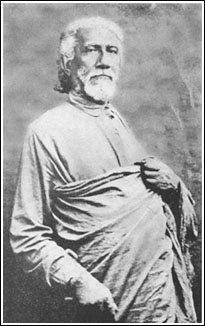
Breakfast did not follow; first came a long walk by the Ganges. Those morning strolls with my guru-how real and vivid still! In the easy resurrection of memory, I often find myself by his side: the early sun is warming the river. His voice rings out, rich with the authenticity of wisdom.
Breakfast came later. First, we took a long walk by the Ganges. Those morning walks with my guru still feel so real and vivid! Memories return so easily, and I often find myself by his side again. The early sun warms the river. His voice rings out, full of genuine wisdom.
A bath; then the midday meal. Its preparation, according to Master’s daily directions, had been the careful task of young disciples. My guru was a vegetarian. Before embracing monkhood, however, he had eaten eggs and fish. His advice to students was to follow any simple diet which proved suited to one’s constitution.
A bath, then the midday meal. Young disciples had carefully prepared the meal, following Master’s daily directions. My guru was a vegetarian. Before becoming a monk, however, he had eaten eggs and fish. He advised students to follow any simple diet that suited their individual bodies.
Master ate little; often rice, colored with turmeric or juice of beets or spinach and lightly sprinkled with buffalo ghee or melted butter. Another day he might have lentil-dhal or channa [^12] curry with vegetables. For dessert, mangoes or oranges with rice pudding, or jackfruit juice.
Master ate little. Often he had rice colored with turmeric, beet juice, or spinach juice, lightly sprinkled with buffalo ghee or melted butter. On another day, he might have lentil dhal or channa [^12] curry with vegetables. For dessert, he had mangoes or oranges with rice pudding, or jackfruit juice.
Visitors appeared in the afternoons. A steady stream poured from the world into the hermitage tranquillity. Everyone found in Master an equal courtesy and kindness. To a man who has realized himself as a soul, not the body or the ego, the rest of humanity assumes a striking similarity of aspect.
Visitors came in the afternoons. A steady stream flowed from the outside world into the peace of the hermitage. Master treated everyone with equal courtesy and kindness. To a man who knows himself as a soul, not the body or ego, all humanity seems strikingly alike.
The impartiality of saints is rooted in wisdom. Masters have escaped maya; its alternating faces of intellect and idiocy no longer cast an influential glance. Sri Yukteswar showed no special consideration to those who happened to be powerful or accomplished; neither did he slight others for their poverty or illiteracy. He would listen respectfully to words of truth from a child, and openly ignore a conceited pundit.
Saints are impartial because they are wise. Masters have escaped maya. Its alternating faces of intelligence and foolishness no longer influence them. Sri Yukteswar gave no special treatment to people who happened to be powerful or accomplished. Nor did he look down on others for being poor or unable to read and write. He would listen respectfully to a child speaking the truth and openly ignore an arrogant pundit.
Eight o’clock was the supper hour, and sometimes found lingering guests. My guru would not excuse himself to eat alone; none left his ashram hungry or dissatisfied. Sri Yukteswar was never at a loss, never dismayed by unexpected visitors; scanty food would emerge a banquet under his resourceful direction. Yet he was economical; his modest funds went far. “Be comfortable within your purse,” he often said. “Extravagance will buy you discomfort.” Whether in the details of hermitage entertainment, or his building and repair work, or other practical concerns, Master manifested the originality of a creative spirit.
Supper was at eight o’clock, and sometimes guests were still there. My guru would not excuse himself to eat alone. No one left his ashram hungry or dissatisfied. Sri Yukteswar was never unprepared or troubled by unexpected visitors. Under his resourceful direction, even a little food became a banquet. Yet he was economical, making his modest funds go far. “Live comfortably within your means,” he often said. “Extravagance will bring you discomfort.” Whether hosting guests at the ashram, building and making repairs, or handling other practical matters, Master showed originality and creativity.
Quiet evening hours often brought one of my guru’s discourses, treasures against time. His every utterance was measured and chiseled by wisdom. A sublime self-assurance marked his mode of expression: it was unique. He spoke as none other in my experience ever spoke. His thoughts were weighed in a delicate balance of discrimination before he permitted them an outward garb. The essence of truth, all-pervasive with even a physiological aspect, came from him like a fragrant exudation of the soul. I was conscious always that I was in the presence of a living manifestation of God. The weight of his divinity automatically bowed my head before him.
In the quiet evening hours, my guru often gave talks that were treasures untouched by time. Wisdom shaped every word he spoke with care and precision. He expressed himself with a profound confidence that was uniquely his own. No one else I had ever known spoke as he did. He carefully weighed his thoughts with keen judgment before putting them into words. The essence of truth flowed from him like a fragrance from his soul, pervading everything, even his physical being. I was always aware that I was in the presence of a living manifestation of God. The power of his divinity made me bow my head before him without thinking.
If late guests detected that Sri Yukteswar was becoming engrossed with the Infinite, he quickly engaged them in conversation. He was incapable of striking a pose, or of flaunting his inner withdrawal. Always one with the Lord, he needed no separate time for communion. A self-realized master has already left behind the stepping stone of meditation. “The flower falls when the fruit appears.” But saints often cling to spiritual forms for the encouragement of disciples.
If late guests noticed Sri Yukteswar becoming absorbed in the Infinite, he quickly drew them into conversation. He was incapable of putting on an act or showing off his inward focus. Always one with the Lord, he needed no separate time to commune with him. A self-realized master has already moved beyond meditation as a stepping stone. “The flower falls when the fruit appears.” But saints often hold on to spiritual practices to encourage their disciples.
As midnight approached, my guru might fall into a doze with the naturalness of a child. There was no fuss about bedding. He often lay down, without even a pillow, on a narrow davenport which was the background for his customary tiger-skin seat.
As midnight approached, my guru might doze off as naturally as a child. There was no fuss about bedding. He often lay down on a narrow couch without even a pillow. The couch stood behind his usual tiger-skin seat.
A night-long philosophical discussion was not rare; any disciple could summon it by intensity of interest. I felt no tiredness then, no desire for sleep; Master’s living words were sufficient. “Oh, it is dawn! Let us walk by the Ganges.” So ended many of my periods of nocturnal edification.
All-night philosophical discussions were not rare. Any disciple could start one by showing a deep enough interest. At those times, I felt no tiredness and no desire to sleep. Master’s vibrant words were enough. “Oh, it is dawn! Let us walk by the Ganges.” That was how many of my nights of learning ended.
My early months with Sri Yukteswar culminated in a useful lesson-“How to Outwit a Mosquito.” At home my family always used protective curtains at night. I was dismayed to discover that in the Serampore hermitage this prudent custom was honored in the breach. Yet the insects were in full residency; I was bitten from head to foot. My guru took pity on me.
My first months with Sri Yukteswar ended with a useful lesson: “How to Outwit a Mosquito.” At home, my family always used mosquito curtains at night. I was dismayed to discover that the Serampore hermitage did not follow this sensible custom. Yet the insects had thoroughly made themselves at home. I was bitten from head to foot. My guru took pity on me.
“Buy yourself a curtain, and also one for me.” He laughed and added, “If you buy only one, for yourself, all mosquitoes will concentrate on me!”
“Buy a curtain for yourself and one for me too.” He laughed and added, “If you buy only one for yourself, all the mosquitoes will focus on me!”
I was more than thankful to comply. Every night that I spent in Serampore, my guru would ask me to arrange the bedtime curtains.
I was deeply grateful to do as he asked. Every night I spent in Serampore, my guru would ask me to arrange the curtains for bedtime.
The mosquitoes one evening were especially virulent. But Master failed to issue his usual instructions. I listened nervously to the anticipatory hum of the insects. Getting into bed, I threw a propitiatory prayer in their general direction. A half hour later, I coughed pretentiously to attract my guru’s attention. I thought I would go mad with the bites and especially the singing drone as the mosquitoes celebrated bloodthirsty rites.
The mosquitoes were especially vicious one evening. But Master did not give his usual instructions. I listened nervously to the insects’ eager hum. As I got into bed, I offered a prayer in their general direction, hoping to appease them. Half an hour later, I gave an exaggerated cough to attract my guru’s attention. I thought the bites would drive me mad. Even worse was the high-pitched drone as the mosquitoes celebrated their bloodthirsty rituals.
No responsive stir from Master; I approached him cautiously. He was not breathing. This was my first observation of him in the yogic trance; it filled me with fright.
Master showed no response. I approached him cautiously. He was not breathing. This was the first time I had seen him in a yogic trance, and the sight filled me with fear.
“His heart must have failed!” I placed a mirror under his nose; no breath-vapor appeared. To make doubly certain, for minutes I closed his mouth and nostrils with my fingers. His body was cold and motionless. In a daze, I turned toward the door to summon help.
“His heart must have stopped!” I placed a mirror under his nose. No mist from his breath appeared on the glass. To be doubly sure, I held his mouth and nostrils closed with my fingers for several minutes. His body was cold and motionless. In a daze, I turned toward the door to call for help.
“So! A budding experimentalist! My poor nose!” Master’s voice was shaky with laughter. “Why don’t you go to bed? Is the whole world going to change for you? Change yourself: be rid of the mosquito consciousness.”
“So! A scientist in the making! My poor nose!” Master’s voice shook with laughter. “Why don’t you go to bed? Is the whole world going to change for you? Change yourself: stop being so aware of the mosquitoes.”
Meekly I returned to my bed. Not one insect ventured near. I realized that my guru had previously agreed to the curtains only to please me; he had no fear of mosquitoes. His yogic power was such that he either could will them not to bite, or could escape to an inner invulnerability.
I meekly returned to my bed. Not a single insect came near. I realized my guru had agreed to the curtains only to please me. He had no fear of mosquitoes. His yogic power was so great that he could either will the mosquitoes not to bite or retreat inward, beyond harm.
“He was giving me a demonstration,” I thought. “That is the yogic state I must strive to attain.” A yogi must be able to pass into, and continue in, the superconsciousness, regardless of multitudinous distractions never absent from this earth. Whether in the buzz of insects or the pervasive glare of daylight, the testimony of the senses must be barred. Sound and sight come then indeed, but to worlds fairer than the banished Eden. [^12]
“He was showing me how,” I thought. “That is the yogic state I must strive to reach.” A yogi must be able to enter and remain in superconsciousness, despite the countless distractions always present on earth. Whether surrounded by buzzing insects or the glare of daylight, the yogi must shut out what the senses report. Sound and sight still come, but they reveal worlds more beautiful than the lost Eden. [^12]
The instructive mosquitoes served for another early lesson at the ashram. It was the gentle hour of dusk. My guru was matchlessly interpreting the ancient texts. At his feet, I was in perfect peace. A rude mosquito entered the idyl and competed for my attention. As it dug a poisonous hypodermic needle into my thigh, I automatically raised an avenging hand. Reprieve from impending execution! An opportune memory came to me of one of Patanjali’s yoga aphorisms-that on ahimsa (harmlessness).
The mosquitoes taught me another early lesson at the ashram. It was the peaceful hour of dusk. My guru was explaining the ancient texts with unmatched skill. At his feet, I felt perfect peace. A rude mosquito interrupted the peaceful scene and competed for my attention. As the mosquito plunged its poisonous needle into my thigh, I automatically raised my hand to take revenge. A last-minute pardon saved the mosquito from execution! Just in time, I remembered one of Patanjali’s yoga aphorisms, the one on ahimsa (harmlessness).
“Why didn’t you finish the job?”
“Why didn’t you finish the job?”
“Master! Do you advocate taking life?”
“Master! Do you support taking a life?”
“No; but the deathblow already had been struck in your mind.”
“No, but the fatal blow had already been struck in your mind.”
“I don’t understand.”
“I don’t understand.”
“Patanjali’s meaning was the removal of desire to kill.” Sri Yukteswar had found my mental processes an open book. “This world is inconveniently arranged for a literal practice of ahimsa. Man may be compelled to exterminate harmful creatures. He is not under similar compulsion to feel anger or animosity. All forms of life have equal right to the air of maya. The saint who uncovers the secret of creation will be in harmony with its countless bewildering expressions. All men may approach that understanding who curb the inner passion for destruction.”
“Patanjali meant removing the desire to kill.” Sri Yukteswar had read my thoughts like an open book. “This world is inconveniently arranged for a literal practice of ahimsa. People may be forced to kill harmful creatures. They are not similarly forced to feel anger or hostility. All forms of life have an equal right to the air of maya. The saint who discovers the secret of creation will be in harmony with creation’s countless bewildering forms. All people may move toward that understanding if they restrain their inner urge to destroy.”
“Guruji, should one offer himself a sacrifice rather than kill a wild beast?”
“Guruji, should someone sacrifice their own life rather than kill a wild animal?”
“No; man’s body is precious. It has the highest evolutionary value because of unique brain and spinal centers. These enable the advanced devotee to fully grasp and express the loftiest aspects of divinity. No lower form is so equipped. It is true that one incurs the debt of a minor sin if he is forced to kill an animal or any living thing. But the Vedas teach that wanton loss of a human body is a serious transgression against the karmic law.”
“No, the human body is precious. It has the highest evolutionary value because of its unique brain and spinal centers. These centers allow an advanced devotee to fully understand and express the highest aspects of divinity. No lower life form has these abilities. It is true that a person incurs a minor karmic debt if forced to kill an animal or other living thing. But the Vedas teach that the needless loss of a human body is a serious violation of karmic law.”
I sighed in relief; scriptural reinforcement of one’s natural instincts is not always forthcoming.
I sighed with relief. Scripture doesn’t always support our natural instincts.
It so happened that I never saw Master at close quarters with a leopard or a tiger. But a deadly cobra once confronted him, only to be conquered by my guru’s love. This variety of snake is much feared in India, where it causes more than five thousand deaths annually. The dangerous encounter took place at Puri, where Sri Yukteswar had a second hermitage, charmingly situated near the Bay of Bengal. Prafulla, a young disciple of later years, was with Master on this occasion.
I never happened to see Master close to a leopard or a tiger. But a deadly cobra once confronted him, only to be overcome by my guru’s love. This kind of snake is greatly feared in India, where it causes more than five thousand deaths each year. The dangerous encounter took place at Puri, where Sri Yukteswar had a second hermitage. The hermitage was in a lovely setting near the Bay of Bengal. Prafulla, a young disciple from Master’s later years, was with him on this occasion.
“We were seated outdoors near the ashram,” Prafulla told me. “A cobra appeared near-by, a four-foot length of sheer terror. Its hood was angrily expanded as it raced toward us. My guru gave a welcoming chuckle, as though to a child. I was beside myself with consternation to see Master engage in a rhythmical clapping of hands. [^12] He was entertaining the dread visitor! I remained absolutely quiet, inwardly ejaculating what fervent prayers I could muster. The serpent, very close to my guru, was now motionless, seemingly magnetized by his caressing attitude. The frightful hood gradually contracted; the snake slithered between Master’s feet and disappeared into the bushes.
“We were sitting outdoors near the ashram,” Prafulla told me. “A cobra appeared nearby, four feet of sheer terror. Its hood flared angrily as it raced toward us. My guru chuckled in welcome, as though greeting a child. I was overwhelmed with alarm as I watched Master clap his hands rhythmically. [^12] He was entertaining the terrifying visitor! I stayed completely still and silent, inwardly offering whatever fervent prayers I could muster. The snake was now very close to my guru and lay motionless, seemingly spellbound by his gentle, affectionate manner. The terrifying hood gradually folded in. The snake slithered between Master’s feet and disappeared into the bushes.
“Why my guru would move his hands, and why the cobra would not strike them, were inexplicable to me then,” Prafulla concluded. “I have since come to realize that my divine master is beyond fear of hurt from any living creature.”
“At the time, I couldn’t understand why my guru moved his hands or why the cobra wouldn’t strike them,” Prafulla concluded. “I have since realized that my divine master has no fear of being harmed by any living creature.”
One afternoon during my early months at the ashram, found Sri Yukteswar’s eyes fixed on me piercingly.
One afternoon during my early months at the ashram, I found Sri Yukteswar staring at me with a piercing gaze.
“You are too thin, Mukunda.”
“You’re too thin, Mukunda.”
His remark struck a sensitive point. That my sunken eyes and emaciated appearance were far from my liking was testified to by rows of tonics in my room at Calcutta. Nothing availed; chronic dyspepsia had pursued me since childhood. My despair reached an occasional zenith when I asked myself if it were worth-while to carry on this life with a body so unsound.
His remark touched a sore spot. I was deeply unhappy with my sunken eyes and painfully thin appearance. The rows of tonics in my room at Calcutta made that clear. Nothing helped. I had suffered from chronic indigestion since childhood. At times, my despair peaked as I wondered whether life was worth continuing with such an unhealthy body.
“Medicines have limitations; the creative life-force has none. Believe that: you shall be well and strong.”
“Medicines have limits, but the creative life-force has none. Believe in this unlimited power, and you will be well and strong.”
Sri Yukteswar’s words aroused a conviction of personally-applicable truth which no other healer-and I had tried many!-had been able to summon within me.
Sri Yukteswar’s words convinced me of a truth that applied personally to me. No other healer had been able to inspire such conviction in me. And I had tried many!
Day by day, behold! I waxed. Two weeks after Master’s hidden blessing, I had accumulated the invigorating weight which eluded me in the past. My persistent stomach ailments vanished with a lifelong permanency. On later occasions I witnessed my guru’s instantaneous divine healings of persons suffering from ominous disease-tuberculosis, diabetes, epilepsy, or paralysis. Not one could have been more grateful for his cure than I was at sudden freedom from my cadaverous aspect.
Day by day, to my wonder, I gained weight. Two weeks after Master’s hidden blessing, I had gained the healthy, energizing weight I had never managed to gain before. My persistent stomach problems disappeared for the rest of my life. Later, I witnessed my guru’s instant divine healings of people with serious diseases: tuberculosis, diabetes, epilepsy, or paralysis. None could have been more grateful for their cure than I was to be suddenly free of my deathly appearance.
“Years ago, I too was anxious to put on weight,” Sri Yukteswar told me. “During convalescence after a severe illness, I visited Lahiri Mahasaya in Benares.
“Years ago, I too was eager to gain weight,” Sri Yukteswar told me. “While recovering from a serious illness, I visited Lahiri Mahasaya in Benares.
“‘Sir, I have been very sick and lost many pounds.’
“‘Sir, I’ve been very sick and lost a lot of weight.’
“‘I see, Yukteswar, [^12] you made yourself unwell, and now you think you are thin.’
“‘I see, Yukteswar, [^12] you made yourself sick, and now you think you’re thin.’
“This reply was far from the one I had expected; my guru, however, added encouragingly:
“This reply was very different from what I had expected. But my guru added encouragingly:
“‘Let me see; I am sure you ought to feel better tomorrow.’
“‘Let me see. I’m sure you should feel better tomorrow.’
“Taking his words as a gesture of secret healing toward my receptive mind, I was not surprised the next morning at a welcome accession of strength. I sought out my master and exclaimed exultingly, ‘Sir, I feel much better today.’
“I took his words as an act of secret healing directed toward my receptive mind. So I was not surprised when I felt a welcome increase in strength the next morning. I sought out my master and exclaimed joyfully, ‘Sir, I feel much better today.’
“‘Indeed! Today you invigorate yourself.’
“‘Indeed! Today you're giving yourself new energy.’
“‘No, master!’ I protested. ‘It was you who helped me; this is the first time in weeks that I have had any energy.’
“‘No, master!’ I protested. ‘You were the one who helped me. For the first time in weeks, I have some energy.’
“‘O yes! Your malady has been quite serious. Your body is frail yet; who can say how it will be tomorrow?’
“‘Oh yes! Your illness has been quite serious. Your body is still weak. Who can say how your body will be tomorrow?’
“The thought of possible return of my weakness brought me a shudder of cold fear. The following morning I could hardly drag myself to Lahiri Mahasaya’s home.
“The thought that my weakness might return made me shudder with cold fear. The next morning, I could hardly drag myself to Lahiri Mahasaya’s home.
“‘Sir, I am ailing again.’
“‘Sir, I’m ill again.’
“My guru’s glance was quizzical. ‘So! Once more you indispose yourself.’
“My guru gave me a questioning look. ‘So! Once again, you make yourself ill.’
“‘Gurudeva, I realize now that day by day you have been ridiculing me.’ My patience was exhausted. ‘I don’t understand why you disbelieve my truthful reports.’
“‘Gurudeva, I realize now that you’ve been making fun of me day after day.’ I had run out of patience. ‘I don’t understand why you don’t believe my truthful accounts.’
“‘Really, it has been your thoughts that have made you feel alternately weak and strong.’ My master looked at me affectionately. ‘You have seen how your health has exactly followed your expectations. Thought is a force, even as electricity or gravitation. The human mind is a spark of the almighty consciousness of God. I could show you that whatever your powerful mind believes very intensely would instantly come to pass.’
“‘Really, your thoughts have made you feel weak at some times and strong at others.’ My master looked at me affectionately. ‘You have seen how your health has matched your expectations exactly. Thought is a force, just like electricity or gravity. The human mind is a spark of God’s almighty consciousness. I could show you how anything your powerful mind believes with great intensity would happen instantly.’
“Knowing that Lahiri Mahasaya never spoke idly, I addressed him with great awe and gratitude: ‘Master, if I think I am well and have regained my former weight, shall that happen?’
“I knew Lahiri Mahasaya never spoke without meaning, so I addressed him with great awe and gratitude. ‘Master, if I think I am well and back to my former weight, will that happen?’
“‘It is so, even at this moment.’ My guru spoke gravely, his gaze concentrated on my eyes.
“‘It is true, even right now.’ My guru spoke seriously, looking straight into my eyes.
“Lo! I felt an increase not alone of strength but of weight. Lahiri Mahasaya retreated into silence. After a few hours at his feet, I returned to my mother’s home, where I stayed during my visits to Benares.
“To my surprise, I felt not only stronger but heavier. Lahiri Mahasaya fell silent. After a few hours at his feet, I returned to my mother’s home. I stayed there during my visits to Benares.
“‘My son! What is the matter? Are you swelling with dropsy?’ Mother could hardly believe her eyes. My body was now of the same robust dimensions it had possessed before my illness.
“‘My son! What’s wrong? Is your body swelling from fluid buildup?’ Mother could hardly believe her eyes. My body was now as strong and full as before my illness.
“I weighed myself and found that in one day I had gained fifty pounds; they remained with me permanently. Friends and acquaintances who had seen my thin figure were aghast with wonderment. A number of them changed their mode of life and became disciples of Lahiri Mahasaya as a result of this miracle.
“I weighed myself and found I had gained fifty pounds in one day. I kept that extra weight permanently. Friends and acquaintances who had seen how thin I was were astonished. As a result of this miracle, a number of them changed their way of life and became disciples of Lahiri Mahasaya.
“My guru, awake in God, knew this world to be nothing but an objectivized dream of the Creator. Because he was completely aware of his unity with the Divine Dreamer, Lahiri Mahasaya could materialize or dematerialize or make any change he wished in the cosmic vision. [^12]
“My guru, spiritually awake in God, knew the world was nothing but the Creator’s dream given visible form. Because Lahiri Mahasaya was fully aware of his oneness with the Divine Dreamer, he could make things appear or disappear. He could also make any change he wished in the cosmic vision. [^12]
“All creation is governed by law,” Sri Yukteswar concluded. “The ones which manifest in the outer universe, discoverable by scientists, are called natural laws. But there are subtler laws ruling the realms of consciousness which can be known only through the inner science of yoga. The hidden spiritual planes also have their natural and lawful principles of operation. It is not the physical scientist but the fully self-realized master who comprehends the true nature of matter. Thus Christ was able to restore the servant’s ear after it had been severed by one of the disciples.” [^12]
“All creation is governed by laws,” Sri Yukteswar concluded. “The laws at work in the outer universe, which scientists can discover, are called natural laws. But subtler laws govern the realms of consciousness. These laws can be known only through the inner science of yoga. The hidden spiritual planes also operate according to natural laws and principles. The fully self-realized master, not the physical scientist, understands the true nature of matter. That is how Christ could restore the servant’s ear after one of the disciples had cut it off.” [^12]
Sri Yukteswar was a peerless interpreter of the scriptures. Many of my happiest memories are centered in his discourses. But his jeweled thoughts were not cast into ashes of heedlessness or stupidity. One restless movement of my body, or my slight lapse into absent- mindedness, sufficed to put an abrupt period to Master’s exposition.
Sri Yukteswar had no equal as an interpreter of the scriptures. Many of my happiest memories center on his talks. But he did not waste his precious insights on inattention or stupidity. A single restless movement or even a slight lapse in my attention was enough to make Master stop explaining abruptly.
“You are not here.” Master interrupted himself one afternoon with this disclosure. As usual, he was keeping track of my attention with a devastating immediacy.
“You are not here.” Master stopped himself one afternoon to make this observation. As usual, he was tracking my attention with unnerving speed.
“Guruji!” My tone was a protest. “I have not stirred; my eyelids have not moved; I can repeat each word you have uttered!”
“Guruji!” I protested. “I haven’t moved. My eyelids haven’t moved. I can repeat every word you’ve said!”
“Nevertheless you were not fully with me. Your objection forces me to remark that in your mental background you were creating three institutions. One was a sylvan retreat on a plain, another on a hilltop, a third by the ocean.”
“Still, you were not fully with me. Your objection forces me to point out that you were creating three institutions in the back of your mind. One was a woodland retreat on a plain, another on a hilltop, and a third by the ocean.”
Those vaguely formulated thoughts had indeed been present almost subconsciously. I glanced at him apologetically.
Those vague thoughts had indeed been in my mind, though I was barely aware of them. I glanced at him apologetically.
“What can I do with such a master, who penetrates my random musings?”
“What can I do with a master like this, who can read my wandering thoughts?”
“You have given me that right. The subtle truths I am expounding cannot be grasped without your complete concentration. Unless necessary I do not invade the seclusion of others’ minds. Man has the natural privilege of roaming secretly among his thoughts. The unbidden Lord does not enter there; neither do I venture intrusion.”
“You have given me that right. You cannot grasp the subtle truths I am explaining without giving them your full attention. Unless necessary, I do not intrude on the privacy of other people’s minds. Everyone has the natural right to wander privately among their own thoughts. The Lord does not enter uninvited, nor do I dare intrude.”
“You are ever welcome, Master!”
“You are always welcome, Master!”
“Your architectural dreams will materialize later. Now is the time for study!”
“Your architectural dreams will come true later. Now is the time to study!”
Thus incidentally my guru revealed in his simple way the coming of three great events in my life. Since early youth I had had enigmatic glimpses of three buildings, each in a different setting. In the exact sequence Sri Yukteswar had indicated, these visions took ultimate form. First came my founding of a boys’ yoga school on a Ranchi plain, then my American headquarters on a Los Angeles hilltop, finally a hermitage in southern California by the vast Pacific.
In this way, my guru casually revealed, in his simple manner, three great events to come in my life. Since my early youth, I had seen mysterious glimpses of three buildings, each in a different setting. These visions eventually became reality in the exact order Sri Yukteswar had indicated. First, I founded a boys’ yoga school on a plain in Ranchi. Then came my American headquarters on a Los Angeles hilltop. Finally came a hermitage in southern California beside the vast Pacific.
Master never arrogantly asserted: “I prophesy that such and such an event shall occur!” He would rather hint: “Don’t you think it may happen?” But his simple speech hid vatic power. There was no recanting; never did his slightly veiled words prove false.
Master never arrogantly declared: “I predict that such and such an event will happen!” Instead, he would hint: “Don’t you think it may happen?” But his simple words hid the power to foretell the future. He never had to take back his words. His slightly veiled predictions never proved false.
Sri Yukteswar was reserved and matter-of-fact in demeanor. There was naught of the vague or daft visionary about him. His feet were firm on the earth, his head in the haven of heaven. Practical people aroused his admiration. “Saintliness is not dumbness! Divine perceptions are not incapacitating!” he would say. “The active expression of virtue gives rise to the keenest intelligence.”
Sri Yukteswar was reserved and matter-of-fact. There was nothing vague or foolish about him as a visionary. His feet were firmly on the ground, his head in the shelter of heaven. He admired practical people. “Saintliness does not mean stupidity! Spiritual insight does not make you incapable!” he would say. “Putting virtue into practice develops the sharpest intelligence.”
In Master’s life I fully discovered the cleavage between spiritual realism and the obscure mysticism that spuriously passes as a counterpart. My guru was reluctant to discuss the superphysical realms. His only “marvelous” aura was one of perfect simplicity. In conversation he avoided startling references; in action he was freely expressive. Others talked of miracles but could manifest nothing; Sri Yukteswar seldom mentioned the subtle laws but secretly operated them at will.
In Master’s life, I fully discovered the difference between spiritual reality and the vague mysticism falsely presented as its equal. My guru was reluctant to discuss realms beyond the physical world. His only “marvelous” aura was one of perfect simplicity. In conversation, he avoided startling references, but in action, he expressed himself freely. Others talked of miracles but could perform none. Sri Yukteswar seldom mentioned the subtle laws, but he secretly used them at will.
“A man of realization does not perform any miracle until he receives an inward sanction,” Master explained. “God does not wish the secrets of His creation revealed promiscuously. [^12] Also, every individual in the world has inalienable right to his free will. A saint will not encroach upon that independence.”
“A spiritually realized person does not perform a miracle without first receiving inner permission,” Master explained. “God does not want the secrets of his creation revealed indiscriminately. [^12] Also, every person in the world has a right to free will that cannot be taken away. A saint will not interfere with that independence.”
The silence habitual to Sri Yukteswar was caused by his deep perceptions of the Infinite. No time remained for the interminable “revelations” that occupy the days of teachers without self- realization. “In shallow men the fish of little thoughts cause much commotion. In oceanic minds the whales of inspiration make hardly a ruffle.” This observation from the Hindu scriptures is not without discerning humor.
Sri Yukteswar was usually silent because of his deep awareness of the Infinite. He had no time for the endless “revelations” that fill the days of teachers who lack self-realization. “In shallow people, the fish of small thoughts cause much commotion. In ocean-like minds, the whales of inspiration hardly disturb the surface.” This observation from the Hindu scriptures has a touch of perceptive humor.
Because of my guru’s unspectacular guise, only a few of his contemporaries recognized him as a superman. The popular adage: “He is a fool that cannot conceal his wisdom,” could never be applied to Sri Yukteswar. Though born a mortal like all others, Master had achieved identity with the Ruler of time and space. In his life I perceived a godlike unity. He had not found any insuperable obstacle to mergence of human with Divine. No such barrier exists, I came to understand, save in man’s spiritual unadventurousness.
Because my guru looked so ordinary, only a few people of his time recognized him as more than human. The popular saying, “Anyone who cannot hide his wisdom is a fool,” could never be applied to Sri Yukteswar. Though born mortal like everyone else, Master had become one with the Ruler of time and space. In his life I saw a godlike unity. He had found no barrier he could not overcome in uniting the human with the Divine. I came to understand that no such barrier exists, except our unwillingness to venture into spiritual life.
I always thrilled at the touch of Sri Yukteswar’s holy feet. Yogis teach that a disciple is spiritually magnetized by reverent contact with a master; a subtle current is generated. The devotee’s undesirable habit-mechanisms in the brain are often cauterized; the groove of his worldly tendencies beneficially disturbed. Momentarily at least he may find the secret veils of maya lifting, and glimpse the reality of bliss. My whole body responded with a liberating glow whenever I knelt in the Indian fashion before my guru.
I always felt a thrill when I touched Sri Yukteswar’s holy feet. Yogis teach that reverent contact with a master spiritually magnetizes a disciple and creates a subtle current. The unwanted habit patterns in the devotee’s brain are often burned away. The deeply worn paths of his worldly tendencies are disrupted in a helpful way. At least for a moment, he may find the hidden veils of maya lifting and glimpse the reality of bliss. My whole body responded with a freeing glow whenever I knelt before my guru in the Indian way.
“Even when Lahiri Mahasaya was silent,” Master told me, “or when he conversed on other than strictly religious topics, I discovered that nonetheless he had transmitted to me ineffable knowledge.”
“Even when Lahiri Mahasaya was silent,” Master told me, “or spoke about topics that weren't strictly religious, I discovered he had still passed on knowledge to me that words could not express.”
Sri Yukteswar affected me similarly. If I entered the hermitage in a worried or indifferent frame of mind, my attitude imperceptibly changed. A healing calm descended at mere sight of my guru. Every day with him was a new experience in joy, peace, and wisdom. Never did I find him deluded or intoxicated with greed or emotion or anger or any human attachment.
Sri Yukteswar had a similar effect on me. If I entered the hermitage feeling worried or indifferent, my attitude changed without my noticing. A healing calm came over me at the mere sight of my guru. Every day with him brought a new experience of joy, peace, and wisdom. I never found him misled or carried away by greed, emotion, anger, or any human attachment.
“The darkness of maya is silently approaching. Let us hie homeward within.” With these words at dusk Master constantly reminded his disciples of their need for Kriya Yoga. A new student occasionally expressed doubts regarding his own worthiness to engage in yoga practice.
“The darkness of maya is silently approaching. Let us hurry home within.” At dusk, Master constantly used these words to remind his disciples of their need for Kriya Yoga. Occasionally, a new student expressed doubts about whether he was worthy to practice yoga.
“Forget the past,” Sri Yukteswar would console him. “The vanished lives of all men are dark with many shames. Human conduct is ever unreliable until anchored in the Divine. Everything in future will improve if you are making a spiritual effort now.”
“Forget the past,” Sri Yukteswar would say to comfort him. “Everyone’s past lives are darkened by many shameful acts. Human behavior is always unreliable until it is rooted in the Divine. Everything in the future will improve if you are making a spiritual effort now.”
Master always had young chelas [^12] in his hermitage. Their spiritual and intellectual education was his lifelong interest: even shortly before he passed on, he accepted for training two six-year-old boys and one youth of sixteen. He directed their minds and lives with that careful discipline in which the word “disciple” is etymologically rooted. The ashram residents loved and revered their guru; a slight clap of his hands sufficed to bring them eagerly to his side. When his mood was silent and withdrawn, no one ventured to speak; when his laugh rang jovially, children looked upon him as their own.
Master always had young chelas [^12] in his hermitage. Their spiritual and intellectual education was his lifelong interest. Even shortly before his death, he accepted two six-year-old boys and a sixteen-year-old youth for training. He guided their minds and lives with careful discipline, the root of the word “disciple”. The ashram residents loved and revered their guru. A soft clap of his hands was enough to bring them eagerly to his side. When he was quiet and withdrawn, no one dared to speak. When his cheerful laughter rang out, the children saw him as one of their own.
Master seldom asked others to render him a personal service, nor would he accept help from a student unless the willingness were sincere. My guru quietly washed his clothes if the disciples overlooked that privileged task. Sri Yukteswar wore the traditional ocher-colored swami robe; his laceless shoes, in accordance with yogi custom, were of tiger or deer skin.
Master rarely asked others to do anything for him personally. Nor would he accept a student's help unless the student was sincerely willing. My guru quietly washed his own clothes if the disciples overlooked the privilege of washing them. Sri Yukteswar wore the traditional ocher-colored swami robe. Following yogi custom, he wore shoes without laces, made of tiger or deer skin.
Master spoke fluent English, French, Hindi, and Bengali; his Sanskrit was fair. He patiently instructed his young disciples by certain short cuts which he had ingeniously devised for the study of English and Sanskrit.
Master spoke fluent English, French, Hindi, and Bengali. His Sanskrit was adequate. He patiently taught his young disciples using clever shortcuts he had devised for studying English and Sanskrit.
Master was cautious of his body, while withholding solicitous attachment. The Infinite, he pointed out, properly manifests through physical and mental soundness. He discountenanced any extremes. A disciple once started a long fast. My guru only laughed: “Why not throw the dog a bone?”
Master took care of his body without becoming overly attached to it. He explained that the Infinite properly expresses itself through a healthy body and mind. He discouraged all extremes. Once, a disciple began a long fast. My guru only laughed: “Why not throw the dog a bone?”
Sri Yukteswar’s health was excellent; I never saw him unwell. [^12] He permitted students to consult doctors if it seemed advisable. His purpose was to give respect to the worldly custom: “Physicians must carry on their work of healing through God’s laws as applied to matter.” But he extolled the superiority of mental therapy, and often repeated: “Wisdom is the greatest cleanser.”
Sri Yukteswar’s health was excellent. I never saw him ill. [^12] He allowed students to consult doctors if doing so seemed advisable. His purpose was to respect worldly custom: “Doctors must continue their healing work through God’s laws as they apply to matter.” But he praised mental therapy as superior and often repeated: “Wisdom is the greatest cleanser.”
“The body is a treacherous friend. Give it its due; no more,” he said. “Pain and pleasure are transitory; endure all dualities with calmness, while trying at the same time to remove their hold. Imagination is the door through which disease as well as healing enters. Disbelieve in the reality of sickness even when you are ill; an unrecognized visitor will flee!”
“The body is an untrustworthy friend. Give it what it needs, but no more,” he said. “Pain and pleasure are temporary. Face all such opposites calmly while also trying to free yourself from their hold. Imagination is the doorway through which both disease and healing enter. Refuse to believe sickness is real, even when you are ill. A visitor you refuse to recognize will flee!”
Master numbered many doctors among his disciples. “Those who have ferreted out the physical laws can easily investigate the science of the soul,” he told them. “A subtle spiritual mechanism is hidden just behind the bodily structure.” [^12]
Master had many doctors among his disciples. “Those who have uncovered the physical laws can easily explore the science of the soul,” he told them. “A subtle spiritual mechanism is hidden just behind the body’s structure.” [^12]
Sri Yukteswar counseled his students to be living liaisons of Western and Eastern virtues. Himself an executive Occidental in outer habits, inwardly he was the spiritual Oriental. He praised the progressive, resourceful and hygienic habits of the West, and the religious ideals which give a centuried halo to the East.
Sri Yukteswar advised his students to embody and unite the virtues of the West and the East. In his outward habits, he had the practical efficiency of a Westerner. Inwardly, he had the spirituality of an Easterner. He praised the West’s progressive outlook, resourcefulness, and habits of cleanliness. He also praised the religious ideals that have given the East a sacred glow for centuries.
Discipline had not been unknown to me: at home Father was strict, Ananta often severe. But Sri Yukteswar’s training cannot be described as other than drastic. A perfectionist, my guru was hypercritical of his disciples, whether in matters of moment or in the subtle nuances of behavior.
I was no stranger to discipline: at home Father was strict, and Ananta was often severe. But Sri Yukteswar’s training could only be described as drastic. My guru was a perfectionist, excessively critical of his disciples in both important matters and subtle details of behavior.
“Good manners without sincerity are like a beautiful dead lady,” he remarked on suitable occasion. “Straightforwardness without civility is like a surgeon’s knife, effective but unpleasant. Candor with courtesy is helpful and admirable.”
“Good manners without sincerity are like a beautiful woman who is dead,” he said when the occasion called for it. “Honesty without politeness is like a surgeon’s knife, effective but unpleasant. Honesty with courtesy is helpful and admirable.”
Master was apparently satisfied with my spiritual progress, for he seldom referred to it; in other matters my ears were no strangers to reproof. My chief offenses were absentmindedness, intermittent indulgence in sad moods, non-observance of certain rules of etiquette, and occasional unmethodical ways.
Master seemed satisfied with my spiritual progress, because he rarely mentioned it. But he often scolded me about other matters. My main faults were absentmindedness, sometimes giving in to gloomy moods, ignoring certain rules of etiquette, and occasionally being disorganized.
“Observe how the activities of your father Bhagabati are well- organized and balanced in every way,” my guru pointed out. The two disciples of Lahiri Mahasaya had met, soon after I began my pilgrimages to Serampore. Father and Sri Yukteswar admiringly evaluated the other’s worth. Both had built an inner life of spiritual granite, insoluble against the ages.
“Notice how your father Bhagabati keeps his activities well organized and balanced in every way,” my guru pointed out. The two disciples of Lahiri Mahasaya had met soon after I began my pilgrimages to Serampore. Father and Sri Yukteswar each recognized and admired the other’s worth. Both had built an inner spiritual life as solid as granite, unshaken by the passage of time.
From transient teachers of my earlier life I had imbibed a few erroneous lessons. A chela, I was told, need not concern himself strenuously over worldly duties; when I had neglected or carelessly performed my tasks, I was not chastised. Human nature finds such instruction very easy of assimilation. Under Master’s unsparing rod, however, I soon recovered from the agreeable delusions of irresponsibility.
From teachers who passed briefly through my early life, I had picked up a few mistaken lessons. I was told that a chela need not put much effort into worldly duties. When I neglected my tasks or did them carelessly, I was not scolded. Human nature finds such lessons very easy to absorb. Under Master’s strict discipline, however, I soon lost my pleasant illusions about being free of responsibility.
“Those who are too good for this world are adorning some other,” Sri Yukteswar remarked. “So long as you breathe the free air of earth, you are under obligation to render grateful service. He alone who has fully mastered the breathless state [^12] is freed from cosmic imperatives. I will not fail to let you know when you have attained the final perfection.”
“Those who are too good for this world are making another world more beautiful,” Sri Yukteswar remarked. “As long as you breathe the free air of earth, you have a duty to serve with gratitude. Only someone who has fully mastered the breathless state [^12] is free from cosmic obligations. I will be sure to let you know when you have reached complete perfection.”
My guru could never be bribed, even by love. He showed no leniency to anyone who, like myself, willingly offered to be his disciple. Whether Master and I were surrounded by his students or by strangers, or were alone together, he always spoke plainly and upbraided sharply. No trifling lapse into shallowness or inconsistency escaped his rebuke. This flattening treatment was hard to endure, but my resolve was to allow Sri Yukteswar to iron out each of my psychological kinks. As he labored at this titanic transformation, I shook many times under the weight of his disciplinary hammer.
My guru could never be bribed, even by love. He showed no leniency to anyone who, like me, willingly chose to become his disciple. Whether Master and I were among his students, among strangers, or alone together, he always spoke plainly and scolded sharply. Even the slightest lapse into shallow thinking or inconsistency drew his criticism. This flattening treatment was hard to bear, but I was determined to let Sri Yukteswar straighten out every psychological kink. As he worked at this enormous transformation, I often shook under the weight of his disciplinary hammer.
“If you don’t like my words, you are at liberty to leave at any time,” Master assured me. “I want nothing from you but your own improvement. Stay only if you feel benefited.”
“If you don’t like what I say, you’re free to leave at any time,” Master assured me. “All I want from you is your own improvement. Stay only if you feel you’re benefiting.”
For every humbling blow he dealt my vanity, for every tooth in my metaphorical jaw he knocked loose with stunning aim, I am grateful beyond any facility of expression. The hard core of human egotism is hardly to be dislodged except rudely. With its departure, the Divine finds at last an unobstructed channel. In vain It seeks to percolate through flinty hearts of selfishness.
For every humbling blow he dealt my vanity, I am grateful beyond words. I feel the same gratitude for every tooth he knocked loose from my metaphorical jaw with stunning aim. The hard core of human egotism can hardly be removed without harsh treatment. Once egotism is gone, the Divine at last finds a clear channel. The Divine tries in vain to flow through hearts hardened by selfishness.
Sri Yukteswar’s wisdom was so penetrating that, heedless of remarks, he often replied to one’s unspoken observation. “What a person imagines he hears, and what the speaker has really implied, may be poles apart,” he said. “Try to feel the thoughts behind the confusion of men’s verbiage.”
Sri Yukteswar’s wisdom was so penetrating that he often ignored spoken remarks and responded to unspoken thoughts. “What a person thinks they hear may be very different from what the speaker actually meant,” he said. “Try to sense the thoughts behind people’s confusing words.”
But divine insight is painful to worldly ears; Master was not popular with superficial students. The wise, always few in number, deeply revered him. I daresay Sri Yukteswar would have been the most sought- after guru in India had his words not been so candid and so censorious.
But divine insight is painful for worldly people to hear, so Master was not popular with superficial students. The wise, always few in number, deeply respected him. I believe Sri Yukteswar would have been the most sought-after guru in India if his words had not been so blunt and critical.
“I am hard on those who come for my training,” he admitted to me. “That is my way; take it or leave it. I will never compromise. But you will be much kinder to your disciples; that is your way. I try to purify only in the fires of severity, searing beyond the average toleration. The gentle approach of love is also transfiguring. The inflexible and the yielding methods are equally effective if applied with wisdom. You will go to foreign lands, where blunt assaults on the ego are not appreciated. A teacher could not spread India’s message in the West without an ample fund of accommodative patience and forbearance.” I refuse to state the amount of truth I later came to find in Master’s words!
“I am hard on those who come to me for training,” he admitted to me. “That is my way. Take it or leave it. I will never compromise. But you will be much kinder to your disciples. That is your way. I try to purify only through the fire of strict discipline, pushing beyond what most people can bear. A gentle, loving approach can also transform people. Firm and flexible methods are equally effective if used wisely. You will go to foreign lands, where people do not appreciate blunt attacks on the ego. A teacher could not spread India’s message in the West without great patience, flexibility, and tolerance.” I refuse to say how much truth I later found in Master’s words!
Though Sri Yukteswar’s undissembling speech prevented a large following during his years on earth, nevertheless his living spirit manifests today over the world, through sincere students of his Kriya Yoga and other teachings. He has further dominion in men’s souls than ever Alexander dreamed of in the soil.
Though Sri Yukteswar’s frank speech kept him from gaining a large following during his lifetime, his living spirit appears worldwide today. His spirit lives through sincere students of his Kriya Yoga and other teachings. His reach into human souls is greater than Alexander ever dreamed his reach across the earth could be.
Father arrived one day to pay his respects to Sri Yukteswar. My parent expected, very likely, to hear some words in my praise. He was shocked to be given a long account of my imperfections. It was Master’s practice to recount simple, negligible shortcomings with an air of portentous gravity. Father rushed to see me. “From your guru’s remarks I thought to find you a complete wreck!” My parent was between tears and laughter.
Father came one day to pay his respects to Sri Yukteswar. He very likely expected to hear some praise for me. Instead, he was shocked to hear a long account of my faults. Master often described minor, unimportant faults as though they were matters of grave concern. Father rushed to see me. “From your guru’s remarks, I expected to find you a complete wreck!” Father was caught between tears and laughter.
The only cause of Sri Yukteswar’s displeasure at the time was that I had been trying, against his gentle hint, to convert a certain man to the spiritual path.
Sri Yukteswar was displeased with me at the time for only one reason. Despite his gentle hint not to, I had been trying to bring a certain man to the spiritual path.
With indignant speed I sought out my guru. He received me with downcast eyes, as though conscious of guilt. It was the only time I ever saw the divine lion meek before me. The unique moment was savored to the full.
Full of indignation, I hurried to find my guru. He greeted me with his eyes lowered, as though he felt guilty. It was the only time I ever saw the divine lion act meekly before me. I savored that unique moment to the fullest.
“Sir, why did you judge me so mercilessly before my astounded father? Was that just?”
“Sir, why did you judge me so harshly in front of my astonished father? Was that fair?”
“I will not do it again.” Master’s tone was apologetic.
“I won’t do it again.” Master sounded apologetic.
Instantly I was disarmed. How readily the great man admitted his fault! Though he never again upset Father’s peace of mind, Master relentlessly continued to dissect me whenever and wherever he chose.
My resistance vanished instantly. How readily the great man admitted his mistake! Though Master never again disturbed Father’s peace of mind, he kept relentlessly picking me apart whenever and wherever he chose.
New disciples often joined Sri Yukteswar in exhaustive criticism of others. Wise like the guru! Models of flawless discrimination! But he who takes the offensive must not be defenseless. The same carping students fled precipitantly as soon as Master publicly unloosed in their direction a few shafts from his analytical quiver.
New disciples often joined Sri Yukteswar in thoroughly criticizing others. As wise as the guru! Perfect models of sound judgment! But anyone who attacks others must be ready to defend himself. These same fault-finding students fled in a hurry as soon as Master publicly aimed a few sharp criticisms at them.
“Tender inner weaknesses, revolting at mild touches of censure, are like diseased parts of the body, recoiling before even delicate handling.” This was Sri Yukteswar’s amused comment on the flighty ones.
“Sensitive inner weaknesses flinch at mild criticism, like diseased parts of the body recoiling from even a gentle touch.” This was Sri Yukteswar’s amused comment about those who were flighty.
There are disciples who seek a guru made in their own image. Such students often complained that they did not understand Sri Yukteswar.
Some disciples seek a guru who is just like them. Such students often complained that they did not understand Sri Yukteswar.
“Neither do you comprehend God!” I retorted on one occasion. “When a saint is clear to you, you will be one.” Among the trillion mysteries, breathing every second the inexplicable air, who may venture to ask that the fathomless nature of a master be instantly grasped?
“You don’t understand God either!” I shot back on one occasion. “When you understand a saint, you will be one.” We live among a trillion mysteries, breathing air every second that we cannot explain. Who, then, would dare ask to understand a master’s unfathomable nature instantly?
Students came, and generally went. Those who craved a path of oily sympathy and comfortable recognitions did not find it at the hermitage. Master offered shelter and shepherding for the aeons, but many disciples miserly demanded ego-balm as well. They departed, preferring life’s countless humiliations before any humility. Master’s blazing rays, the open penetrating sunshine of his wisdom, were too powerful for their spiritual sickness. They sought some lesser teacher who, shading them with flattery, permitted the fitful sleep of ignorance.
Students came, and usually left. Those who wanted slick sympathy and comfortable reassurance did not find either at the hermitage. Master offered shelter and guidance for ages to come, but many disciples selfishly demanded comfort for their egos too. These disciples left, preferring life’s countless humiliations to any humility. Master’s wisdom shone like bright, penetrating sunlight, too powerful for their spiritual sickness. They sought a lesser teacher who would shade them with flattery and let them sleep fitfully in ignorance.
During my early months with Master, I had experienced a sensitive fear of his reprimands. These were reserved, I soon saw, for disciples who had asked for his verbal vivisection. If any writhing student made a protest, Sri Yukteswar would become unoffendedly silent. His words were never wrathful, but impersonal with wisdom.
During my first months with Master, I was deeply afraid of his reprimands. I soon saw that he reserved them for disciples who had asked for his painfully probing criticism. If any student protested in distress, Sri Yukteswar would fall silent without taking offense. His words were never angry, but impartial and wise.
Master’s insight was not for the unprepared ears of casual visitors; he seldom remarked on their defects, even if conspicuous. But toward students who sought his counsel, Sri Yukteswar felt a serious responsibility. Brave indeed is the guru who undertakes to transform the crude ore of ego-permeated humanity! A saint’s courage roots in his compassion for the stumbling eyeless of this world.
Master’s insight was not meant for casual visitors who were unprepared to hear it. He seldom pointed out their faults, even when those faults were obvious. But Sri Yukteswar felt a serious responsibility toward students who sought his guidance. How brave a guru must be to take on transforming the raw ore of humanity, so deeply filled with ego! A saint’s courage grows from compassion for those who stumble blindly through this world.
When I had abandoned underlying resentment, I found a marked decrease in my chastisement. In a very subtle way, Master melted into comparative clemency. In time I demolished every wall of rationalization and subconscious reservation behind which the human personality generally shields itself. [^12] The reward was an effortless harmony with my guru. I discovered him then to be trusting, considerate, and silently loving. Undemonstrative, however, he bestowed no word of affection.
When I let go of my underlying resentment, I found that I was corrected much less often. In a very subtle way, Master became more lenient. Over time, I tore down every wall of excuses and unconscious reservations that people generally use to protect themselves. [^12] My reward was an effortless harmony with my guru. I then discovered that he was trusting, considerate, and quietly loving. Yet he did not show his feelings openly and never spoke a word of affection.
My own temperament is principally devotional. It was disconcerting at first to find that my guru, saturated with jnana but seemingly dry of bhakti, [^12] expressed himself only in terms of cold spiritual mathematics. But as I tuned myself to his nature, I discovered no diminution but rather increase in my devotional approach to God. A self-realized master is fully able to guide his various disciples along natural lines of their essential bias.
My own nature is mainly devotional. At first, I was unsettled by my guru, who was full of jnana but seemed to lack bhakti, [^12] and spoke only in terms of cold spiritual mathematics. But as I grew more attuned to his nature, my devotional approach to God grew stronger, not weaker. A self-realized master is fully able to guide his different disciples according to their natural tendencies.
My relationship with Sri Yukteswar, somewhat inarticulate, nonetheless possessed all eloquence. Often I found his silent signature on my thoughts, rendering speech inutile. Quietly sitting beside him, I felt his bounty pouring peacefully over my being.
My relationship with Sri Yukteswar, though not easily put into words, was fully expressive. Often I found his silent mark on my thoughts, making speech unnecessary. Sitting quietly beside him, I felt his generosity flowing peacefully over my whole being.
Sri Yukteswar’s impartial justice was notably demonstrated during the summer vacation of my first college year. I welcomed the opportunity to spend uninterrupted months at Serampore with my guru.
Sri Yukteswar’s fairness was clearly demonstrated during the summer break after my first year of college. I welcomed the chance to spend several uninterrupted months with my guru in Serampore.
“You may be in charge of the hermitage.” Master was pleased over my enthusiastic arrival. “Your duties will be the reception of guests, and supervision of the work of the other disciples.”
“You may take charge of the hermitage.” Master was pleased by my enthusiastic arrival. “Your duties will be to welcome guests and supervise the other disciples’ work.”
Kumar, a young villager from east Bengal, was accepted a fortnight later for hermitage training. Remarkably intelligent, he quickly won Sri Yukteswar’s affection. For some unfathomable reason, Master was very lenient to the new resident.
Kumar, a young villager from east Bengal, was accepted for training at the hermitage two weeks later. He was remarkably intelligent and quickly won Sri Yukteswar’s affection. For some reason no one could understand, Master was very lenient with the new resident.
“Mukunda, let Kumar assume your duties. Employ your own time in sweeping and cooking.” Master issued these instructions after the new boy had been with us for a month.
“Mukunda, let Kumar take over your duties. Spend your time sweeping and cooking.” Master gave these instructions after the new boy had been with us for a month.
Exalted to leadership, Kumar exercised a petty household tyranny. In silent mutiny, the other disciples continued to seek me out for daily counsel.
Once placed in charge, Kumar ruled the household like a petty tyrant. In quiet rebellion, the other disciples kept coming to me for daily advice.
“Mukunda is impossible! You made me supervisor, yet the others go to him and obey him.” Three weeks later Kumar was complaining to our guru. I overheard him from an adjoining room.
“Mukunda is impossible! You made me supervisor, but the others go to him and obey him.” Three weeks later, Kumar was complaining to our guru. I overheard him from the next room.
“That’s why I assigned him to the kitchen and you to the parlor.” Sri Yukteswar’s withering tones were new to Kumar. “In this way you have come to realize that a worthy leader has the desire to serve, and not to dominate. You wanted Mukunda’s position, but could not maintain it by merit. Return now to your earlier work as cook’s assistant.”
“That’s why I put him in the kitchen and you in the sitting room.” Kumar had never heard Sri Yukteswar speak so scathingly. “Through this experience, you have come to see that a good leader wants to serve, not dominate. You wanted Mukunda’s position, but you could not keep it through your own merits. Now go back to your old job as the cook’s assistant.”
After this humbling incident, Master resumed toward Kumar a former attitude of unwonted indulgence. Who can solve the mystery of attraction? In Kumar our guru discovered a charming fount which did not spurt for the fellow disciples. Though the new boy was obviously Sri Yukteswar’s favorite, I felt no dismay. Personal idiosyncrasies, possessed even by masters, lend a rich complexity to the pattern of life. My nature is seldom commandeered by a detail; I was seeking from Sri Yukteswar a more inaccessible benefit than an outward praise.
After this humbling incident, Master returned to treating Kumar with unusual indulgence. Who can explain the mystery of attraction? Our guru found a source of charm in Kumar that his fellow disciples did not see. Though the new boy was clearly Sri Yukteswar’s favorite, I was not upset. Even masters have personal quirks, and these add rich complexity to life. Small details rarely take hold of my attention. I was seeking something harder to gain from Sri Yukteswar than open praise.
Kumar spoke venomously to me one day without reason; I was deeply hurt.
One day, Kumar spoke to me with spite for no reason. I was deeply hurt.
“Your head is swelling to the bursting point!” I added a warning whose truth I felt intuitively: “Unless you mend your ways, someday you will be asked to leave this ashram.”
“Your head is getting so big it’s about to burst!” I added a warning I intuitively felt was true: “Unless you change your ways, someday you will be asked to leave this ashram.”
Laughing sarcastically, Kumar repeated my remark to our guru, who had just entered the room. Fully expecting to be scolded, I retired meekly to a corner.
Laughing sarcastically, Kumar repeated my remark to our guru, who had just entered the room. Fully expecting to be scolded, I meekly moved to a corner.
“Maybe Mukunda is right.” Master’s reply to the boy came with unusual coldness. I escaped without castigation.
“Maybe Mukunda is right.” Master answered the boy with unusual coldness. I escaped without a scolding.
A year later, Kumar set out for a visit to his childhood home. He ignored the quiet disapproval of Sri Yukteswar, who never authoritatively controlled his disciples’ movements. On the boy’s return to Serampore in a few months, a change was unpleasantly apparent. Gone was the stately Kumar with serenely glowing face. Only an undistinguished peasant stood before us, one who had lately acquired a number of evil habits.
A year later, Kumar set out to visit his childhood home. He ignored Sri Yukteswar’s quiet disapproval, though Sri Yukteswar never used his authority to control his disciples’ movements. When the boy returned to Serampore a few months later, an unpleasant change was clear. The dignified Kumar, with his calm, glowing face, was gone. Before us stood only an ordinary peasant who had recently picked up several bad habits.
Master summoned me and brokenheartedly discussed the fact that the boy was now unsuited to the monastic hermitage life.
Master called me to him. Heartbroken, he discussed how the boy was no longer suited to monastic life at the hermitage.
“Mukunda, I will leave it to you to instruct Kumar to leave the ashram tomorrow; I can’t do it!” Tears stood in Sri Yukteswar’s eyes, but he controlled himself quickly. “The boy would never have fallen to these depths had he listened to me and not gone away to mix with undesirable companions. He has rejected my protection; the callous world must be his guru still.”
“Mukunda, I’ll leave you to tell Kumar to leave the ashram tomorrow. I can’t do it!” Tears filled Sri Yukteswar’s eyes, but he quickly regained control of himself. “The boy would never have sunk so low if he had listened to me instead of leaving to keep bad company. He has rejected my protection. The cruel world must still be his guru.”
Kumar’s departure brought me no elation; sadly I wondered how one with power to win a master’s love could ever respond to cheaper allures. Enjoyment of wine and sex are rooted in the natural man, and require no delicacies of perception for their appreciation. Sense wiles are comparable to the evergreen oleander, fragrant with its multicolored flowers: every part of the plant is poisonous. The land of healing lies within, radiant with that happiness blindly sought in a thousand misdirections. [^12]
Kumar’s departure brought me no joy. Sadly, I wondered how someone able to win a master’s love could ever give in to lesser attractions. Enjoyment of wine and sex is rooted in human nature and requires no refined perception to appreciate. The senses’ temptations are like the evergreen oleander, with its fragrant, multicolored flowers: every part of the plant is poisonous. The place of healing lies within, radiant with the happiness people blindly seek in a thousand wrong directions. [^12]
“Keen intelligence is two-edged,” Master once remarked in reference to Kumar’s brilliant mind. “It may be used constructively or destructively like a knife, either to cut the boil of ignorance, or to decapitate one’s self. Intelligence is rightly guided only after the mind has acknowledged the inescapability of spiritual law.”
“A sharp mind cuts both ways,” Master once said, referring to Kumar’s brilliant mind. “Like a knife, intelligence may be used to help or to harm. It can cut open the boil of ignorance or cut off your own head. Intelligence is properly guided only after the mind accepts that spiritual law cannot be escaped.”
My guru mixed freely with men and women disciples, treating all as his children. Perceiving their soul equality, he showed no distinction or partiality.
My guru spent time freely with both male and female disciples, treating all as his children. He saw their souls as equal, so he made no distinctions and showed no favoritism.
“In sleep, you do not know whether you are a man or a woman,” he said. “Just as a man, impersonating a woman, does not become one, so the soul, impersonating both man and woman, has no sex. The soul is the pure, changeless image of God.”
“When you are asleep, you do not know whether you are a man or a woman,” he said. “A man playing the role of a woman does not become a woman. In the same way, the soul plays the roles of both men and women but has no sex. The soul is the pure, unchanging image of God.”
Sri Yukteswar never avoided or blamed women as objects of seduction. Men, he said, were also a temptation to women. I once inquired of my guru why a great ancient saint had called women “the door to hell.”
Sri Yukteswar never avoided women or blamed them for tempting men. He said men were also a temptation to women. I once asked my guru why a great saint from ancient times had called women “the door to hell.”
“A girl must have proved very troublesome to his peace of mind in his early life,” my guru answered causticly. “Otherwise he would have denounced, not woman, but some imperfection in his own self-control.”
“A girl must have badly disturbed his peace of mind when he was young,” my guru replied sharply. “Otherwise, he would have condemned some weakness in his own self-control, not women.”
If a visitor dared to relate a suggestive story in the hermitage, Master would maintain an unresponsive silence. “Do not allow yourself to be thrashed by the provoking whip of a beautiful face,” he told the disciples. “How can sense slaves enjoy the world? Its subtle flavors escape them while they grovel in primal mud. All nice discriminations are lost to the man of elemental lusts.”
If a visitor dared to tell a sexually suggestive story in the hermitage, Master would remain silent and unresponsive. “Do not let a beautiful face lash you with the whip of desire,” he told the disciples. “How can slaves to the senses enjoy the world? The world’s subtle pleasures escape them while they wallow in the mud of basic urges. People ruled by raw lust lose all ability to make fine distinctions.”
Students seeking to escape from the dualistic maya delusion received from Sri Yukteswar patient and understanding counsel.
Students seeking to escape the illusion of duality called maya received patient, understanding guidance from Sri Yukteswar.
“Just as the purpose of eating is to satisfy hunger, not greed, so the sex instinct is designed for the propagation of the species according to natural law, never for the kindling of insatiable longings,” he said. “Destroy wrong desires now; otherwise they will follow you after the astral body is torn from its physical casing. Even when the flesh is weak, the mind should be constantly resistant. If temptation assails you with cruel force, overcome it by impersonal analysis and indomitable will. Every natural passion can be mastered.
“Just as eating is meant to satisfy hunger, not greed, so the sex instinct is meant for reproduction,” he said. “Reproduction must follow natural law, and the sex instinct must never fuel desires that cannot be satisfied. Eliminate wrong desires now. Otherwise, those desires will follow you after your astral body is torn from its physical shell. Even when the body is weak, the mind should constantly resist. If temptation attacks you with cruel force, overcome temptation through detached analysis and unshakable will. Every natural passion can be mastered.
“Conserve your powers. Be like the capacious ocean, absorbing within all the tributary rivers of the senses. Small yearnings are openings in the reservoir of your inner peace, permitting healing waters to be wasted in the desert soil of materialism. The forceful activating impulse of wrong desire is the greatest enemy to the happiness of man. Roam in the world as a lion of self-control; see that the frogs of weakness don’t kick you around.”
“Conserve your powers. Be like the vast ocean, taking in all the rivers of the senses. Small desires are leaks in the reservoir of your inner peace. They let its healing waters drain away into the desert soil of materialism. The powerful urge to act on wrong desires is the greatest enemy of human happiness. Move through the world like a lion of self-control. Don’t let the frogs of weakness kick you around.”
The devotee is finally freed from all instinctive compulsions. He transforms his need for human affection into aspiration for God alone, a love solitary because omnipresent.
The devotee is finally free from all instinctive urges. He turns his need for human affection into a longing for God alone. His love is solitary because it is present everywhere.
Sri Yukteswar’s mother lived in the Rana Mahal district of Benares where I had first visited my guru. Gracious and kindly, she was yet a woman of very decided opinions. I stood on her balcony one day and watched mother and son talking together. In his quiet, sensible way, Master was trying to convince her about something. He was apparently unsuccessful, for she shook her head with great vigor.
Sri Yukteswar’s mother lived in the Rana Mahal district of Benares, where I had first visited my guru. She was gracious and kind, but she had very firm opinions. One day, I stood on her balcony and watched mother and son talking together. In his quiet, sensible way, Master was trying to convince her about something. He apparently had no success, because she shook her head vigorously.
“Nay, nay, my son, go away now! Your wise words are not for me! I am not your disciple!”
“No, no, my son, go away now! Your wise words are not for me! I am not your disciple!”
Sri Yukteswar backed away without further argument, like a scolded child. I was touched at his great respect for his mother even in her unreasonable moods. She saw him only as her little boy, not as a sage. There was a charm about the trifling incident; it supplied a sidelight on my guru’s unusual nature, inwardly humble and outwardly unbendable.
Sri Yukteswar backed away without arguing further, like a scolded child. I was moved by his deep respect for his mother, even when she was being unreasonable. She saw him only as her little boy, not as a sage. The small incident had a certain charm. It offered a glimpse of my guru’s unusual nature, humble on the inside and unbending on the outside.
The monastic regulations do not allow a swami to retain connection with worldly ties after their formal severance. He cannot perform the ceremonial family rites which are obligatory on the householder. Yet Shankara, the ancient founder of the Swami Order, disregarded the injunctions. At the death of his beloved mother, he cremated her body with heavenly fire which he caused to spurt from his upraised hand.
Monastic rules forbid a swami from keeping worldly ties after formally cutting them. He cannot perform the family religious ceremonies required of a householder. Yet Shankara, the ancient founder of the Swami Order, ignored these rules. When his beloved mother died, he cremated her body with heavenly fire. He made the fire shoot from his raised hand.
Sri Yukteswar also ignored the restrictions, in a fashion less spectacular. When his mother passed on, he arranged the crematory services by the holy Ganges in Benares, and fed many Brahmins in conformance with age-old custom.
Sri Yukteswar also ignored the restrictions, though less dramatically. When his mother died, he arranged her cremation beside the holy Ganges in Benares. He also fed many Brahmins, following an age-old custom.
The shastric prohibitions were intended to help swamis overcome narrow identifications. Shankara and Sri Yukteswar had wholly merged their beings in the Impersonal Spirit; they needed no rescue by rule. Sometimes, too, a master purposely ignores a canon in order to uphold its principle as superior to and independent of form. Thus Jesus plucked ears of corn on the day of rest. To the inevitable critics he said: “The sabbath was made for man, and not man for the sabbath.” [^12]
The shastric restrictions were meant to help swamis overcome a narrow sense of identity. Shankara and Sri Yukteswar had merged their beings completely with the Impersonal Spirit. They needed no rules to free them. Sometimes, too, a master deliberately ignores a religious rule to show that its underlying principle is greater than its form. The principle stands independently of that form. Thus Jesus picked heads of grain on the day of rest. He told the inevitable critics: “The sabbath was made for man, and not man for the sabbath.” [^12]
Outside of the scriptures, seldom was a book honored by Sri Yukteswar’s perusal. Yet he was invariably acquainted with the latest scientific discoveries and other advancements of knowledge. A brilliant conversationalist, he enjoyed an exchange of views on countless topics with his guests. My guru’s ready wit and rollicking laugh enlivened every discussion. Often grave, Master was never gloomy. “To seek the Lord, one need not disfigure his face,” he would remark. “Remember that finding God will mean the funeral of all sorrows.”
Apart from the scriptures, Sri Yukteswar rarely honored a book by reading it. Yet he always knew about the latest scientific discoveries and other advances in knowledge. A brilliant conversationalist, he enjoyed exchanging views with his guests on countless topics. My guru’s quick wit and hearty laugh brought every discussion to life. Though often serious, Master was never gloomy. “You don’t need to put on a grim face to seek the Lord,” he would say. “Remember that finding God will mean the funeral of all sorrows.”
Among the philosophers, professors, lawyers and scientists who came to the hermitage, a number arrived for their first visit with the expectation of meeting an orthodox religionist. A supercilious smile or a glance of amused tolerance occasionally betrayed that the newcomers anticipated nothing more than a few pious platitudes. Yet their reluctant departure would bring an expressed conviction that Sri Yukteswar had shown precise insight into their specialized fields.
Philosophers, professors, lawyers, and scientists came to the hermitage. Some first-time visitors expected to meet a man with strictly traditional religious views. A smug smile or a look of amused tolerance sometimes revealed that these newcomers expected only a few pious clichés. Yet when these visitors reluctantly left, they said Sri Yukteswar had shown a precise understanding of their specialized fields.
My guru ordinarily was gentle and affable to guests; his welcome was given with charming cordiality. Yet inveterate egotists sometimes suffered an invigorating shock. They confronted in Master either a frigid indifference or a formidable opposition: ice or iron!
My guru was usually gentle and friendly with guests. He welcomed them with charming warmth. Yet hardened egotists sometimes received an invigorating shock. In Master, they met either icy indifference or fierce opposition: ice or iron!
A noted chemist once crossed swords with Sri Yukteswar. The visitor would not admit the existence of God, inasmuch as science has devised no means of detecting Him.
A well-known chemist once argued with Sri Yukteswar. The visitor refused to accept that God existed because science had found no way to detect him.
“So you have inexplicably failed to isolate the Supreme Power in your test tubes!” Master’s gaze was stern. “I recommend an unheard-of experiment. Examine your thoughts unremittingly for twenty-four hours. Then wonder no longer at God’s absence.”
“So, for some unexplained reason, you’ve failed to isolate the Supreme Power in your test tubes!” Master’s gaze was stern. “I suggest an unheard-of experiment. Watch your thoughts constantly for twenty-four hours. Then you’ll no longer wonder why God is absent.”
A celebrated pundit received a similar jolt. With ostentatious zeal, the scholar shook the ashram rafters with scriptural lore. Resounding passages poured from the Mahabharata, the Upanishads, [^12] the Bhasyas [^12] of Shankara.
A celebrated pundit received a similar jolt. Eager to show off, the scholar made the ashram rafters shake with his knowledge of scripture. Booming passages poured from the Mahabharata, the Upanishads, [^12] the Bhasyas [^12] of Shankara.
“I am waiting to hear you.” Sri Yukteswar’s tone was inquiring, as though utter silence had reigned. The pundit was puzzled.
“I’m waiting to hear you.” Sri Yukteswar’s tone was questioning, as though there had been complete silence. The pundit was puzzled.
“Quotations there have been, in superabundance.” Master’s words convulsed me with mirth, as I squatted in my corner, at a respectful distance from the visitor. “But what original commentary can you supply, from the uniqueness of your particular life? What holy text have you absorbed and made your own? In what ways have these timeless truths renovated your nature? Are you content to be a hollow victrola, mechanically repeating the words of other men?”
“You’ve given us far too many quotations.” Master’s words made me shake with laughter as I squatted in my corner, a respectful distance from the visitor. “But what original insights can you offer from your own unique life? What sacred text have you taken to heart and made your own? How have these timeless truths transformed your character? Are you content to be an empty record player, mechanically repeating other people’s words?”
“I give up!” The scholar’s chagrin was comical. “I have no inner realization.”
“I give up!” The scholar’s embarrassment was funny. “I have no inner realization.”
For the first time, perhaps, he understood that discerning placement of the comma does not atone for a spiritual coma.
Perhaps for the first time, he understood that correct comma placement cannot make up for a spiritual coma.
“These bloodless pedants smell unduly of the lamp,” my guru remarked after the departure of the chastened one. “They prefer philosophy to be a gentle intellectual setting-up exercise. Their elevated thoughts are carefully unrelated either to the crudity of outward action or to any scourging inner discipline!”
“These lifeless scholars spend far too much time buried in books,” my guru remarked after the humbled man left. “They prefer philosophy to be a gentle mental warm-up. They carefully keep their lofty thoughts separate from the roughness of outward action or any harsh inner discipline!”
Master stressed on other occasions the futility of mere book learning.
On other occasions, Master emphasized how useless book learning alone is.
“Do not confuse understanding with a larger vocabulary,” he remarked. “Sacred writings are beneficial in stimulating desire for inward realization, if one stanza at a time is slowly assimilated. Continual intellectual study results in vanity and the false satisfaction of an undigested knowledge.”
“Do not confuse understanding with knowing more words,” he said. “Sacred writings help awaken the desire for inner realization if you slowly absorb one stanza at a time. Constant intellectual study leads to vanity and the false satisfaction of knowledge you have not truly absorbed.”
Sri Yukteswar related one of his own experiences in scriptural edification. The scene was a forest hermitage in eastern Bengal, where he observed the procedure of a renowned teacher, Dabru Ballav. His method, at once simple and difficult, was common in ancient India.
Sri Yukteswar shared one of his own experiences with learning from scripture. At a forest hermitage in eastern Bengal, he observed the teaching method of the renowned teacher Dabru Ballav. The method was both simple and difficult, and was common in ancient India.
Dabru Ballav had gathered his disciples around him in the sylvan solitudes. The holy Bhagavad Gita was open before them. Steadfastly they looked at one passage for half an hour, then closed their eyes. Another half hour slipped away. The master gave a brief comment. Motionless, they meditated again for an hour. Finally the guru spoke.
Dabru Ballav had gathered his disciples around him in the quiet seclusion of the woods. The holy Bhagavad Gita lay open before them. They focused steadily on one passage for half an hour, then closed their eyes. Another half hour passed. The master made a brief comment. They meditated again for an hour without moving. Finally, the guru spoke.
“Have you understood?”
“Do you understand?”
“Yes, sir.” One in the group ventured this assertion.
“Yes, sir.” Someone in the group hesitantly spoke up.
“No; not fully. Seek the spiritual vitality that has given these words the power to rejuvenate India century after century.” Another hour disappeared in silence. The master dismissed the students, and turned to Sri Yukteswar.
“No, not fully. Seek the spiritual energy that has given these words the power to renew India century after century.” Another hour passed in silence. The master dismissed the students and turned to Sri Yukteswar.
“Do you know the Bhagavad Gita?”
“Are you familiar with the Bhagavad Gita?”
“No, sir, not really; though my eyes and mind have run through its pages many times.”
“No, sir, not really, though I’ve looked through its pages and thought about them many times.”
“Thousands have replied to me differently!” The great sage smiled at Master in blessing. “If one busies himself with an outer display of scriptural wealth, what time is left for silent inward diving after the priceless pearls?”
“Thousands have answered me differently!” The great sage smiled at Master, offering his blessing. “If you spend your time showing off your knowledge of scripture, what time is left to dive silently within for priceless pearls?”
Sri Yukteswar directed the study of his own disciples by the same intensive method of one-pointedness. “Wisdom is not assimilated with the eyes, but with the atoms,” he said. “When your conviction of a truth is not merely in your brain but in your being, you may diffidently vouch for its meaning.” He discouraged any tendency a student might have to construe book-knowledge as a necessary step to spiritual realization.
Sri Yukteswar guided his own disciples’ studies with the same intensive focus on a single point. “Wisdom is absorbed not through the eyes, but through the atoms,” he said. “When your certainty about a truth is not just in your brain but in your whole being, you may humbly speak for its meaning.” He discouraged students from treating book knowledge as a necessary step toward spiritual realization.
“The rishis wrote in one sentence profundities that commentating scholars busy themselves over for generations,” he remarked. “Endless literary controversy is for sluggard minds. What more liberating thought than ‘God is’-nay, ‘God’?”
“The rishis expressed profound truths in a single sentence that scholars spend generations explaining,” he remarked. “Endless literary debate is for lazy minds. What thought could be more liberating than ‘God is’ or, better still, ‘God’?”
But man does not easily return to simplicity. It is seldom “God” for him, but rather learned pomposities. His ego is pleased, that he can grasp such erudition.
But people do not easily return to simplicity. For them, it is seldom “God” but rather pompous displays of learning. Their egos are pleased that they can understand such scholarship.
Men who were pridefully conscious of high worldly position were likely, in Master’s presence, to add humility to their other possessions. A local magistrate once arrived for an interview at the seaside hermitage in Puri. The man, who held a reputation for ruthlessness, had it well within his power to oust us from the ashram. I cautioned my guru about the despotic possibilities. But he seated himself with an uncompromising air, and did not rise to greet the visitor. Slightly nervous, I squatted near the door. The man had to content himself with a wooden box; my guru did not request me to fetch a chair. There was no fulfillment of the magistrate’s obvious expectation that his importance would be ceremoniously acknowledged.
Men proud of their high worldly status were likely to add humility to their possessions in Master’s presence. A local magistrate once came for a meeting at the seaside hermitage in Puri. The man had a reputation for ruthlessness and could easily have forced us out of the ashram. I warned my guru that the magistrate might abuse his power. But my guru sat down with an unyielding air and did not rise to greet the visitor. Slightly nervous, I squatted near the door. The man had to settle for a wooden box. My guru did not ask me to fetch a chair. The magistrate clearly expected a formal acknowledgment of his importance, but received none.
A metaphysical discussion ensued. The guest blundered through misinterpretations of the scriptures. As his accuracy sank, his ire rose.
A discussion of metaphysics followed. The guest stumbled through mistaken interpretations of the scriptures. As he became less accurate, he grew angrier.
“Do you know that I stood first in the M. A. examination?” Reason had forsaken him, but he could still shout.
“Do you know that I came first in the M.A. exam?” He had lost his reason, but he could still shout.
“Mr. Magistrate, you forget that this is not your courtroom,” Master replied evenly. “From your childish remarks I would have surmised that your college career was unremarkable. A university degree, in any case, is not remotely related to Vedic realization. Saints are not produced in batches every semester like accountants.”
“Mr. Magistrate, you forget that this is not your courtroom,” Master replied calmly. “From your childish remarks, I would have guessed that your college record was nothing special. In any case, a university degree has nothing at all to do with Vedic realization. Saints are not turned out in batches every semester like accountants.”
After a stunned silence, the visitor laughed heartily.
After a stunned silence, the visitor let out a hearty laugh.
“This is my first encounter with a heavenly magistrate,” he said. Later he made a formal request, couched in the legal terms which were evidently part and parcel of his being, to be accepted as a “probationary” disciple.
“This is my first encounter with a heavenly magistrate,” he said. Later he formally asked to be accepted as a “probationary” disciple. He used legal language, which was clearly a part of who he was.
My guru personally attended to the details connected with the management of his property. Unscrupulous persons on various occasions attempted to secure possession of Master’s ancestral land. With determination and even by instigating lawsuits, Sri Yukteswar outwitted every opponent. He underwent these painful experiences from a desire never to be a begging guru, or a burden on his disciples.
My guru personally handled the details of managing his property. Dishonest people tried on several occasions to take possession of Master’s ancestral land. Through determination, even filing lawsuits, Sri Yukteswar outwitted every opponent. He endured these painful experiences because he never wanted to be a guru who begged or burdened his disciples.
His financial independence was one reason why my alarmingly outspoken Master was innocent of the cunnings of diplomacy. Unlike those teachers who have to flatter their supporters, my guru was impervious to the influences, open or subtle, of others’ wealth. Never did I hear him ask or even hint for money for any purpose. His hermitage training was given free and freely to all disciples.
My alarmingly outspoken Master had no use for diplomatic tricks, partly because he was financially independent. Unlike teachers who have to flatter their supporters, my guru could not be influenced by anyone’s wealth, openly or subtly. I never heard him ask for money for any purpose, or even hint at needing any. He offered training at his hermitage freely and at no cost to all disciples.
An insolent court deputy arrived one day at the Serampore ashram to serve Sri Yukteswar with a legal summons. A disciple named Kanai and myself were also present. The officer’s attitude toward Master was offensive.
One day, a rude court deputy arrived at the Serampore ashram to serve Sri Yukteswar with a legal summons. A disciple named Kanai and I were also there. The officer’s attitude toward Master was disrespectful.
“It will do you good to leave the shadows of your hermitage and breathe the honest air of a courtroom.” The deputy grinned contemptuously. I could not contain myself.
“Leaving the shadows of your hermitage and breathing the honest air of a courtroom will do you good.” The deputy grinned with contempt. I couldn’t hold myself back.
“Another word of your impudence and you will be on the floor!” I advanced threateningly.
“One more rude word from you and you’ll be on the floor!” I moved forward threateningly.
“You wretch!” Kanai’s shout was simultaneous with my own. “Dare you bring your blasphemies into this sacred ashram?”
“You wretch!” Kanai shouted at the same time I did. “How dare you bring your blasphemies into this sacred ashram?”
But Master stood protectingly in front of his abuser. “Don’t get excited over nothing. This man is only doing his rightful duty.”
But Master stood in front of the man who had abused him, protecting him. “Don’t get worked up over nothing. This man is only doing his duty.”
The officer, dazed at his varying reception, respectfully offered a word of apology and sped away.
The officer, bewildered by the different ways he had been received, respectfully apologized and hurried away.
Amazing it was to find that a master with such a fiery will could be so calm within. He fitted the Vedic definition of a man of God: “Softer than the flower, where kindness is concerned; stronger than the thunder, where principles are at stake.”
I was amazed that a master with such a fiery will could be so calm inside. He matched the Vedic description of a man of God: “Softer than a flower when kindness is needed. Stronger than thunder when principles are at stake.”
There are always those in this world who, in Browning’s words, “endure no light, being themselves obscure.” An outsider occasionally berated Sri Yukteswar for an imaginary grievance. My imperturbable guru listened politely, analyzing himself to see if any shred of truth lay within the denunciation. These scenes would bring to my mind one of Master’s inimitable observations: “Some people try to be tall by cutting off the heads of others!”
There are always people in this world who, in Browning’s words, “cannot bear any light, being themselves in darkness.” Occasionally, an outsider scolded Sri Yukteswar over an imagined grievance. My unshakably calm guru listened politely, examining himself for any trace of truth in the criticism. These scenes reminded me of one of Master’s observations, expressed in his unique way: “Some people try to be tall by cutting off the heads of others!”
The unfailing composure of a saint is impressive beyond any sermon. “He that is slow to anger is better than the mighty; and he that ruleth his spirit than he that taketh a city.” [^12]
A saint’s unfailing calm is more impressive than any sermon. “Someone slow to anger is better than the mighty. And someone who controls his spirit is better than someone who captures a city.” [^12]
I often reflected that my majestic Master could easily have been an emperor or world-shaking warrior had his mind been centered on fame or worldly achievement. He had chosen instead to storm those inner citadels of wrath and egotism whose fall is the height of a man.
I often thought my majestic Master could easily have been an emperor or a warrior who shook the world. He could have done so if he had focused on fame or worldly achievement. Instead, he had chosen to storm the inner fortresses of anger and egotism. Conquering those fortresses is a person's highest achievement.
12-1: “Worship of Durga.” This is the chief festival of the Bengali year and lasts for nine days around the end of September. Immediately following is the ten-day festival of Dashahara (“the One who removes ten sins”-three of body, three of mind, four of speech). Both pujas are sacred to Durga, literally “the Inaccessible,” an aspect of Divine Mother, Shakti, the female creative force personified.
12-1: “Worship of Durga.” This is the main festival of the Bengali year. It lasts nine days around the end of September. Immediately afterward comes the ten-day festival of Dashahara (“the One who removes ten sins”: three of body, three of mind, four of speech). Both pujas are sacred to Durga, whose name literally means “the Inaccessible.” Durga is an aspect of Divine Mother, Shakti, the female creative force in personal form.
12-2: Sri Yukteswar was born on May 10, 1855.
12-2: Sri Yukteswar was born on May 10, 1855.
12-3: Yukteswar means “united to God.” Giri is a classificatory distinction of one of the ten ancient Swami branches. Sri means “holy”; it is not a name but a title of respect.
12-3: Yukteswar means “united to God.” Giri identifies one of the ten ancient Swami branches. Sri means “holy.” It is a title of respect, not a name.
12-4: Literally, “to direct together.” Samadhi is a superconscious state of ecstasy in which the yogi perceives the identity of soul and Spirit.
12-4: Literally, “to direct together.” Samadhi is a superconscious state of ecstasy in which the yogi perceives that soul and Spirit are one.
12-5: Snoring, according to physiologists, is an indication of utter relaxation (to the oblivious practitioner, solely).
12-5: According to physiologists, snoring is a sign of complete relaxation (but only for the oblivious snorer).
12-6: Dhal is a thick soup made from split peas or other pulses. Channa is a cheese of fresh curdled milk, cut into squares and curried with potatoes.
12-6: Dhal is a thick soup made from split peas or other pulses. Channa is a cheese made from freshly curdled milk. The cheese is cut into squares and cooked in a curry with potatoes.
12-7: The omnipresent powers of a yogi, whereby he sees, hears, tastes, smells, and feels his oneness in creation without the use of sensory organs, have been described as follows in the Taittiriya Aranyaka: “The blind man pierced the pearl; the fingerless put a thread into it; the neckless wore it; and the tongueless praised it.”
12-7: A yogi’s powers extend everywhere. Through these powers, he sees, hears, tastes, smells, and feels his oneness with creation without using sensory organs. The Taittiriya Aranyaka describes these powers as follows: “The blind man pierced the pearl. The man without fingers threaded the pearl. The man without a neck wore it. And the man without a tongue praised it.”
12-8: The cobra swiftly strikes at any moving object within its range. Complete immobility is usually one’s sole hope of safety.
12-8: The cobra quickly strikes at any moving object within reach. Staying completely still is usually your only hope of safety.
12-9: Lahiri Mahasaya actually said “Priya” (first or given name), not “Yukteswar” (monastic name, not received by my guru during Lahiri Mahasaya’s lifetime). (See page 109.) “Yukteswar” is substituted here, and in a few other places in this book, in order to avoid the confusion, to reader, of two names.
12-9: Lahiri Mahasaya actually said “Priya” (my guru’s given name), not “Yukteswar” (his monastic name). My guru received his monastic name only after Lahiri Mahasaya’s lifetime. (See page 109.) “Yukteswar” is used here and in a few other places in this book to avoid confusing readers with two names.
12-10: “Therefore I say unto you, What things soever ye desire, when ye pray, believe that ye receive them, and ye shall have them.”-Mark 11:24. Masters who possess the Divine Vision are fully able to transfer their realizations to advanced disciples, as Lahiri Mahasaya did for Sri Yukteswar on this occasion.
12-10: “So I tell you, whatever you ask for in prayer, believe you have received it, and you will have it.” Mark 11:24. Masters who possess the Divine Vision are fully able to transfer their realizations to advanced disciples. Lahiri Mahasaya did just that for Sri Yukteswar on this occasion.
12-11: “And one of them smote the servant of the high priest, and cut off his right ear. And Jesus answered and said, Suffer ye thus far. And he touched his ear and healed him.”-Luke 22:50-51.
12-11: “And one of them struck the high priest’s servant and cut off his right ear. And Jesus said, Allow this much. And he touched the servant’s ear and healed him.”-Luke 22:50-51.
12-12: “Give not that which is holy unto the dogs, neither cast ye your pearls before swine, lest they trample them under their feet, and turn again and rend you.”-Matthew 7:6.
12-12: “Do not give what is holy to dogs. Do not throw your pearls to pigs, lest the pigs trample them, then turn and tear you apart.”-Matthew 7:6.
12-13: Disciples; from Sanskrit verb root, “to serve.”
12-13: Disciples, from a Sanskrit verb root meaning “to serve.”
12-14: He was once ill in Kashmir, when I was absent from him. (See [^23].)
12-14: He was once ill in Kashmir while I was away from him. (See [^23].)
12-15: A courageous medical man, Charles Robert Richet, awarded the Nobel Prize in physiology, wrote as follows: “Metaphysics is not yet officially a science, recognized as such. But it is going to be. . . . At Edinburgh, I was able to affirm before 100 physiologists that our five senses are not our only means of knowledge and that a fragment of reality sometimes reaches the intelligence in other ways. . . . Because a fact is rare is no reason that it does not exist. Because a study is difficult, is that a reason for not understanding it? . . . Those who have railed at metaphysics as an occult science will be as ashamed of themselves as those who railed at chemistry on the ground that pursuit of the philosopher’s stone was illusory. . . . In the matter of principles there are only those of Lavoisier, Claude Bernard, and Pasteur-the experimental everywhere and always. Greetings, then, to the new science which is going to change the orientation of human thought.“
12-15: Charles Robert Richet, a courageous doctor awarded the Nobel Prize in physiology, wrote: “Metaphysics is not yet officially recognized as a science. But it will be. . . . At Edinburgh, I was able to tell 100 physiologists that our five senses are not our only sources of knowledge. Sometimes a fragment of reality reaches the mind in other ways. . . . Just because a fact is rare does not mean it does not exist. Just because a subject is difficult to study, is that a reason not to understand it? . . . Those who have attacked metaphysics as an occult science will be ashamed of themselves. They will be as ashamed as those who attacked chemistry because the search for the philosopher’s stone was an illusion. . . . As for principles, there are only those of Lavoisier, Claude Bernard, and Pasteur: the experimental approach, everywhere and always. So let us welcome the new science that will change the direction of human thought.“
12-16: Samadhi : perfect union of the individualized soul with the Infinite Spirit.
12-16: Samadhi : perfect union of the individual soul with the Infinite Spirit.
12-17: The subconsciously guided rationalizations of the mind are utterly different from the infallible guidance of truth which issues from the superconsciousness. Led by French scientists of the Sorbonne, Western thinkers are beginning to investigate the possibility of divine perception in man.
12-17: The mind’s subconsciously guided rationalizations are completely different from the unfailing guidance of truth that comes from superconsciousness. Led by French scientists at the Sorbonne, Western thinkers are beginning to explore whether humans can have divine perception.
“For the past twenty years, students of psychology, influenced by Freud, gave all their time to searching the subconscious realms,” Rabbi Israel H. Levinthal pointed out in 1929. “It is true that the subconscious reveals much of the mystery that can explain human actions, but not all of our actions. It can explain the abnormal, but not deeds that are above the normal. The latest psychology, sponsored by the French schools, has discovered a new region in man, which it terms the superconscious. In contrast to the subconscious which represents the submerged currents of our nature, it reveals the heights to which our nature can reach. Man represents a triple, not a double, personality; our conscious and subconscious being is crowned by a superconsciousness. Many years ago the English psychologist, F. W. H. Myers, suggested that ‘hidden in the deep of our being is a rubbish heap as well as a treasure house.’ In contrast to the psychology that centers all its researches on the subconscious in man’s nature, this new psychology of the superconscious focuses its attention upon the treasure-house, the region that alone can explain the great, unselfish, heroic deeds of men.”
“For the past twenty years, psychology students influenced by Freud devoted all their time to exploring the subconscious,” Rabbi Israel H. Levinthal noted in 1929. “The subconscious does reveal much of the mystery behind human actions, but it cannot explain all our actions. The subconscious can explain abnormal behavior, but not deeds that rise above the normal. The latest psychology, supported by the French schools, has discovered a new realm within people, called the superconscious. The subconscious represents the hidden currents of our nature. In contrast, the superconscious reveals the heights our nature can reach. Human personality has three parts, not two. Above our conscious and subconscious selves is a superconsciousness. Many years ago, the English psychologist F. W. H. Myers suggested that ‘deep within us lies both a rubbish heap and a treasure house.’ Some psychology focuses all its research on the subconscious in human nature. In contrast, this new psychology of the superconscious focuses on the treasure house. Only this realm can explain people’s great, selfless, heroic deeds.”
12-18: Jnana , wisdom, and bhakti , devotion: two of the main paths to God.
12-18: Jnana, wisdom, and bhakti, devotion, are two of the main paths to God.
12-19: “Man in his waking state puts forth innumerable efforts for experiencing sensual pleasures; when the entire group of sensory organs is fatigued, he forgets even the pleasure on hand and goes to sleep in order to enjoy rest in the soul, his own nature,” Shankara, the great Vedantist, has written. “Ultra-sensual bliss is thus extremely easy of attainment and is far superior to sense delights which always end in disgust.”
12-19: “While awake, a person makes countless efforts to experience sensory pleasures. When all his sense organs grow tired, he forgets even the pleasure at hand. He goes to sleep to enjoy rest in the soul, his own true nature,” wrote Shankara, the great Vedantist. “Bliss beyond the senses is therefore extremely easy to attain. Such bliss is far greater than sensory pleasures, which always end in disgust.”
12-20: Mark 2:27.
12-20: Mark 2:27.
12-21: The Upanishads or Vedanta (literally, “end of the Vedas”), occur in certain parts of the Vedas as essential summaries. The Upanishads furnish the doctrinal basis of the Hindu religion. They received the following tribute from Schopenhauer: “How entirely does the Upanishad breathe throughout the holy spirit of the Vedas ! How is everyone who has become familiar with that incomparable book stirred by that spirit to the very depths of his soul! From every sentence deep, original, and sublime thoughts arise, and the whole is pervaded by a high and holy and earnest spirit. . . . The access to the Vedas by means of the Upanishads is in my eyes the greatest privilege this century may claim before all previous centuries.”
12-21: The Upanishads or Vedanta (literally, “end of the Vedas”) appear in certain parts of the Vedas as essential summaries. The Upanishads provide the doctrinal foundation of the Hindu religion. Schopenhauer paid them this tribute: “How fully the Upanishad breathes the holy spirit of the Vedas throughout! Everyone familiar with that incomparable book is moved by that spirit to the very depths of their soul! Every sentence offers deep, original, and sublime thoughts. A noble, holy, and earnest spirit fills the entire work. . . . In my eyes, access to the Vedas through the Upanishads is this century’s greatest privilege over all previous centuries.”
12-22: Commentaries. Shankara peerlessly expounded the Upanishads .
12-22: Commentaries. Shankara explained the Upanishads with unmatched skill.
12-23: Proverbs 16:32.
12-23: Proverbs 16:32.