Chapter 1
My Parents and Early Life
The characteristic features of Indian culture have long been a search for ultimate verities and the concomitant disciple-guru [^1] relationship. My own path led me to a Christlike sage whose beautiful life was chiseled for the ages. He was one of the great masters who are India’s sole remaining wealth. Emerging in every generation, they have bulwarked their land against the fate of Babylon and Egypt.
Indian culture has long been marked by a search for ultimate truths. That search has gone hand in hand with the disciple-guru [^1] relationship. My own path led me to a Christlike sage whose beautiful life would be remembered for ages. He was one of the great masters who are India’s only remaining wealth. Such masters appear in every generation and have protected their land from the fate of Babylon and Egypt.
I find my earliest memories covering the anachronistic features of a previous incarnation. Clear recollections came to me of a distant life, a yogi [^1] amidst the Himalayan snows. These glimpses of the past, by some dimensionless link, also afforded me a glimpse of the future.
My earliest memories reach back to a previous incarnation, with details that belong to another time. I clearly remembered a distant life as a yogi [^1] among the Himalayan snows. Through some dimensionless connection, these glimpses of the past also gave me a glimpse of the future.
The helpless humiliations of infancy are not banished from my mind. I was resentfully conscious of not being able to walk or express myself freely. Prayerful surges arose within me as I realized my bodily impotence. My strong emotional life took silent form as words in many languages. Among the inward confusion of tongues, my ear gradually accustomed itself to the circumambient Bengali syllables of my people. The beguiling scope of an infant’s mind! adultly considered limited to toys and toes.
I still remember the helpless humiliations of infancy. I resented being unable to walk or express myself freely. Waves of prayer rose within me as I realized how helpless my body was. My intense emotions silently took shape as words in many languages. Amid the confusion of languages within me, my ears gradually grew used to the Bengali spoken around me. How fascinating the range of an infant’s mind, which adults think is limited to toys and toes!
Psychological ferment and my unresponsive body brought me to many obstinate crying-spells. I recall the general family bewilderment at my distress. Happier memories, too, crowd in on me: my mother’s caresses, and my first attempts at lisping phrase and toddling step. These early triumphs, usually forgotten quickly, are yet a natural basis of self-confidence.
My inner turmoil and my body’s failure to respond led to many crying spells that were hard to stop. I remember how puzzled my whole family was by my distress. Happier memories also come flooding back: my mother’s caresses and my first attempts to speak and take unsteady steps. These early achievements are usually soon forgotten, yet they form a natural foundation for self-confidence.
My far-reaching memories are not unique. Many yogis are known to have retained their self-consciousness without interruption by the dramatic transition to and from “life” and “death.” If man be solely a body, its loss indeed places the final period to identity. But if prophets down the millenniums spake with truth, man is essentially of incorporeal nature. The persistent core of human egoity is only temporarily allied with sense perception.
My memories reaching so far back are not unique. Many yogis are known to have remained continuously self-aware through the dramatic transition to and from “life” and “death.” If a person is only a body, losing the body truly ends that person’s identity. But if the prophets throughout the millennia spoke the truth, human beings are essentially nonphysical. The enduring core of a person’s sense of self is only temporarily linked to sensory perception.
Although odd, clear memories of infancy are not extremely rare. During travels in numerous lands, I have listened to early recollections from the lips of veracious men and women.
Although unusual, clear memories of infancy are not extremely rare. During my travels in many countries, I have heard truthful men and women share their earliest memories.
I was born in the last decade of the nineteenth century, and passed my first eight years at Gorakhpur. This was my birthplace in the United Provinces of northeastern India. We were eight children: four boys and four girls. I, Mukunda Lal Ghosh [^1], was the second son and the fourth child.
I was born in the last decade of the nineteenth century and spent my first eight years in Gorakhpur. My birthplace was in the United Provinces of northeastern India. There were eight children in our family: four boys and four girls. I, Mukunda Lal Ghosh [^1], was the second son and the fourth child.
Father and Mother were Bengalis, of the kshatriya caste. [^1] Both were blessed with saintly nature. Their mutual love, tranquil and dignified, never expressed itself frivolously. A perfect parental harmony was the calm center for the revolving tumult of eight young lives.
Father and Mother were Bengalis of the kshatriya caste. [^1] Both were blessed with saintly natures. Their love for each other was calm and dignified, never frivolous. Their perfect harmony as parents was the calm center around which eight young lives swirled.
Father, Bhagabati Charan Ghosh, was kind, grave, at times stern. Loving him dearly, we children yet observed a certain reverential distance. An outstanding mathematician and logician, he was guided principally by his intellect. But Mother was a queen of hearts, and taught us only through love. After her death, Father displayed more of his inner tenderness. I noticed then that his gaze often metamorphosed into my mother’s.
Father, Bhagabati Charan Ghosh, was kind, serious, and sometimes stern. We children loved him dearly, but still kept a respectful distance. He was an outstanding mathematician and logician, guided mainly by his intellect. But Mother won our hearts and taught us only through love. After her death, Father showed more of his inner tenderness. I noticed then that his gaze often changed to look like my mother’s.
In Mother’s presence we tasted our earliest bitter-sweet acquaintance with the scriptures. Tales from the mahabharata and ramayana [^1] were resourcefully summoned to meet the exigencies of discipline. Instruction and chastisement went hand in hand.
With Mother, we had our first bittersweet introduction to the scriptures. Stories from the mahabharata and ramayana [^1] were cleverly used whenever discipline was needed. Teaching and punishment went hand in hand.
A daily gesture of respect to Father was given by Mother’s dressing us carefully in the afternoons to welcome him home from the office. His position was similar to that of a vice-president, in the Bengal-Nagpur Railway, one of India’s large companies. His work involved traveling, and our family lived in several cities during my childhood.
Every afternoon, Mother carefully dressed us to welcome Father home from the office, a daily sign of respect for him. He held a position similar to a vice-president’s at the Bengal-Nagpur Railway, one of India’s large companies. His work required travel, and our family lived in several cities during my childhood.
Mother held an open hand toward the needy. Father was also kindly disposed, but his respect for law and order extended to the budget. One fortnight Mother spent, in feeding the poor, more than Father’s monthly income.
Mother gave generously to those in need. Father was kind too, but his respect for law and order also applied to the budget. In two weeks, Mother once spent more on feeding the poor than Father earned in a month.
“All I ask, please, is to keep your charities within a reasonable limit.” Even a gentle rebuke from her husband was grievous to Mother. She ordered a hackney carriage, not hinting to the children at any disagreement.
“All I ask, please, is that you keep your charitable giving within reasonable limits.” Even a gentle scolding from her husband deeply upset Mother. She called for a hired carriage without giving the children any hint of a disagreement.
“Good-by; I am going away to my mother’s home.” Ancient ultimatum!
“Goodbye. I’m leaving for my mother’s house.” The age-old ultimatum!
We broke into astounded lamentations. Our maternal uncle arrived opportunely; he whispered to Father some sage counsel, garnered no doubt from the ages. After Father had made a few conciliatory remarks, Mother happily dismissed the cab. Thus ended the only trouble I ever noticed between my parents. But I recall a characteristic discussion.
We cried out in shock and distress. Our mother's brother arrived at just the right moment and whispered some wise advice to Father. No doubt the advice came from the wisdom of the ages. After Father said a few words to make peace, Mother happily sent the cab away. That ended the only trouble I ever noticed between my parents. But I remember a discussion that was typical of them.
“Please give me ten rupees for a hapless woman who has just arrived at the house.” Mother’s smile had its own persuasion.
“Please give me ten rupees for an unfortunate woman who has just arrived at the house.” Mother’s smile was persuasive in its own way.
“Why ten rupees? One is enough.” Father added a justification: “When my father and grandparents died suddenly, I had my first taste of poverty. My only breakfast, before walking miles to my school, was a small banana. Later, at the university, I was in such need that I applied to a wealthy judge for aid of one rupee per month. He declined, remarking that even a rupee is important.”
“Why ten rupees? One is enough.” Father explained why: “When my father and grandparents died suddenly, I experienced poverty for the first time. Before walking miles to school, I had only a small banana for breakfast. Later, at the university, I was so poor that I asked a wealthy judge for one rupee a month. He refused, saying that even one rupee is important.”
“How bitterly you recall the denial of that rupee!” Mother’s heart had an instant logic. “Do you want this woman also to remember painfully your refusal of ten rupees which she needs urgently?”
“How bitterly you remember the refusal of that rupee!” Mother’s heart saw the logic at once. “Do you want this woman, too, to remember painfully how you refused her the ten rupees she urgently needs?”
“You win!” With the immemorial gesture of vanquished husbands, he opened his wallet. “Here is a ten-rupee note. Give it to her with my good will.”
“You win!” With the age-old gesture of defeated husbands, he opened his wallet. “Here is a ten-rupee note. Give it to her with my best wishes.”
Father tended to first say “No” to any new proposal. His attitude toward the strange woman who so readily enlisted Mother’s sympathy was an example of his customary caution. Aversion to instant acceptance- typical of the French mind in the West-is really only honoring the principle of “due reflection.” I always found Father reasonable and evenly balanced in his judgments. If I could bolster up my numerous requests with one or two good arguments, he invariably put the coveted goal within my reach, whether it were a vacation trip or a new motorcycle.
Father tended to say “No” at first to any new proposal. His attitude toward the unfamiliar woman who so easily won Mother’s sympathy showed his usual caution. Reluctance to accept something immediately is really just respect for the principle of “due reflection.” In the West, this reluctance is typical of the French mind. I always found Father reasonable and balanced in his judgments. If I could support my many requests with one or two good arguments, he always made my wish possible. This was true whether I wanted a vacation trip or a new motorcycle.
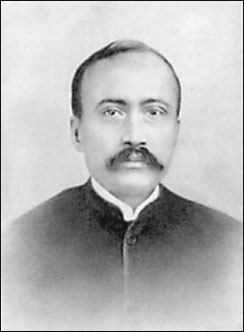
Father was a strict disciplinarian to his children in their early years, but his attitude toward himself was truly Spartan. He never visited the theater, for instance, but sought his recreation in various spiritual practices and in reading the bhagavad gita. [^1] Shunning all luxuries, he would cling to one old pair of shoes until they were useless. His sons bought automobiles after they came into popular use, but Father was always content with the trolley car for his daily ride to the office. The accumulation of money for the sake of power was alien to his nature. Once, after organizing the Calcutta Urban Bank, he refused to benefit himself by holding any of its shares. He had simply wished to perform a civic duty in his spare time.
Father was strict with his children in their early years, but he was even stricter with himself. For instance, he never went to the theater. Instead, he found relaxation in various spiritual practices and in reading the bhagavad gita. [^1] He avoided all luxuries and kept wearing the same old pair of shoes until they were useless. His sons bought cars after cars became popular. But Father was always content to take the trolley car to work each day. Building wealth for the sake of power was foreign to his nature. Once, after organizing the Calcutta Urban Bank, he refused to profit personally by owning any shares in the bank. He had simply wanted to fulfill a civic duty in his spare time.
Several years after Father had retired on a pension, an English accountant arrived to examine the books of the Bengal-Nagpur Railway Company. The amazed investigator discovered that Father had never applied for overdue bonuses.
Several years after Father retired with a pension, an English accountant arrived to check the Bengal-Nagpur Railway Company’s books. The accountant was amazed to discover that Father had never applied for bonuses he was owed.
“He did the work of three men!” the accountant told the company. “He has rupees 125,000 (about $41,250.) owing to him as back compensation.” The officials presented Father with a check for this amount. He thought so little about it that he overlooked any mention to the family. Much later he was questioned by my youngest brother Bishnu, who noticed the large deposit on a bank statement.
“He did the work of three men!” the accountant told the company. “He is owed 125,000 rupees (about $41,250) in back pay.” The officials gave Father a check for that amount. He gave the payment so little thought that he forgot to mention it to the family. Much later, my youngest brother Bishnu noticed the large deposit on a bank statement and asked Father about it.
“Why be elated by material profit?” Father replied. “The one who pursues a goal of evenmindedness is neither jubilant with gain nor depressed by loss. He knows that man arrives penniless in this world, and departs without a single rupee.”
“Why get excited about financial gain?” Father replied. “Someone who aims to stay even-minded is neither overjoyed by gain nor discouraged by loss. He knows that a person enters this world penniless and leaves without a single rupee.”
Early in their married life, my parents became disciples of a great master, Lahiri Mahasaya of Benares. This contact strengthened Father’s naturally ascetical temperament. Mother made a remarkable admission to my eldest sister Roma: “Your father and myself live together as man and wife only once a year, for the purpose of having children.”
Early in their marriage, my parents became disciples of a great master, Lahiri Mahasaya of Benares. Their connection with him strengthened Father’s natural tendency toward self-denial. Mother made a remarkable admission to my eldest sister Roma: “Your father and I have sex only once a year, for the purpose of having children.”
Father first met Lahiri Mahasaya through Abinash Babu, [^1] an employee in the Gorakhpur office of the Bengal-Nagpur Railway. Abinash instructed my young ears with engrossing tales of many Indian saints. He invariably concluded with a tribute to the superior glories of his own guru.
Father first met Lahiri Mahasaya through Abinash Babu, [^1] who worked in the Gorakhpur office of the Bengal-Nagpur Railway. When I was young, Abinash taught me about many Indian saints through captivating stories. He always ended by praising his own guru as greater than the other saints.
“Did you ever hear of the extraordinary circumstances under which your father became a disciple of Lahiri Mahasaya?”
“Have you heard about the extraordinary way your father became a disciple of Lahiri Mahasaya?”
It was on a lazy summer afternoon, as Abinash and I sat together in the compound of my home, that he put this intriguing question. I shook my head with a smile of anticipation.
On a lazy summer afternoon, Abinash and I sat together in the grounds of my home. As we sat, he asked this intriguing question. I shook my head with a smile of anticipation.
“Years ago, before you were born, I asked my superior officer-your father-to give me a week’s leave from my Gorakhpur duties in order to visit my guru in Benares. Your father ridiculed my plan.
“Years ago, before you were born, I asked my superior officer for a week off from my duties in Gorakhpur. Your father was my superior officer. I wanted to visit my guru in Benares. Your father mocked my plan.
“‘Are you going to become a religious fanatic?’ he inquired. ‘Concentrate on your office work if you want to forge ahead.’
“‘Are you going to become a religious fanatic?’ he asked. ‘Focus on your office work if you want to get ahead.’
“Sadly walking home along a woodland path that day, I met your father in a palanquin. He dismissed his servants and conveyance, and fell into step beside me. Seeking to console me, he pointed out the advantages of striving for worldly success. But I heard him listlessly. My heart was repeating: ‘Lahiri Mahasaya! I cannot live without seeing you!’
“I was walking home sadly along a woodland path that day when I met your father in a palanquin. He sent his servants and palanquin away and began walking beside me. To comfort me, he pointed out the benefits of working toward worldly success. But I listened with little interest. My heart kept repeating: ‘Lahiri Mahasaya! I cannot live without seeing you!’
“Our path took us to the edge of a tranquil field, where the rays of the late afternoon sun were still crowning the tall ripple of the wild grass. We paused in admiration. There in the field, only a few yards from us, the form of my great guru suddenly appeared! [^1]
“Our path led us to the edge of a peaceful field. The late afternoon sunlight still crowned the tops of the tall, rippling wild grass. We stopped to admire the scene. There in the field, only a few yards from us, the form of my great guru suddenly appeared! [^1]
“‘Bhagabati, you are too hard on your employee!’ His voice was resonant in our astounded ears. He vanished as mysteriously as he had come. On my knees I was exclaiming, ‘Lahiri Mahasaya! Lahiri Mahasaya!’ Your father was motionless with stupefaction for a few moments.
“‘Bhagabati, you are too hard on your employee!’ His voice rang in our ears as we listened in amazement. He vanished as mysteriously as he had appeared. On my knees, I cried out, ‘Lahiri Mahasaya! Lahiri Mahasaya!’ Your father stood motionless with shock for a few moments.
“‘Abinash, not only do I give you leave, but I give myself leave to start for Benares tomorrow. I must know this great Lahiri Mahasaya, who is able to materialize himself at will in order to intercede for you! I will take my wife and ask this master to initiate us in his spiritual path. Will you guide us to him?’
“‘Abinash, not only am I giving you leave, but I’m also giving myself leave to go to Benares tomorrow. I must meet this great Lahiri Mahasaya, who can appear in physical form at will to speak on your behalf! I will take my wife and ask this master to initiate us into his spiritual path. Will you guide us to him?’
“‘Of course.’ Joy filled me at the miraculous answer to my prayer, and the quick, favorable turn of events.
“‘Of course.’ I was filled with joy at the miraculous answer to my prayer and how quickly events turned in my favor.
“The next evening your parents and I entrained for Benares. We took a horse cart the following day, and then had to walk through narrow lanes to my guru’s secluded home. Entering his little parlor, we bowed before the master, enlocked in his habitual lotus posture. He blinked his piercing eyes and leveled them on your father.
“The next evening your parents and I took the train to Benares. The following day, we took a horse-drawn cart, then had to walk through narrow lanes to my guru’s secluded home. We entered his small sitting room and bowed before the master, who sat in his usual lotus position. He blinked his piercing eyes and fixed his gaze on your father.
“‘Bhagabati, you are too hard on your employee!’ His words were the same as those he had used two days before in the Gorakhpur field. He added, ‘I am glad that you have allowed Abinash to visit me, and that you and your wife have accompanied him.’
“‘Bhagabati, you are too hard on your employee!’ He had said the same words two days earlier in the Gorakhpur field. He added, ‘I’m glad you let Abinash visit me, and that you and your wife came with him.’
“To their joy, he initiated your parents in the spiritual practice of Kriya Yoga. [^1] Your father and I, as brother disciples, have been close friends since the memorable day of the vision. Lahiri Mahasaya took a definite interest in your own birth. Your life shall surely be linked with his own: the master’s blessing never fails.”
“To their joy, he initiated your parents into the spiritual practice of Kriya Yoga. [^1] Your father and I are fellow disciples. We have been close friends since that memorable day of the vision. Lahiri Mahasaya took a clear interest in your birth. Your life will surely be linked with his: the master’s blessing never fails.”
Lahiri Mahasaya left this world shortly after I had entered it. His picture, in an ornate frame, always graced our family altar in the various cities to which Father was transferred by his office. Many a morning and evening found Mother and me meditating before an improvised shrine, offering flowers dipped in fragrant sandalwood paste. With frankincense and myrrh as well as our united devotions, we honored the divinity which had found full expression in Lahiri Mahasaya.
Lahiri Mahasaya passed away shortly after I was born. His picture, in an ornate frame, always adorned our family altar wherever Father’s work transferred him. On many mornings and evenings, Mother and I meditated before a makeshift shrine, offering flowers dipped in fragrant sandalwood paste. With frankincense, myrrh, and our shared devotion, we honored the divinity fully expressed in Lahiri Mahasaya.
His picture had a surpassing influence over my life. As I grew, the thought of the master grew with me. In meditation I would often see his photographic image emerge from its small frame and, taking a living form, sit before me. When I attempted to touch the feet of his luminous body, it would change and again become the picture. As childhood slipped into boyhood, I found Lahiri Mahasaya transformed in my mind from a little image, cribbed in a frame, to a living, enlightening presence. I frequently prayed to him in moments of trial or confusion, finding within me his solacing direction. At first I grieved because he was no longer physically living. As I began to discover his secret omnipresence, I lamented no more. He had often written to those of his disciples who were over-anxious to see him: “Why come to view my bones and flesh, when I am ever within range of your kutastha (spiritual sight)?”
His picture had an extraordinary influence on my life. As I grew, my awareness of the master grew with me. In meditation, I would often see his image emerge from its small frame, take living form, and sit before me. When I tried to touch the feet of his glowing body, his form would change back into the picture. As I passed from childhood into boyhood, Lahiri Mahasaya changed in my mind. He was no longer a small image confined to a frame, but a living presence bringing spiritual understanding. I often prayed to him in moments of trouble or confusion and found his comforting guidance within me. At first, I grieved because he was no longer physically alive. As I began to discover that he was invisibly present everywhere, I no longer grieved. He had often written to disciples who were overly eager to see him: “Why come to see my flesh and bones when I am always within reach of your kutastha (spiritual sight)?”
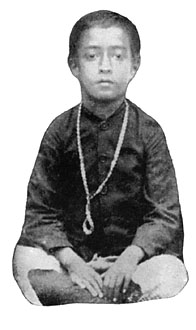
I was blessed about the age of eight with a wonderful healing through the photograph of Lahiri Mahasaya. This experience gave intensification to my love. While at our family estate in Ichapur, Bengal, I was stricken with Asiatic cholera. My life was despaired of; the doctors could do nothing. At my bedside, Mother frantically motioned me to look at Lahiri Mahasaya’s picture on the wall above my head.
When I was about eight, I was blessed with a wonderful healing through the photograph of Lahiri Mahasaya. This experience deepened my love. While at our family estate in Ichapur, Bengal, I fell ill with Asiatic cholera. No one thought I would survive. The doctors could do nothing. At my bedside, Mother frantically gestured for me to look at Lahiri Mahasaya’s picture on the wall above my head.
“Bow to him mentally!” She knew I was too feeble even to lift my hands in salutation. “If you really show your devotion and inwardly kneel before him, your life will be spared!”
“Bow to him in your mind!” She knew I was too weak even to raise my hands in greeting. “If you truly show your devotion and kneel before him in your heart, your life will be spared!”
I gazed at his photograph and saw there a blinding light, enveloping my body and the entire room. My nausea and other uncontrollable symptoms disappeared; I was well. At once I felt strong enough to bend over and touch Mother’s feet in appreciation of her immeasurable faith in her guru. Mother pressed her head repeatedly against the little picture.
I looked at his photograph and saw a blinding light surrounding my body and the entire room. My nausea and other uncontrollable symptoms disappeared. I was well. Immediately, I felt strong enough to bend down and touch Mother’s feet. I did so in gratitude for her immeasurable faith in her guru. Mother repeatedly pressed her head against the little picture.
“O Omnipresent Master, I thank thee that thy light hath healed my son!”
“Ever-present Master, thank you for healing my son with your light!”
I realized that she too had witnessed the luminous blaze through which I had instantly recovered from a usually fatal disease.
I realized that she too had seen the blaze of light. Through that light, I had instantly recovered from a disease that was usually fatal.
One of my most precious possessions is that same photograph. Given to Father by Lahiri Mahasaya himself, it carries a holy vibration. The picture had a miraculous origin. I heard the story from Father’s brother disciple, Kali Kumar Roy.
That same photograph is one of my most precious possessions. Lahiri Mahasaya himself gave it to Father, and the photograph carries a holy vibration. The picture had a miraculous origin. I heard the story from Kali Kumar Roy, a fellow disciple of Father’s.
It appears that the master had an aversion to being photographed. Over his protest, a group picture was once taken of him and a cluster of devotees, including Kali Kumar Roy. It was an amazed photographer who discovered that the plate which had clear images of all the disciples, revealed nothing more than a blank space in the center where he had reasonably expected to find the outlines of Lahiri Mahasaya. The phenomenon was widely discussed.
The master seems to have disliked being photographed. Despite his protests, a group photo was once taken of him with several devotees, including Kali Kumar Roy. The photographer was amazed to discover that the photographic plate showed clear images of all the disciples. But in the center, where he had reasonably expected to see Lahiri Mahasaya’s outline, there was only a blank space. The phenomenon was widely discussed.
A certain student and expert photographer, Ganga Dhar Babu, boasted that the fugitive figure would not escape him. The next morning, as the guru sat in lotus posture on a wooden bench with a screen behind him, Ganga Dhar Babu arrived with his equipment. Taking every precaution for success, he greedily exposed twelve plates. On each one he soon found the imprint of the wooden bench and screen, but once again the master’s form was missing.
A student and expert photographer, Ganga Dhar Babu, boasted that the elusive figure would not escape his camera. The next morning, the guru sat in lotus posture on a wooden bench with a screen behind him. Ganga Dhar Babu arrived with his equipment. Taking every precaution to succeed, he eagerly exposed twelve photographic plates. Each plate soon showed the wooden bench and screen, but once again the master’s figure was missing.
With tears and shattered pride, Ganga Dhar Babu sought out his guru. It was many hours before Lahiri Mahasaya broke his silence with a pregnant comment:
In tears and with his pride shattered, Ganga Dhar Babu sought out his guru. Many hours passed before Lahiri Mahasaya broke his silence with a meaningful comment:
“I am Spirit. Can your camera reflect the omnipresent Invisible?”
“I am Spirit. Can your camera capture what is invisible and present everywhere?”
“I see it cannot! But, Holy Sir, I lovingly desire a picture of the bodily temple where alone, to my narrow vision, that Spirit appears fully to dwell.”
“I see it cannot! But, Holy Sir, I lovingly wish for a picture of your body, a temple. To my limited vision, that Spirit seems to dwell fully only in that temple.”
“Come, then, tomorrow morning. I will pose for you.”
“Then come tomorrow morning. I’ll pose for you.”
Again the photographer focused his camera. This time the sacred figure, not cloaked with mysterious imperceptibility, was sharp on the plate. The master never posed for another picture; at least, I have seen none.
The photographer focused his camera again. This time, the sacred figure was no longer mysteriously invisible and appeared clearly on the photographic plate. The master never posed for another picture. At least, I have seen no other picture of him.
The photograph is reproduced in this book. Lahiri Mahasaya’s fair features, of a universal cast, hardly suggest to what race he belonged. His intense joy of God-communion is slightly revealed in a somewhat enigmatic smile. His eyes, half open to denote a nominal direction on the outer world, are half closed also. Completely oblivious to the poor lures of the earth, he was fully awake at all times to the spiritual problems of seekers who approached for his bounty.
The photograph appears in this book. Lahiri Mahasaya’s fair features have a universal quality and hardly suggest what race he belonged to. His somewhat mysterious smile offers a slight glimpse of his intense joy in communion with God. His eyes are half open, suggesting only slight attention to the outside world, but they are also half closed. He was completely unaware of the world’s meager attractions. Yet he was always fully alert to the spiritual problems of seekers who came for his generous help.
Shortly after my healing through the potency of the guru’s picture, I had an influential spiritual vision. Sitting on my bed one morning, I fell into a deep reverie.
Shortly after I was healed through the power of the guru’s picture, I had a spiritual vision that deeply influenced me. One morning, as I sat on my bed, I sank into deep contemplation.
“What is behind the darkness of closed eyes?” This probing thought came powerfully into my mind. An immense flash of light at once manifested to my inward gaze. Divine shapes of saints, sitting in meditation posture in mountain caves, formed like miniature cinema pictures on the large screen of radiance within my forehead.
“What is behind the darkness of closed eyes?” This searching question came forcefully into my mind. An immense flash of light immediately appeared in my inner vision. Divine figures of saints appeared, seated in meditation in mountain caves. They looked like miniature movie images on the large screen of light within my forehead.
“Who are you?” I spoke aloud.
“Who are you?” I said out loud.
“We are the Himalayan yogis.” The celestial response is difficult to describe; my heart was thrilled.
“We are the Himalayan yogis.” The heavenly reply is hard to describe. My heart filled with excitement.
“Ah, I long to go to the Himalayas and become like you!” The vision vanished, but the silvery beams expanded in ever-widening circles to infinity.
“Ah, I long to go to the Himalayas and become like you!” The vision disappeared, but the silvery beams spread outward in ever-widening circles, reaching into infinity.
“What is this wondrous glow?”
“What is this wonderful glow?”
“I am Iswara.[^1] I am Light.” The voice was as murmuring clouds.
“I am Iswara.[^1] I am Light.” The voice sounded like murmuring clouds.
“I want to be one with Thee!”
“I want to be one with you!”
Out of the slow dwindling of my divine ecstasy, I salvaged a permanent legacy of inspiration to seek God. “He is eternal, ever-new Joy!” This memory persisted long after the day of rapture.
As my divine ecstasy slowly faded, I was left with lasting inspiration to seek God. “He is eternal, ever-new Joy!” This memory stayed with me long after that day of overwhelming joy.
Another early recollection is outstanding; and literally so, for I bear the scar to this day. My elder sister Uma and I were seated in the early morning under a neem tree in our Gorakhpur compound. She was helping me with a Bengali primer, what time I could spare my gaze from the near-by parrots eating ripe margosa fruit. Uma complained of a boil on her leg, and fetched a jar of ointment. I smeared a bit of the salve on my forearm.
Another early memory stands out, quite literally, because I still bear the scar. My older sister Uma and I were sitting under a neem tree in our Gorakhpur compound early one morning. She was helping me with a beginner’s Bengali textbook whenever I could look away from nearby parrots eating ripe margosa fruit. Uma complained about a boil on her leg and went to get a jar of ointment. I smeared a little of the ointment on my forearm.
“Why do you use medicine on a healthy arm?”
“Why do you put medicine on a healthy arm?”
“Well, Sis, I feel I am going to have a boil tomorrow. I am testing your ointment on the spot where the boil will appear.”
“Well, Sis, I feel I’m going to get a boil tomorrow. I’m testing your ointment on the spot where the boil will appear.”
“You little liar!”
“You little liar!”
“Sis, don’t call me a liar until you see what happens in the morning.” Indignation filled me.
“Sis, don’t call me a liar until you see what happens in the morning.” I was filled with anger at being called a liar.
Uma was unimpressed, and thrice repeated her taunt. An adamant resolution sounded in my voice as I made slow reply.
Uma was unimpressed and repeated her taunt three times. My voice carried firm determination as I replied slowly.
“By the power of will in me, I say that tomorrow I shall have a fairly large boil in this exact place on my arm; and your boil shall swell to twice its present size!”
“By the power of my will, I declare that tomorrow I will have a fairly large boil. It will be in this exact spot on my arm. And your boil will swell to twice its current size!”
Morning found me with a stalwart boil on the indicated spot; the dimensions of Uma’s boil had doubled. With a shriek, my sister rushed to Mother. “Mukunda has become a necromancer!” Gravely, Mother instructed me never to use the power of words for doing harm. I have always remembered her counsel, and followed it.
By morning, I had a large boil on the spot I had pointed to. Uma’s boil had doubled in size. With a shriek, my sister rushed to Mother. “Mukunda has become a sorcerer!” Mother solemnly told me never to use the power of words to cause harm. I have always remembered her advice and followed it.
My boil was surgically treated. A noticeable scar, left by the doctor’s incision, is present today. On my right forearm is a constant reminder of the power in man’s sheer word.
My boil was treated with surgery. A visible scar from the doctor’s cut remains today. The scar on my right forearm constantly reminds me of the power of a person’s words alone.
Those simple and apparently harmless phrases to Uma, spoken with deep concentration, had possessed sufficient hidden force to explode like bombs and produce definite, though injurious, effects. I understood, later, that the explosive vibratory power in speech could be wisely directed to free one’s life from difficulties, and thus operate without scar or rebuke. [^1]
Those simple, seemingly harmless words to Uma, spoken with deep concentration, carried enough hidden force to explode like bombs. They produced definite but harmful effects. Later, I understood that the explosive power of vibrations in speech could be wisely directed to free one’s life from difficulties. Used this way, that power could work without leaving scars or drawing criticism. [^1]
Our family moved to Lahore in the Punjab. There I acquired a picture of the Divine Mother in the form of the Goddess Kali. [^1] It sanctified a small informal shrine on the balcony of our home. An unequivocal conviction came over me that fulfillment would crown any of my prayers uttered in that sacred spot. Standing there with Uma one day, I watched two kites flying over the roofs of the buildings on the opposite side of the very narrow lane.
Our family moved to Lahore in the Punjab. There I obtained a picture of the Divine Mother in the form of the Goddess Kali. [^1] The picture made a small, informal shrine on our balcony sacred. I became completely convinced that any prayer I offered in that sacred spot would be answered. One day, standing there with Uma, I watched two kites flying above the rooftops across the very narrow lane.
“Why are you so quiet?” Uma pushed me playfully.
“Why are you so quiet?” Uma gave me a playful push.
“I am just thinking how wonderful it is that Divine Mother gives me whatever I ask.”
“I’m just thinking how wonderful it is that Divine Mother gives me whatever I ask for.”
“I suppose She would give you those two kites!” My sister laughed derisively.
“I suppose she would give you those two kites!” My sister laughed mockingly.
“Why not?” I began silent prayers for their possession.
“Why not?” I began praying silently to have them.
Matches are played in India with kites whose strings are covered with glue and ground glass. Each player attempts to sever the string of his opponent. A freed kite sails over the roofs; there is great fun in catching it. Inasmuch as Uma and I were on the balcony, it seemed impossible that any loosed kite could come into our hands; its string would naturally dangle over the roofs.
In India, people compete with kites whose strings are coated with glue and ground glass. Each player tries to cut the opponent’s string. A kite set free sails over the rooftops, and catching it is great fun. Since Uma and I were on the balcony, it seemed impossible for us to catch any kite set free. The kite’s string would naturally hang over the rooftops.
The players across the lane began their match. One string was cut; immediately the kite floated in my direction. It was stationary for a moment, through sudden abatement of breeze, which sufficed to firmly entangle the string with a cactus plant on top of the opposite house. A perfect loop was formed for my seizure. I handed the prize to Uma.
The players across the lane began their match. One string was cut, and the kite immediately floated toward me. The breeze suddenly died down, leaving the kite still for a moment. That pause was enough for the string to catch firmly on a cactus atop the house across the lane. The string formed a perfect loop for me to grab. I handed the prize to Uma.
“It was just an extraordinary accident, and not an answer to your prayer. If the other kite comes to you, then I shall believe.” Sister’s dark eyes conveyed more amazement than her words.
“It was just an extraordinary coincidence, not an answer to your prayer. If the other kite comes to you, then I’ll believe.” Sister’s dark eyes showed more amazement than her words did.
I continued my prayers with a crescendo intensity. A forcible tug by the other player resulted in the abrupt loss of his kite. It headed toward me, dancing in the wind. My helpful assistant, the cactus plant, again secured the kite string in the necessary loop by which I could grasp it. I presented my second trophy to Uma.
I continued praying with growing intensity. A strong tug by the other player caused him to lose his kite suddenly. The kite danced in the wind as it headed toward me. Once again, my helpful assistant, the cactus plant, caught the kite string in a loop so I could grab it. I gave my second trophy to Uma.
“Indeed, Divine Mother listens to you! This is all too uncanny for me!” Sister bolted away like a frightened fawn.
“Divine Mother really does listen to you! This is all too strange for me!” Sister ran off like a frightened fawn.
1-2: Spiritual teacher; from Sanskrit root _gu_r, to raise, to uplift.
1-2: Spiritual teacher. From the Sanskrit root _gu_r, meaning to raise or uplift.
1-3: A practitioner of yoga, “union,” ancient Indian science of meditation on God.
1-3: Someone who practices yoga, meaning “union,” the ancient Indian science of meditating on God.
1-4: My name was changed to Yogananda when I entered the ancient monastic Swami Order in 1914. My guru bestowed the religious title of Paramhansa on me in 1935 (see chapters [^24] and [^42]).
1-4: My name was changed to Yogananda when I joined the ancient monastic Swami Order in 1914. My guru gave me the religious title of Paramhansa in 1935 (see chapters [^24] and [^42]).
1-5: Traditionally, the second caste of warriors and rulers.
1-5: Traditionally, the second caste, made up of warriors and rulers.
1-6: These ancient epics are the hoard of India’s history, mythology, and philosophy. An “Everyman’s Library” volume, Ramayana and Mahabharata, is a condensation in English verse by Romesh Dutt (New York: E. P. Dutton).
1-6: These ancient epics are a treasury of India’s history, mythology, and philosophy. The “Everyman’s Library” volume, Ramayana and Mahabharata, is Romesh Dutt’s shortened version in English verse (New York: E. P. Dutton).
1-7: This noble Sanskrit poem, which occurs as part of the Mahabharata epic, is the Hindu Bible. The most poetical English translation is Edwin Arnold’s The Song Celestial (Philadelphia: David McKay, 75 cents). One of the best translations with detailed commentary is Sri Aurobindo’s Message Of The Gita (Jupiter Press, 16 Semudoss St., Madras, India, $3.50).
1-7: This noble Sanskrit poem is part of the Mahabharata epic and is the Hindu Bible. The most poetic English translation is Edwin Arnold’s The Song Celestial (Philadelphia: David McKay, 75 cents). One of the best translations with detailed commentary is Sri Aurobindo’s Message Of The Gita (Jupiter Press, 16 Semudoss St., Madras, India, $3.50).
1-8: Babu (Mister) is placed in Bengali names at the end.
1-8: Babu (Mister) comes at the end of Bengali names.
1-9: The phenomenal powers possessed by great masters are explained in [^30], “The Law of Miracles.”
1-9: The extraordinary powers of great masters are explained in [^30], “The Law of Miracles.”
1-10: A yogic technique whereby the sensory tumult is stilled, permitting man to achieve an ever-increasing identity with cosmic consciousness. (See [^26].)
1-10: A yogic technique that quiets the turmoil of the senses, allowing a person to become increasingly one with cosmic consciousness. (See [^26].)
1-11: A Sanskrit name for God as Ruler of the universe; from the root Is , to rule. There are 108 names for God in the Hindu scriptures, each one carrying a different shade of philosophical meaning.
1-11: A Sanskrit name for God as ruler of the universe. It comes from the root Is, meaning to rule. Hindu scriptures have 108 names for God, each expressing a different shade of philosophical meaning.
1-12: The infinite potencies of sound derive from the Creative Word, Aum , the cosmic vibratory power behind all atomic energies. Any word spoken with clear realization and deep concentration has a materializing value. Loud or silent repetition of inspiring words has been found effective in Coueism and similar systems of psychotherapy; the secret lies in the stepping-up of the mind’s vibratory rate. The poet Tennyson has left us, in his Memoirs , an account of his repetitious device for passing beyond the conscious mind into superconsciousness:
1-12: Sound’s limitless powers come from the Creative Word, Aum, the cosmic vibrating power behind all atomic energies. Any word spoken with clear understanding and deep concentration has the power to take material form. Repeating inspiring words aloud or silently has been found effective in Coueism and similar systems of psychotherapy. The secret lies in increasing the mind’s rate of vibration. In his Memoirs, the poet Tennyson described his method of repetition for moving beyond the conscious mind into superconsciousness:
“A kind of waking trance-this for lack of a better word-I have frequently had, quite up from boyhood, when I have been all alone,” Tennyson wrote. “This has come upon me through repeating my own name to myself silently, till all at once, as it were out of the intensity of the consciousness of individuality, individuality itself seemed to dissolve and fade away into boundless being, and this not a confused state but the clearest, the surest of the surest, utterly beyond words-where death was an almost laughable impossibility-the loss of personality (if so it were) seeming no extinction, but the only true life.” He wrote further: “It is no nebulous ecstasy, but a state of transcendent wonder, associated with absolute clearness of mind.”
“I have often experienced a kind of waking trance since boyhood, when I have been entirely alone,” Tennyson wrote. “I call it a trance for lack of a better word. The experience has come through repeating my own name silently to myself. Then suddenly, as if from the intensity of my awareness of individuality, individuality itself seemed to dissolve into boundless being. Yet this was not a confused state. It was the clearest state, the most certain of all, utterly beyond words. In that state, death was an almost laughable impossibility. The loss of my individual identity (if that was what happened) seemed not an extinction, but the only true life.” He wrote further: “It is no vague ecstasy, but a state of wonder beyond ordinary experience, accompanied by absolute clarity of mind.”
1-13: Kali is a symbol of God in the aspect of eternal Mother Nature.
1-13: Kali symbolizes God as eternal Mother Nature.