

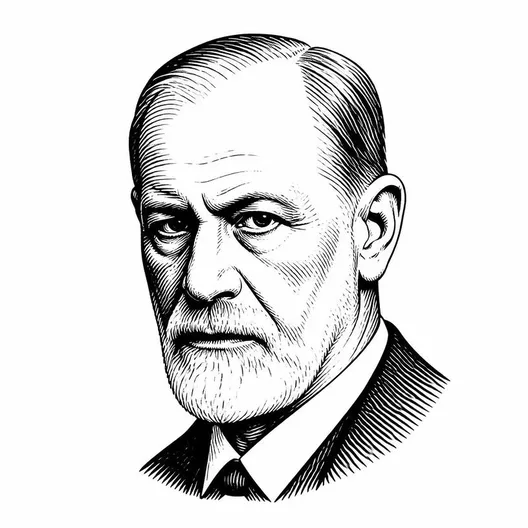
Sigmund Freud
Austrian neurologist who founded psychoanalysis and built a theory of the unconscious mind Show bio
Bio
Sigmund Freud planned to study law but switched to medicine at the University of Vienna. He spent six years comparing human brains with those of frogs, lampreys and crayfish. Freud later wrote that his secular Jewish identity made him a nonconformist thinker.
He moved from the lab to patients, opening a practice for "nervous disorders" in 1886. Freud read dreams as wish fulfillments, and they became his model for how symptoms form.
He carried his Jewish identity into psychoanalysis, which shares its concern with desire bounded by law. Freud became, in the poet W. H. Auden's words, "a whole climate of opinion."
Books by Sigmund Freud
- Civilization and Its DiscontentsCivilization and Its Discontents
This extended essay examines the conflict between human desires and the demands of living together. A comparison with Rome imagines the mind as a city where every past building still stands.
- The Future of an IllusionThe Future of an Illusion
This short essay examines religious belief through human wishes and fears. Freud debates an imagined opponent who challenges his hope that people can live without religion.