

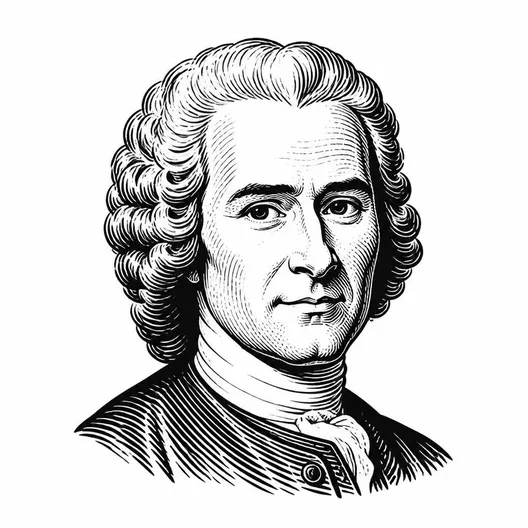
Jean-Jacques Rousseau
Genevan philosopher whose Social Contract defined legitimate rule and whose Confessions began modern autobiography Show bio
Bio
Jean-Jacques Rousseau lost his mother nine days after birth and called it "the first of my misfortunes." He said reading Plutarch's tales of ancient heroes with his father formed his "free and republican spirit." Rousseau ran away from Geneva at 15, after finding the city gates locked for the night.
He asked in The Social Contract what gives a government the right to rule. Rousseau also wrote his own life story, the Confessions, which appeared after his death.
He shaped Enlightenment thought across Europe and parts of the French Revolution. Rousseau, who ran from Geneva at 15, still signed his books as a "Citizen of Geneva."
Books by Jean-Jacques Rousseau
- Discourse on the Origin of InequalityDiscourse on the Origin of Inequality
This essay traces how inequality might have developed as humans moved from solitary lives into organized society. A striking passage imagines someone fencing off land and declaring it his own.
- The Social ContractThe Social Contract
This political treatise examines how societies form and what gives governments the right to rule. The Social Contract opens with the claim that people are born free but live in chains.