

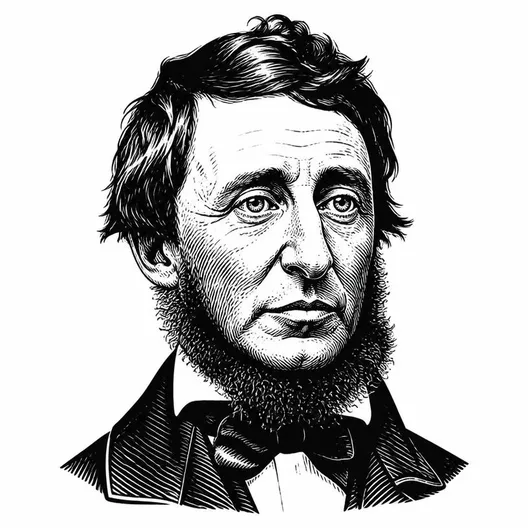
Henry David Thoreau
American essayist whose book Walden praised simple living and whose essay “Civil Disobedience” urged defying unjust states Show bio
Bio
Henry David Thoreau quit his first teaching job within weeks rather than physically punish students. He found a mentor in the essayist Ralph Waldo Emerson, who suggested he keep a journal. Thoreau embraced transcendentalism, which held that nature is the outward sign of inward spirit.
He wrote that he went to the woods because he “wished to live deliberately.” Thoreau drew on those years for Walden, his book about living plainly in nature.
He argued in his essay “Civil Disobedience” that citizens may disobey an unjust state. Thoreau later influenced Leo Tolstoy, Mahatma Gandhi and Martin Luther King Jr. with that argument.