

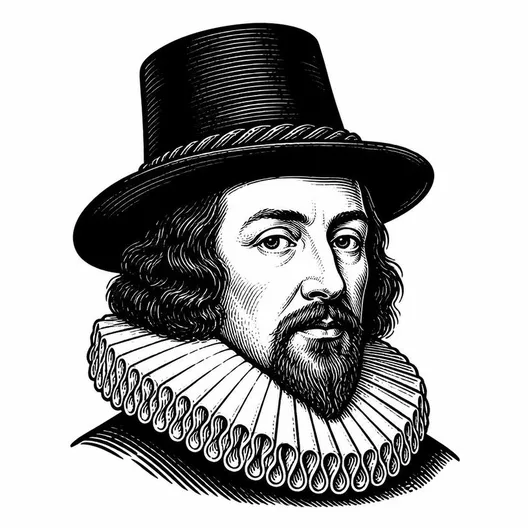
Francis Bacon
English philosopher and statesman, called the father of empiricism, who grounded knowledge in observing nature Show bio
Bio
Francis Bacon entered Cambridge at 12 and came to believe the science of his day was wrong. He found Aristotle's philosophy barren, argumentative and wrong in its aims. Bacon lost most of his expected inheritance when his father died suddenly, and fell into debt.
He rose through law and Parliament to Lord Chancellor, despite royal snubs and an arrest for debt. Bacon argued that science must rest on close observation and methodical doubt, to avoid self-deception.
He influenced science throughout the Scientific Revolution, and his skeptical framework still anchors debates on method. Bacon went from doubting the science of his day to helping found the scientific method.