This adventure novel follows Phileas Fogg as he bets he can circle the world in eighty days. An elephant ride across India leads to a rescue that threatens his carefully planned schedule.
225 pages 4h 21m reading time
One of the best-known adventure novels ever written, and among the most famous books by an early master of science fiction and travel adventure.
Imagines a world newly tied together by steamships, railways, and the telegraph, where a careful plan and a timetable can carry a person all the way around the globe.
Builds to a famous twist about time itself: by traveling east around the world, Fogg gains a full day without knowing it.
Inspired real attempts to beat Fogg's record, most famously the American reporter Nellie Bly, who went around the world in 72 days in 1889 and 1890.
Gave the world a story retold again and again on stage and screen, including the 1956 film that won the Academy Award for Best Picture.
Ended almost in real time
The newspaper serial printed its last part on December 22, 1872, one day after Fogg's fictional return.
Read in daily installments
The story first appeared in parts in the Paris newspaper Le Temps before it came out as a book.
Born from new travel routes
Verne drew on the newly opened Suez Canal, the American cross-country railroad, and India's new railways.
A borrowed time trick
The lost-day twist likely drew on Edgar Allan Poe's story "Three Sundays in a Week," which uses a similar idea.
A hit play paid more
Verne's own stage version, opening in Paris in 1874, ran for years and earned him more than the novel.


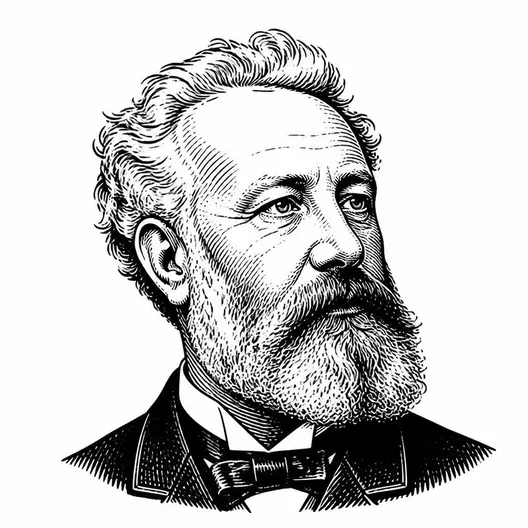 Jules Verne 1872