Chapter 3
Life in the 25th Century
We were delayed in starting for quite a while since I had to acquire a few crude ideas about the technique of using these belts. I had been sitting down, for instance, with the belt strapped about me, enjoying an ease similar to that of a comfortable armchair; when I stood up with a natural exertion of muscular effort, I shot ten feet into the air, with a wild instinctive thrashing of arms and legs that amused Wilma greatly.
We were delayed for quite a while because I had to learn the basics of using the belts. For example, I had been sitting with the belt strapped around me, as comfortable as if I were in an armchair. When I stood up with my usual effort, I shot ten feet into the air. I instinctively flailed my arms and legs, which greatly amused Wilma.
But after some practice, I began to get the trick of gauging muscular effort to a minimum of vertical and a maximum of horizontal. The correct form, I found, was in a measure comparable to that of skating. I found, also, that in forest work particularly the arms and hands could be used to great advantage in swinging along from branch to branch, so prolonging leaps almost indefinitely at times.
But after some practice, I learned to use my muscles to move as little upward and as much forward as possible. I found that the right technique was somewhat like skating. I also found that, especially in the forest, I could use my arms and hands to swing from branch to branch. This sometimes allowed me to extend my leaps almost indefinitely.
In going up the side of the mountain, I found that my 20th Century muscles did have an advantage, in spite of lack of skill with the belt, and since the slopes were very sharp, and most of our leaps were upward, I could have distanced Wilma easily. But when we crossed the ridge and descended, she outstripped me with her superior technique. Choosing the steepest slopes, she would crouch in the top of a tree, and propel herself outward, literally diving until, with the loss of horizontal momentum, she would assume a more upright position and float downward. In this manner she would sometimes cover as much as a quarter of a mile in a single leap, while I leaped and scrambled clumsily behind, thoroughly enjoying the novel sensation.
As we climbed the mountain, I found that my 20th Century muscles gave me an advantage, despite my inexperience with the belt. The slopes were very steep, and most of our leaps were upward, so I could easily have left Wilma behind. But when we crossed the ridge and headed down, her superior technique let her outpace me. She chose the steepest slopes and crouched in a treetop. Then she launched herself outward, literally diving until she lost horizontal momentum. At that point, she would straighten up and float down. In this way, she sometimes covered as much as a quarter of a mile in a single leap. I leaped and scrambled clumsily behind her, thoroughly enjoying the new sensation.
Half way down the mountain, we saw another green-clad figure leap out above the tree tops toward us. The three of us perched on an outcropping of rock from which a view for many miles around could be had, while Wilma hastily explained her adventure and my presence to her fellow guard; whose name was Alan. I learned later that this was the modern form of Helen.
Halfway down the mountain, we saw another figure in green leap toward us above the treetops. The three of us perched on a rocky ledge with a view for many miles around. Wilma quickly explained her adventure and my presence to her fellow guard, Alan. I later learned that Alan was the modern form of Helen.
"You want to report by phone then, don't you?" Alan took a compact packet about six inches square from a holster attached to her belt and handed it to Wilma.
"You want to report by phone, then, don't you?" Alan took a compact packet about six inches square from a holster on her belt. He handed it to Wilma.
So far as I could see, it had no special receiver for the ear. Wilma merely threw back a lid, as though she were opening a book, and began to talk. The voice that came back from the machine was as audible as her own.
As far as I could tell, it had no separate earpiece. Wilma simply flipped open a lid, as if opening a book, and began to talk. The voice from the machine was as easy to hear as her own.
She was queried closely as to the attack upon her, and at considerable length as to myself, and I could tell from the tone of that voice that its owner was not prepared to take me at my face value as readily as Wilma had. For that matter, neither was the other girl. I could realize it from the suspicious glances she threw my way, when she thought my attention was elsewhere, and the manner in which her hand hovered constantly near her gun holster.
She was questioned closely about the attack on her, and at considerable length about me. I could tell from the tone of the voice that its owner was less ready than Wilma to take me at face value. For that matter, neither was the other girl. I could tell from the suspicious glances she gave me when she thought I was looking elsewhere. Her hand also hovered constantly near her gun holster.
Wilma was ordered to bring me in at once, and informed that another scout would take her place on the other side of the mountain. So she closed down the lid of the phone and handed it back to Alan, who seemed relieved to see us departing over the tree tops in the direction of the camps.
Wilma was ordered to bring me in immediately. She was told another scout would take her place on the other side of the mountain. So she closed the phone’s lid and handed it back to Alan. He seemed relieved to see us leave over the treetops, heading toward the camps.
We had covered perhaps ten miles, in what still seemed to me a surprisingly easy fashion, when Wilma explained, that from here on we would have to keep to the ground. We were nearing the camps, she said, and there was always the possibility that some small Han scoutship, invisible high in the sky, might catch sight of us through a projectoscope and thus find the general location of the camps.
We had traveled perhaps ten miles, and I was still surprised by how easy it had been. Then Wilma explained that from here on, we would have to stay on the ground. We were nearing the camps, she said. A small Han scoutship could always be high in the sky, invisible to us. It might spot us through a projectoscope and discover the general location of the camps.
Wilma took me to the Scout office, which proved to be a small building of irregular shape, conforming to the trees around it, and substantially constructed of green sheet-like material.
Wilma took me to the Scout office, a small, irregularly shaped building that fit around the trees. It was solidly built from a green, sheet-like material.
I was received by the assistant Scout Boss, who reported my arrival at once to the historical office, and to officials he called the Psycho Boss and the History Boss, who came in a few minutes later. The attitude of all three men was at first polite but skeptical, and Wilma's ardent advocacy seemed to amuse them secretly.
The assistant Scout Boss received me and immediately reported my arrival to the historical office. He also reported it to officials he called the Psycho Boss and the History Boss. They arrived a few minutes later. At first, all three men were polite but skeptical. Wilma's passionate support for me seemed to amuse them, though they kept it to themselves.
For the next two hours I talked, explained and answered questions. I had to explain, in detail, the manner of my life in the 20th Century and my understanding of customs, habits, business, science and the history of that period, and about developments in the centuries that had elapsed. Had I been in a classroom, I would have come through the examination with a very poor mark, for I was unable to give any answer to fully half of their questions. But before long I realized that the majority of these questions were designed as traps. Objects, of whose purpose I knew nothing, were casually handed to me, and I was watched keenly as I handled them.
For the next two hours, I talked, explained, and answered questions. I had to describe my life in the 20th century in detail. I also had to explain what I knew about its customs, habits, business, science, and history. And I had to explain what I knew about developments in the centuries since then. If I had been in a classroom, I would have received a very poor grade. I couldn’t answer fully half their questions. But before long, I realized that most of the questions were traps. They casually handed me objects whose purposes I didn’t know. Then they watched me closely as I handled them.
In the end I could see both amazement and belief begin to show in the faces of my inquisitors, and at last the Historical and Psycho Bosses agreed openly that they could find no flaw in my story or reactions, and that unbelievable as it seemed, my story must be accepted as genuine.
Finally, I could see both amazement and belief beginning to show on my questioners' faces. At last, the Historical and Psycho Bosses openly agreed that they could find no flaw in my story or reactions. They agreed that, unbelievable as my story seemed, it had to be accepted as genuine.
They took me at once to Big Boss Hart. He was a portly man with a "poker face." He would probably have been the successful politician even in the 20th Century.
They took me straight to Big Boss Hart. He was a heavyset man with a "poker face." He probably would have been a successful politician even in the 20th century.
They gave him a brief outline of my story and a report of their examination of me. He made no comment other than to nod his acceptance of it. Then he turned to me.
They briefly told him my story and reported the results of their examination of me. He said nothing, but nodded to show he accepted their report. Then he turned to me.
"How does it feel?" he asked. "Do we look funny to you?"
"How does it feel?" he asked. "Do we look funny to you?"
"A bit strange," I admitted. "But I'm beginning to lose that dazed feeling, though I can see I have an awful lot to learn."
"A little strange," I admitted. "But I'm starting to feel less dazed, though I can see I have a lot to learn."
"Maybe we can learn some things from you, too," he said. "So you fought in the First World War. Do you know, we have very little left in the way of records of the details of that war, that is, the precise conditions under which it was fought, and the tactics employed. We forgot many things during the Han terror, and—well, I think you might have a lot of ideas worth thinking over for our raid masters. By the way, now that you're here, and can't go back to your own century, so to speak, what do you want to do? You're welcome to become one of us. Or perhaps you'd just like to visit with us for a while, and then look around among the other gangs. Maybe you'd like some of the others better. Don't make up your mind now. We'll put you down as an exchange for a while. Let's see. You and Bill Hearn ought to get along well together. He's Camp Boss of Number 34 when he isn't acting as Raid Boss or Scout Boss. There's a vacancy in his camp. Stay with him and think things over as long as you want to. As soon as you make up your mind to anything, let me know."
"Maybe we can learn some things from you, too," he said. "So you fought in the First World War. You know, we have very few records of the details of that war. We know little about the exact conditions under which it was fought or the tactics used. We forgot many things during the Han terror. Well, I think you might have many ideas worth considering for our raid masters. "By the way, now that you're here and can't return to your own century, so to speak, what do you want to do? You're welcome to join us. Or perhaps you'd just like to stay with us for a while, then look around among the other gangs. Maybe you'd like some of the others better. Don't decide now. We'll list you as an exchange for a while. "Let's see. You and Bill Hearn should get along well. He's Camp Boss of Number 34 when he isn't acting as Raid Boss or Scout Boss. There's an opening in his camp. Stay with him and think things over as long as you want. As soon as you decide what you want to do, let me know."
We all shook hands, for that was one custom that had not died out in five hundred years, and I set out with Bill Hearn.
We all shook hands, because that custom had survived for five hundred years. Then I set out with Bill Hearn.
Bill, like all the others, was clad in green. He was a big man. That is, he was about my own height, five feet eleven. This was considerably above the average now, for the race had lost something in stature, it seemed, through the vicissitudes of five centuries. Most of the women were a bit below five feet, and the men only a trifle above this height.
Bill, like all the others, was dressed in green. He was a big man. He was about my height, five feet eleven. That was well above average now. It seemed the race had grown shorter through the hardships of five centuries. Most women were just under five feet tall, and the men were only a little over five feet.
For a period of two weeks Bill was to confine himself to camp duties, so I had a good chance to familiarize myself with the community life. It was not easy. There were so many marvels to absorb. I never ceased to wonder at the strange combination of rustic social life and feverish industrial activity. At least, it was strange to me. For in my experience, industrial development meant crowded cities, tenements, paved streets, profusion of vehicles, noise, hurrying men and women with strained or dull faces, vast structures and ornate public works.
For two weeks, Bill had to stick to camp duties, so I had a good chance to learn about community life. It wasn't easy. There were so many wonders to take in. I never stopped marveling at the strange mix of rural social life and frantic industrial activity. At least, it seemed strange to me. In my experience, industrial development meant crowded cities, tenements, paved streets, and countless vehicles. It meant noise and people rushing about with strained or dull faces. It also meant huge buildings and elaborate public works.
Here, however, was rustic simplicity, apparently isolated families and groups, living in the heart of the forest, with a quarter of a mile or more between households, a total absence of crowds, no means of conveyance other than the belts called jumpers, almost constantly worn by everybody, and an occasional rocket ship, used only for longer journeys, and underground plants or factories that were to my mind more like laboratories and engine rooms; many of them were excavations as deep as mines, with well finished, lighted and comfortable interiors. These people were adepts at camouflage against air observation. Not only would their activity have been unsuspected by an airship passing over the center of the community, but even by an enemy who might happen to drop through the screen of the upper branches to the floor of the forest. The camps, or household structures, were all irregular in shape and of colors that blended with the great trees among which they were hidden.
Here, however, life was simple and rural. Apparently isolated families and groups lived deep in the forest, with a quarter mile or more between households. There were no crowds at all. The only means of transportation were belts called jumpers, which almost everyone wore constantly, and occasional rocket ships used only for longer journeys. The underground plants or factories seemed more like laboratories and engine rooms to me. Many were dug as deep as mines, with well-finished, well-lit, comfortable interiors. These people were experts at hiding from observers in the air. An airship passing over the center of the community would never have suspected any activity there. Even an enemy who happened to drop through the canopy of upper branches to the forest floor would not have suspected it. The camps, or household structures, were all irregularly shaped and colored to blend in with the great trees that hid them.
There were 724 dwellings or "camps" among the Wyomings, located within an area of about fifteen square miles. The total population was 8,688, every man, woman and child, whether member or "exchange," being listed.
The Wyomings had 724 homes, or "camps," spread over about fifteen square miles. The total population was 8,688. Every man, woman, and child was listed, whether a member or an "exchange."
The plants were widely scattered through the territory also. Nowhere was anything like congestion permitted. So far as possible, families and individuals were assigned to living quarters, not too far from the plants or offices in which their work lay.
The plants were also spread widely across the territory. Crowding was not allowed anywhere. Whenever possible, families and individuals were given homes not too far from the plants or offices where they worked.
All able-bodied men and women alternated in two-week periods between military and industrial service, except those who were needed for household work. Since working conditions in the plants and offices were ideal, and everybody thus had plenty of healthy outdoor activity in addition, the population was sturdy and active. Laziness was regarded as nearly the greatest of social offenses. Hard work and general merit were variously rewarded with extra privileges, advancement to positions of authority, and with various items of personal equipment for convenience and luxury.
All able-bodied men and women alternated between two weeks of military service and two weeks of industrial service. The only exceptions were those needed for household work. Working conditions in the plants and offices were ideal, and everyone also got plenty of healthy outdoor activity. As a result, the population was sturdy and active. Laziness was regarded as one of the worst social offenses. Hard work and overall merit were rewarded in various ways. These included extra privileges, promotion to positions of authority, and personal equipment for comfort and luxury.
In leisure moments, I got great enjoyment from sitting outside the dwelling in which I was quartered with Bill Hearn and ten other men, watching the occasional passers-by, as with leisurely, but swift movements, they swung up and down the forest trail, rising from the ground in long almost-horizontal leaps, occasionally swinging from one convenient branch overhead to another before "sliding" back to the ground farther on. Normal traveling pace, where these trails were straight enough, was about twenty miles an hour. Such things as automobiles and railroad trains (the memory of them not more than a month old in my mind) seemed inexpressibly silly and futile compared with such convenience as these belts or jumpers offered.
In my spare time, I enjoyed sitting outside the dwelling I shared with Bill Hearn and ten other men. I watched the occasional passersby travel up and down the forest trail with movements that were swift but unhurried. They rose from the ground in long, nearly horizontal leaps. Sometimes they swung from one convenient branch overhead to another before "sliding" back to the ground farther along. Where the trails were straight enough, the normal traveling speed was about twenty miles an hour. Cars and railroad trains were still fresh in my memory, less than a month old. Yet compared with the convenience of these belts or jumpers, they seemed inexpressibly silly and futile.
Bill suggested that I wander around for several days, from plant to plant, to observe and study what I could. The entire community had been apprised of my coming, my rating as an "exchange" reaching every building and post in the community, by means of ultronic broadcast. Everywhere I was welcomed in an interested and helpful spirit.
Bill suggested I spend several days going from plant to plant, observing and studying what I could. The entire community had been told I was coming. An ultronic broadcast had carried my status as an "exchange" to every building and post in the community. Everywhere I went, people welcomed me with interest and offered to help.
I visited the plants where ultronic vibrations were isolated from the ether and through slow processes built up into sub-electronic, electronic and atomic forms into the two great synthetic elements, ultron and inertron. I learned something, superficially at least, of the processes of combined chemical and mechanical action through which were produced the various forms of synthetic cloth. I watched the manufacture of the machines which were used at locations of construction to produce the various forms of building materials. But I was particularly interested in the munitions plants and the rocket-ship shops.
I visited the plants where ultronic vibrations were isolated from the ether. Through slow processes, the vibrations were built up into sub-electronic, electronic, and atomic forms, producing the two great synthetic elements, ultron and inertron. I learned a little about the combined chemical and mechanical processes used to make the various forms of synthetic cloth, though only on a superficial level. I watched workers manufacture machines used at construction sites to produce various building materials. But I was particularly interested in the munitions plants and rocket-ship shops.
Ultron is a solid of great molecular density and moderate elasticity, which has the property of being 100 percent conductive to those pulsations known as light, electricity and heat. Since it is completely permeable to light vibrations, it is therefore absolutely invisible and non-reflective. Its magnetic response is almost, but not quite, 100 percent also. It is therefore very heavy under normal conditions but extremely responsive to the repellor or anti-gravity rays, such as the Hans use as "legs" for their airships.
Ultron is a solid with great molecular density and moderate elasticity. It is 100 percent conductive to the pulsations known as light, electricity, and heat. Because light vibrations pass completely through it, Ultron is absolutely invisible and non-reflective. Its magnetic response is also almost, but not quite, 100 percent. Ultron is therefore very heavy under normal conditions. But it is extremely responsive to repellor or anti-gravity rays, like those the Hans use as "legs" for their airships.
Inertron is the second great triumph of American research and experimentation with ultronic forces. It was developed just a few years before my awakening in the abandoned mine. It is a synthetic element, built up, through a complicated heterodyning of ultronic pulsations, from "infra-balanced" sub-ionic forms. It is completely inert to both electric and magnetic forces in all the orders above the ultronic; that is to say, the sub-electronic, the electronic, the atomic and the molecular. In consequence it has a number of amazing and valuable properties. One of these is the total lack of weight. Another is a total lack of heat. It has no molecular vibration whatever. It reflects 100 percent of the heat and light impinging upon it. It does not feel cold to the touch, of course, since it will not absorb the heat of the hand. It is a solid, very dense in molecular structure despite its lack of weight, of great strength and considerable elasticity. It is a perfect shield against the disintegrator rays.
Inertron is the second great triumph of American research and experimentation with ultronic forces. It was developed just a few years before I awoke in the abandoned mine. It is a synthetic element, built from "infra-balanced" sub-ionic forms through a complicated heterodyning of ultronic pulsations. Electric and magnetic forces have no effect on it at any level above the ultronic. These include the sub-electronic, the electronic, the atomic, and the molecular levels. As a result, inertron has several amazing and valuable properties. One is the total lack of weight. Another is a total lack of heat. It has no molecular vibration at all. It reflects 100 percent of the heat and light that strikes it. Of course, it does not feel cold to the touch, because it will not absorb heat from the hand. It is a solid with a very dense molecular structure, despite its lack of weight. It is very strong and quite elastic. It is a perfect shield against disintegrator rays.
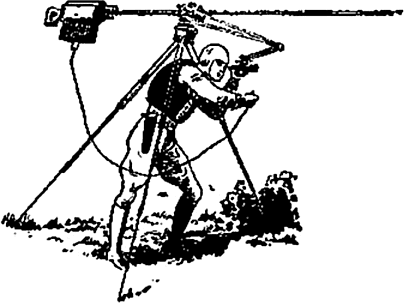
Rocket guns are very simple contrivances so far as the mechanism of launching the bullet is concerned. They are simple light tubes, closed at the rear end, with a trigger-actuated pin for piercing the thin skin at the base of the cartridge. This piercing of the skin starts the chemical and atomic reaction. The entire cartridge leaves the tube under its own power, at a very easy initial velocity, just enough to insure accuracy of aim; so the tube does not have to be of heavy construction. The bullet increases in velocity as it goes. It may be solid or explosive. It may explode on contact or on time, or a combination of these two.
Rocket guns have a very simple firing mechanism. They are lightweight tubes, closed at the rear, with a trigger-operated pin that pierces the thin skin at the base of the cartridge. This starts a chemical and atomic reaction. The entire cartridge leaves the tube under its own power. Its initial velocity is very low, just enough to ensure accurate aim. So the tube does not need to be heavily built. The bullet gains speed as it travels. It may be solid or explosive. It may explode on contact, after a set time, or through a combination of both.
Bill and I talked mostly of weapons, military tactics and strategy. Strangely enough he had no idea whatever of the possibilities of the barrage, though the tremendous effect of a "curtain of fire" with such high-explosive projectiles as these modern rocket guns used was obvious to me. But the barrage idea, it seemed, has been lost track of completely in the air wars that followed the First World War, and in the peculiar guerilla tactics developed by Americans in the later period of operations from the ground against Han airships, and in the gang wars which, until a few generations ago I learned, had been almost continuous.
Bill and I talked mostly about weapons, military tactics, and strategy. Strangely, he had no idea what a barrage could do. To me, the tremendous effect of a "curtain of fire" was obvious, given the high explosive projectiles these modern rocket guns used. But the idea of a barrage seemed to have been completely forgotten. It was lost during the air wars that followed the First World War. It was also lost in the unusual guerrilla tactics Americans later developed when fighting Han airships from the ground. And it was lost in the gang wars, which, I learned, had been almost continuous until a few generations ago.
"I wonder," said Bill one day, "if we couldn't work up some form of barrage to spring on the Bad Bloods. The Big Boss told me today that he's been in communication with the other gangs, and all are agreed that the Bad Bloods might as well be wiped out for good. That attempt on Wilma Deering's life and their evident desire to make trouble among the gangs, has stirred up every community east of the Alleghenies. The Boss says that none of the others will object if we go after them. So I imagine that before long we will. Now show me again how you worked that business in the Argonne forest. The conditions ought to be pretty much the same."
“I wonder,” Bill said one day, “if we could work out some kind of barrage to spring on the Bad Bloods. The Big Boss told me today that he’s been in touch with the other gangs. They all agree that the Bad Bloods might as well be wiped out for good. The attempt on Wilma Deering’s life has stirred up every community east of the Alleghenies. So has the Bad Bloods’ obvious desire to make trouble among the gangs. The Boss says none of the other gangs will object if we go after the Bad Bloods. So I imagine we’ll go after them before long. Now show me again how you did that in the Argonne forest. The conditions should be pretty much the same.”
I went over it with him in detail, and gradually we worked out a modified plan that would be better adapted to our more powerful weapons, and the use of jumpers.
I went over it with him in detail. Gradually, we revised the plan to better suit our more powerful weapons and the use of jumpers.
"It will be easy," Bill exulted. "I'll slide down and talk it over with the Boss tomorrow."
"It'll be easy," Bill said excitedly. "I'll go down and talk it over with the Boss tomorrow."
During the first two weeks of my stay with the Wyomings, Wilma Deering and I saw a great deal of each other. I naturally felt a little closer friendship for her, in view of the fact that she was the first human being I saw after waking from my long sleep; her appreciation of my saving her life, though I could not have done otherwise than I did in that matter, and most of all my own appreciation of the fact that she had not found it as difficult as the others to believe my story, operated in the same direction. I could easily imagine my story must have sounded incredible.
During my first two weeks with the Wyomings, Wilma Deering and I spent a lot of time together. I naturally felt a little closer to her because she was the first person I saw after waking from my long sleep. She was also grateful that I had saved her life, though I could not have done otherwise. Most of all, I appreciated that she had found my story easier to believe than the others had. I could easily imagine how incredible it must have sounded.
It was natural enough too, that she should feel an unusual interest in me. In the first place, I was her personal discovery. In the second, she was a girl of studious and reflective turn of mind. She never got tired of my stories and descriptions of the 20th Century.
It was natural, too, that she should be unusually interested in me. For one thing, she had discovered me herself. For another, she was a studious and thoughtful girl. She never tired of my stories and descriptions of the 20th Century.
The others of the community, however, seemed to find our friendship a bit amusing. It seemed that Wilma had a reputation for being cold toward the opposite sex, and so others, not being able to appreciate some of her fine qualities as I did, misinterpreted her attitude, much to their own delight. Wilma and I, however, ignored this as much as we could.
The other people in the community, however, seemed to find our friendship a little amusing. Wilma apparently had a reputation for being cold toward men. The others couldn't appreciate some of her fine qualities as I did, so they misread her attitude. This seemed to delight them. Wilma and I, however, ignored their amusement as much as we could.