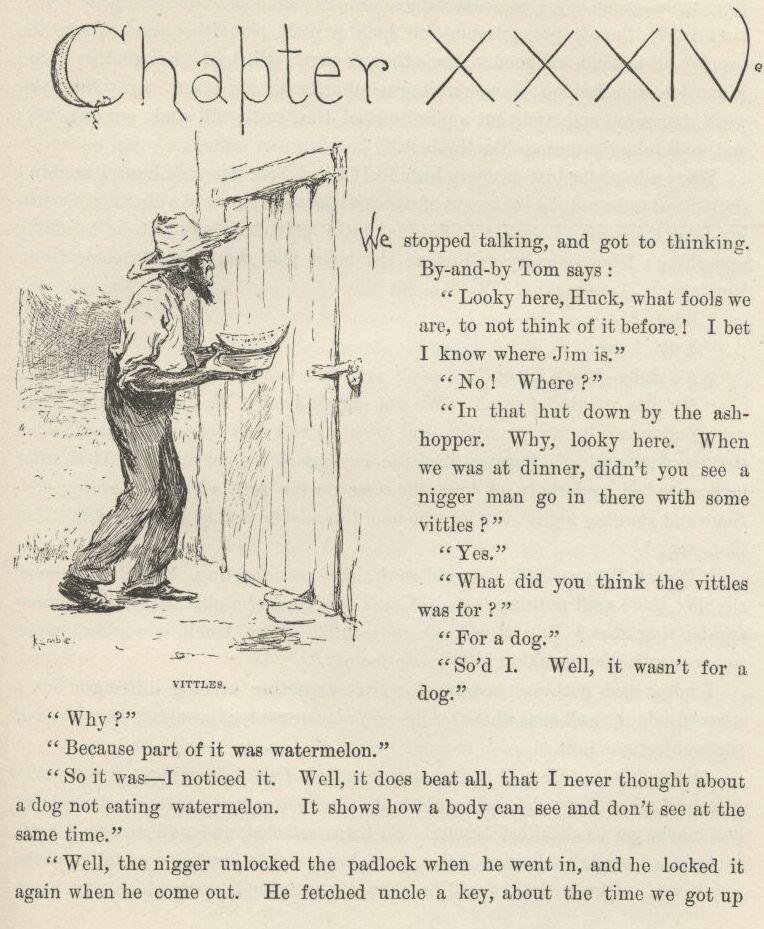
Chapter 33
So I started for town in the wagon, and when I was half-way I see a wagon coming, and sure enough it was Tom Sawyer, and I stopped and waited till he come along. I says “Hold on!” and it stopped alongside, and his mouth opened up like a trunk, and stayed so; and he swallowed two or three times like a person that’s got a dry throat, and then says:
So I started for town in the wagon. Halfway there, I see another wagon coming, and sure enough, it was Tom Sawyer. I stopped and waited till he come along. I says “Hold on!” and his wagon stopped alongside mine. His mouth opened up like a trunk and stayed open. He swallowed two or three times like someone with a dry throat, and then says:
“I hain’t ever done you no harm. You know that. So, then, what you want to come back and ha’nt me for?”
“I ain’t ever done you no harm. You know that. So, then, what you want to come back and haunt me for?”
I says:
I says:
“I hain’t come back—I hain’t been gone.”
“I ain't come back. I ain't been gone.”
When he heard my voice it righted him up some, but he warn’t quite satisfied yet. He says:
When he heard my voice, he calmed down some, but he wasn't quite satisfied yet. He says:
“Don’t you play nothing on me, because I wouldn’t on you. Honest injun, now, you ain’t a ghost?”
“Don’t you play no tricks on me, because I wouldn’t on you. Honest Injun, now, you ain’t a ghost?”
“Honest injun, I ain’t,” I says.
“Honest injun, I ain’t,” I says.
“Well—I—I—well, that ought to settle it, of course; but I can’t somehow seem to understand it no way. Looky here, warn’t you ever murdered at all?”
“Well, I, I, well, that ought to settle it, of course. But I can’t somehow seem to understand it no way. Look here, weren’t you ever murdered at all?”
“No. I warn’t ever murdered at all—I played it on them. You come in here and feel of me if you don’t believe me.”
“No. I wasn't ever murdered at all. I played a trick on them. You come in here and touch me if you don't believe me.”
So he done it; and it satisfied him; and he was that glad to see me again he didn’t know what to do. And he wanted to know all about it right off, because it was a grand adventure, and mysterious, and so it hit him where he lived. But I said, leave it alone till by-and-by; and told his driver to wait, and we drove off a little piece, and I told him the kind of a fix I was in, and what did he reckon we better do? He said, let him alone a minute, and don’t disturb him. So he thought and thought, and pretty soon he says:
So he done it, and it satisfied him. And he was that glad to see me again he didn’t know what to do. And he wanted to know all about it right away, because it was a grand adventure, and mysterious. So it was just the kind of thing he loved. But I said to leave it alone till later. I told his driver to wait, and we drove a little way off. Then I told him the kind of fix I was in, and asked what he reckoned we better do. He said to leave him alone a minute and not disturb him. So he thought and thought, and pretty soon he says:
“It’s all right; I’ve got it. Take my trunk in your wagon, and let on it’s your’n; and you turn back and fool along slow, so as to get to the house about the time you ought to; and I’ll go towards town a piece, and take a fresh start, and get there a quarter or a half an hour after you; and you needn’t let on to know me at first.”
“It’s all right. I’ve got it. Take my trunk in your wagon, and pretend it’s yours. And you turn back and go along slow, so you reach the house about the time you ought to. And I’ll go a little way toward town, then make a fresh start. I’ll get there fifteen or thirty minutes after you. And you needn’t let on that you know me at first.”
I says:
I says:
“All right; but wait a minute. There’s one more thing—a thing that nobody don’t know but me. And that is, there’s a here that I’m a-trying to steal out of slavery, and his name is Jim—old Miss Watson’s Jim.”
“All right, but wait a minute. There’s one more thing that nobody don’t know but me. And that is, there’s a here that I’m trying to steal out of slavery. His name is Jim, old Miss Watson’s Jim.”
He says:
He says:
“What! Why, Jim is—”
“What! Why, Jim is...”
He stopped and went to studying. I says:
He stopped and started thinking. I says:
“I know what you’ll say. You’ll say it’s dirty, low-down business; but what if it is? I’m low down; and I’m a-going to steal him, and I want you keep mum and not let on. Will you?”
“I know what you’ll say. You’ll say it’s dirty, low-down business. But what if it is? I’m low down. And I’m going to steal him, and I want you keep quiet and not tell anyone. Will you?”
His eye lit up, and he says:
His eye lit up, and he says:
“I’ll help you steal him!”
“I’ll help you steal him!”
Well, I let go all holts then, like I was shot. It was the most astonishing speech I ever heard—and I’m bound to say Tom Sawyer fell considerable in my estimation. Only I couldn’t believe it. Tom Sawyer a stealer!
Well, I let go of everything then, like I was shot. It was the most astonishing thing I ever heard anyone say. And I’ve got to say, Tom Sawyer fell a good deal in my opinion. Only I couldn’t believe it. Tom Sawyer a stealer!
“Oh, shucks!” I says; “you’re joking.”
“Oh, shucks!” I says. “You’re joking.”
“I ain’t joking, either.”
“I ain’t joking, either.”
“Well, then,” I says, “joking or no joking, if you hear anything said about a runaway , don’t forget to remember that you don’t know nothing about him, and I don’t know nothing about him.”
“Well, then,” I says, “joking or no joking, if you hear anything said about a runaway , don’t forget to remember that you don’t know nothing about him, and I don’t know nothing about him.”
Then we took the trunk and put it in my wagon, and he drove off his way and I drove mine. But of course I forgot all about driving slow on accounts of being glad and full of thinking; so I got home a heap too quick for that length of a trip. The old gentleman was at the door, and he says:
Then we took the trunk and put it in my wagon. He drove off his way, and I drove mine. But of course I forgot all about driving slow, on accounts of being glad and full of thinking. So I got home a heap too quick for a trip that long. The old gentleman was at the door, and he says:
“Why, this is wonderful! Whoever would a thought it was in that mare to do it? I wish we’d a timed her. And she hain’t sweated a hair—not a hair. It’s wonderful. Why, I wouldn’t take a hundred dollars for that horse now—I wouldn’t, honest; and yet I’d a sold her for fifteen before, and thought ’twas all she was worth.”
“Why, this is wonderful! Whoever would have thought that mare had it in her to do that? I wish we’d have timed her. And she ain’t sweated a hair, not a hair. It’s wonderful. Why, I wouldn’t take a hundred dollars for that horse now. I wouldn’t, honest. And yet I’d have sold her for fifteen before, and thought that was all she was worth.”
That’s all he said. He was the innocentest, best old soul I ever see. But it warn’t surprising; because he warn’t only just a farmer, he was a preacher, too, and had a little one-horse log church down back of the plantation, which he built it himself at his own expense, for a church and schoolhouse, and never charged nothing for his preaching, and it was worth it, too. There was plenty other farmer-preachers like that, and done the same way, down South.
That’s all he said. He was the innocentest, best old soul I ever see. But that wasn’t surprising, because he wasn’t only just a farmer. He was a preacher, too, and had a little log church out back of the plantation. He built it himself at his own expense, for a church and schoolhouse. He never charged nothing for his preaching, and it was worth it, too. There was plenty other farmer-preachers like that, and done the same way, down South.
In about half an hour Tom’s wagon drove up to the front stile, and Aunt Sally she see it through the window, because it was only about fifty yards, and says:
About half an hour later, Tom’s wagon drove up to the front gate. Aunt Sally she see it through the window, because it was only about fifty yards away, and says:
“Why, there’s somebody come! I wonder who ’tis? Why, I do believe it’s a stranger. Jimmy” (that’s one of the children) “run and tell Lize to put on another plate for dinner.”
“Why, there’s somebody come! I wonder who it is? Why, I do believe it’s a stranger.” (Jimmy is one of the children.) “Jimmy, run and tell Lize to set another plate for dinner.”
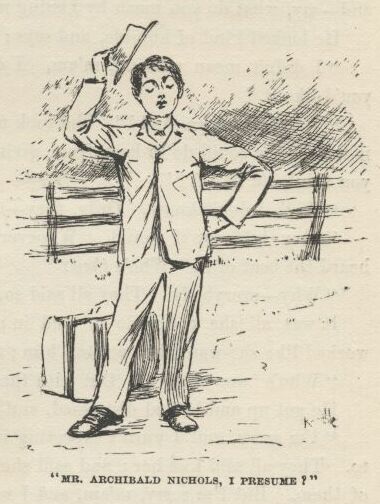
Everybody made a rush for the front door, because, of course, a stranger don’t come every year, and so he lays over the yaller-fever, for interest, when he does come. Tom was over the stile and starting for the house; the wagon was spinning up the road for the village, and we was all bunched in the front door. Tom had his store clothes on, and an audience—and that was always nuts for Tom Sawyer. In them circumstances it warn’t no trouble to him to throw in an amount of style that was suitable. He warn’t a boy to meeky along up that yard like a sheep; no, he come ca’m and important, like the ram. When he got a-front of us he lifts his hat ever so gracious and dainty, like it was the lid of a box that had butterflies asleep in it and he didn’t want to disturb them, and says:
Everybody rushed for the front door, because, of course, a stranger don’t come every year. So when he does come, he’s more interesting than yellow fever. Tom was over the stile and starting for the house. The wagon was speeding up the road toward the village, and we was all bunched in the front doorway. Tom had his store-bought clothes on, and an audience. That was always a treat for Tom Sawyer. In those circumstances, it wasn’t no trouble to him to put on a suitable amount of style. He wasn’t a boy to creep meekly up that yard like a sheep. No, he come calm and important, like the ram. When he got in front of us, he lifts his hat ever so politely and delicately. You’d think it was the lid of a box with butterflies asleep inside, and he didn’t want to disturb them. And he says:
“Mr. Archibald Nichols, I presume?”
“Mr. Archibald Nichols, I assume?”
“No, my boy,” says the old gentleman, “I’m sorry to say ’t your driver has deceived you; Nichols’s place is down a matter of three mile more. Come in, come in.”
“No, my boy,” says the old gentleman. “I’m sorry to say that your driver has misled you. Nichols’s place is about three mile farther down. Come in, come in.”
Tom he took a look back over his shoulder, and says, “Too late—he’s out of sight.”
Tom he looked back over his shoulder, and says, “Too late. He’s out of sight.”
“Yes, he’s gone, my son, and you must come in and eat your dinner with us; and then we’ll hitch up and take you down to Nichols’s.”
“Yes, he’s gone, my son. And you must come in and have dinner with us. Then we’ll hitch up the horses and take you down to Nichols’s.”
“Oh, I can’t make you so much trouble; I couldn’t think of it. I’ll walk—I don’t mind the distance.”
“Oh, I can’t put you to so much trouble. I wouldn’t dream of it. I’ll walk. I don’t mind the distance.”
“But we won’t let you walk—it wouldn’t be Southern hospitality to do it. Come right in.”
“But we won’t let you walk. Letting you walk wouldn’t be Southern hospitality. Come right in.”
“Oh, do,” says Aunt Sally; “it ain’t a bit of trouble to us, not a bit in the world. You must stay. It’s a long, dusty three mile, and we can’t let you walk. And, besides, I’ve already told ’em to put on another plate when I see you coming; so you mustn’t disappoint us. Come right in and make yourself at home.”
“Oh, do,” says Aunt Sally. “It ain’t a bit of trouble to us, not a bit in the world. You must stay. It’s a long, dusty three mile, and we can’t let you walk. And besides, I’ve already told them to set another plate when I see you coming. So you mustn’t disappoint us. Come right in and make yourself at home.”
So Tom he thanked them very hearty and handsome, and let himself be persuaded, and come in; and when he was in he said he was a stranger from Hicksville, Ohio, and his name was William Thompson—and he made another bow.
So Tom he thanked them very hearty and polite. He let himself be persuaded and come in. Once inside, he said he was a stranger from Hicksville, Ohio. He said his name was William Thompson, and he bowed again.
Well, he run on, and on, and on, making up stuff about Hicksville and everybody in it he could invent, and I getting a little nervious, and wondering how this was going to help me out of my scrape; and at last, still talking along, he reached over and kissed Aunt Sally right on the mouth, and then settled back again in his chair comfortable, and was going on talking; but she jumped up and wiped it off with the back of her hand, and says:
Well, he run on, and on, and on, making up stuff about Hicksville and everybody in it. And I getting a little nervous, wondering how this was going to help me out of my scrape. At last, still talking, he reached over and kissed Aunt Sally right on the mouth. Then he settled back comfortable in his chair and was going on talking. But she jumped up and wiped the kiss off with the back of her hand, and says:
“You owdacious puppy!”
“You audacious puppy!”
He looked kind of hurt, and says:
He looked kind of hurt, and says:
“I’m surprised at you, m’am.”
“I’m surprised at you, ma’am.”
“You’re s’rp—Why, what do you reckon I am? I’ve a good notion to take and—Say, what do you mean by kissing me?”
“You’re surprised... Why, what do you reckon I am? I’ve a good mind to... Say, what do you mean by kissing me?”
He looked kind of humble, and says:
He looked kind of humble, and says:
“I didn’t mean nothing, m’am. I didn’t mean no harm. I—I—thought you’d like it.”
“I didn’t mean nothing, ma’am. I didn’t mean no harm. I, I thought you’d like it.”
“Why, you born fool!” She took up the spinning stick, and it looked like it was all she could do to keep from giving him a crack with it. “What made you think I’d like it?”
“Why, you born fool!” She picked up the spinning stick. It looked like she could barely keep herself from hitting him with it. “What made you think I’d like it?”
“Well, I don’t know. Only, they—they—told me you would.”
“Well, I don’t know. It’s just that they, they, told me you would.”
“They told you I would. Whoever told you’s another lunatic. I never heard the beat of it. Who’s they?”
“They told you I would. Whoever told you is another lunatic. I never heard anything like it. Who’s they?”
“Why, everybody. They all said so, m’am.”
“Why, everybody. They all said so, ma’am.”
It was all she could do to hold in; and her eyes snapped, and her fingers worked like she wanted to scratch him; and she says:
It was all she could do to hold herself back. And her eyes flashed, and her fingers twitched like she wanted to scratch him. And she says:
“Who’s ‘everybody’? Out with their names, or ther’ll be an idiot short.”
“Who’s ‘everybody’? Give me their names, or there’ll be one less idiot.”
He got up and looked distressed, and fumbled his hat, and says:
He got up and looked upset, and fumbled with his hat, and says:
“I’m sorry, and I warn’t expecting it. They told me to. They all told me to. They all said, kiss her; and said she’d like it. They all said it—every one of them. But I’m sorry, m’am, and I won’t do it no more—I won’t, honest.”
“I’m sorry, and I wasn’t expecting it. They told me to. They all told me to. They all said to kiss her, and said she’d like it. They all said it, every one of them. But I’m sorry, ma’am, and I won’t do it no more. I won’t, honest.”
“You won’t, won’t you? Well, I sh’d reckon you won’t!”
“You won’t, won’t you? Well, I should reckon you won’t!”
“No’m, I’m honest about it; I won’t ever do it again—till you ask me.”
“No, ma’am, I’m honest about it. I won’t ever do it again, till you ask me.”
“Till I ask you! Well, I never see the beat of it in my born days! I lay you’ll be the Methusalem-numskull of creation before ever I ask you—or the likes of you.”
“Until I ask you! Well, I never see the beat of it in my born days! I lay you’ll be the Methusalem-numskull of creation before I ever ask you or the likes of you.”
“Well,” he says, “it does surprise me so. I can’t make it out, somehow. They said you would, and I thought you would. But—” He stopped and looked around slow, like he wished he could run across a friendly eye somewheres, and fetched up on the old gentleman’s, and says, “Didn’t you think she’d like me to kiss her, sir?”
“Well,” he says, “it surprises me so much. I can’t figure it out, somehow. They said you would, and I thought you would. But...” He stopped and looked around slow, like he wished he could find a friendly face somewhere. Then he caught the old gentleman’s eye and says, “Didn’t you think she’d like me to kiss her, sir?”
“Why, no; I—I—well, no, I b’lieve I didn’t.”
“Why, no. I, I, well, no, I believe I didn’t.”
Then he looks on around the same way to me, and says:
Then he turns to look at me the same way and says:
“Tom, didn’t you think Aunt Sally ’d open out her arms and say, ‘Sid Sawyer—’”
“Tom, didn’t you think Aunt Sally would open her arms and say, ‘Sid Sawyer...’”
“My land!” she says, breaking in and jumping for him, “you impudent young rascal, to fool a body so—” and was going to hug him, but he fended her off, and says:
“My land!” she says, cutting in and rushing toward him. “You cheeky young rascal, to fool a person like that...” She was going to hug him, but he held her off, and says:
“No, not till you’ve asked me first.”
“No, not until you’ve asked me first.”
So she didn’t lose no time, but asked him; and hugged him and kissed him over and over again, and then turned him over to the old man, and he took what was left. And after they got a little quiet again she says:
So she didn’t lose no time, but asked him. She hugged him and kissed him over and over again. Then she turned him over to the old man, and he took what was left. And after they got a little quiet again, she says:
“Why, dear me, I never see such a surprise. We warn’t looking for you at all, but only Tom. Sis never wrote to me about anybody coming but him.”
“Why, dear me, I never see such a surprise. We weren't looking for you at all, but only Tom. Sis never wrote to me about anybody coming but him.”
“It’s because it warn’t intended for any of us to come but Tom,” he says; “but I begged and begged, and at the last minute she let me come, too; so, coming down the river, me and Tom thought it would be a first-rate surprise for him to come here to the house first, and for me to by-and-by tag along and drop in, and let on to be a stranger. But it was a mistake, Aunt Sally. This ain’t no healthy place for a stranger to come.”
“It’s because it wasn’t intended for any of us to come but Tom,” he says. “But I begged and begged, and at the last minute she let me come, too. So, coming down the river, me and Tom thought it would be a first-rate surprise. He would come here to the house first. Then I would tag along later and drop in, pretending to be a stranger. But it was a mistake, Aunt Sally. This ain’t no healthy place for a stranger to come.”
“No—not impudent whelps, Sid. You ought to had your jaws boxed; I hain’t been so put out since I don’t know when. But I don’t care, I don’t mind the terms—I’d be willing to stand a thousand such jokes to have you here. Well, to think of that performance! I don’t deny it, I was most putrified with astonishment when you give me that smack.”
“No, not impudent whelps, Sid. You ought to had your jaws boxed. I ain’t been so put out since I don’t know when. But I don’t care, I don’t mind the terms. I’d be willing to stand a thousand such jokes to have you here. Well, to think of that performance! I don’t deny it, I was just about putrified with astonishment when you give me that smack.”
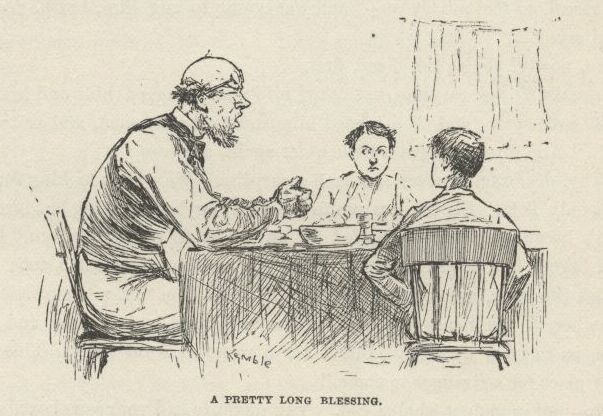
We had dinner out in that broad open passage betwixt the house and the kitchen; and there was things enough on that table for seven families—and all hot, too; none of your flabby, tough meat that’s laid in a cupboard in a damp cellar all night and tastes like a hunk of old cold cannibal in the morning. Uncle Silas he asked a pretty long blessing over it, but it was worth it; and it didn’t cool it a bit, neither, the way I’ve seen them kind of interruptions do lots of times. There was a considerable good deal of talk all the afternoon, and me and Tom was on the lookout all the time; but it warn’t no use, they didn’t happen to say nothing about any runaway , and we was afraid to try to work up to it. But at supper, at night, one of the little boys says:
We had dinner out in that wide open passage between the house and the kitchen. There was enough food on that table for seven families, and all hot, too. None of your flabby, tough meat that’s sat in a cupboard in a damp cellar all night. That kind tastes like a chunk of old cold cannibal in the morning. Uncle Silas he said a pretty long blessing over the food, but it was worth it. And the blessing didn’t cool the food a bit, neither, like I’ve seen them kind of interruptions do lots of times. There was a good deal of talk all afternoon, and me and Tom was listening for news the whole time. But it wasn’t no use. They didn’t happen to say nothing about any runaway , and we was afraid to bring it up. But at supper that night, one of the little boys says:
“Pa, mayn’t Tom and Sid and me go to the show?”
“Pa, can’t Tom and Sid and me go to the show?”
“No,” says the old man, “I reckon there ain’t going to be any; and you couldn’t go if there was; because the runaway told Burton and me all about that scandalous show, and Burton said he would tell the people; so I reckon they’ve drove the owdacious loafers out of town before this time.”
“No,” says the old man, “I reckon there ain’t going to be any show. And you couldn’t go if there was, because the runaway told Burton and me all about that scandalous show. And Burton said he would tell the people. So I reckon they’ve drove those brazen loafers out of town by now.”
So there it was!—but I couldn’t help it. Tom and me was to sleep in the same room and bed; so, being tired, we bid good-night and went up to bed right after supper, and clumb out of the window and down the lightning-rod, and shoved for the town; for I didn’t believe anybody was going to give the king and the duke a hint, and so if I didn’t hurry up and give them one they’d get into trouble sure.
So there it was! But I couldn’t help it. Tom and me was to sleep in the same room and bed. So, being tired, we bid good-night and went up to bed right after supper, and clumb out of the window and down the lightning-rod, and shoved for the town. I went because I didn’t believe anybody was going to give the king and the duke a hint, and so if I didn’t hurry up and give them one, they’d get into trouble sure.
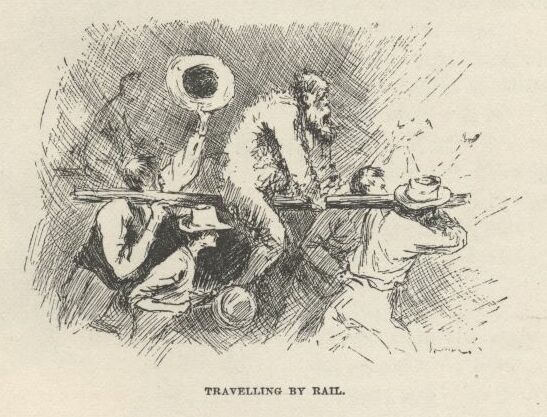
On the road Tom he told me all about how it was reckoned I was murdered, and how pap disappeared pretty soon, and didn’t come back no more, and what a stir there was when Jim run away; and I told Tom all about our Royal Nonesuch rapscallions, and as much of the raft voyage as I had time to; and as we struck into the town and up through the middle of it—it was as much as half-after eight, then—here comes a raging rush of people with torches, and an awful whooping and yelling, and banging tin pans and blowing horns; and we jumped to one side to let them go by; and as they went by I see they had the king and the duke astraddle of a rail—that is, I knowed it was the king and the duke, though they was all over tar and feathers, and didn’t look like nothing in the world that was human—just looked like a couple of monstrous big soldier-plumes. Well, it made me sick to see it; and I was sorry for them poor pitiful rascals, it seemed like I couldn’t ever feel any hardness against them any more in the world. It was a dreadful thing to see. Human beings can be awful cruel to one another.
On the road Tom he told me all about how people figured I was murdered. He told me how pap disappeared pretty soon and didn’t come back no more. He also told me what a stir there was when Jim run away. And I told Tom all about our Royal Nonesuch rascals, and as much of the raft voyage as I had time to. As we headed into town and up through the middle of it, it was about half past eight. Here comes a raging crowd of people with torches, whooping and yelling something awful, banging tin pans and blowing horns. We jumped to one side to let them go by. And as they went by, I see they had the king and the duke sitting astride a wooden rail. That is, I knowed it was the king and the duke, though they was covered all over in tar and feathers. They didn’t look like nothing human in the world. They just looked like a couple of monstrous big feather plumes on soldiers’ hats. Well, it made me sick to see it. And I was sorry for them poor pitiful rascals. It seemed like I couldn’t ever feel any hardness against them any more in the world. It was a dreadful thing to see. Human beings can be awful cruel to one another.
We see we was too late—couldn’t do no good. We asked some stragglers about it, and they said everybody went to the show looking very innocent; and laid low and kept dark till the poor old king was in the middle of his cavortings on the stage; then somebody give a signal, and the house rose up and went for them.
We see we was too late. We couldn’t do no good. We asked some people still hanging around about it. They said everybody went to the show looking very innocent. They laid low and kept quiet till the poor old king was in the middle of his antics on stage. Then somebody give a signal, and the whole audience jumped up and went for them.
So we poked along back home, and I warn’t feeling so brash as I was before, but kind of ornery, and humble, and to blame, somehow—though I hadn’t done nothing. But that’s always the way; it don’t make no difference whether you do right or wrong, a person’s conscience ain’t got no sense, and just goes for him anyway. If I had a yaller dog that didn’t know no more than a person’s conscience does I would pison him. It takes up more room than all the rest of a person’s insides, and yet ain’t no good, nohow. Tom Sawyer he says the same.
So we poked along back home, and I wasn't feeling so brash as I was before. I felt kind of ornery, and humble, and somehow to blame, though I hadn't done nothing. But that's always the way. It don't make no difference whether you do right or wrong. A person's conscience ain't got no sense, and just goes after him anyway. If I had a yellow dog that didn't know no more than a person's conscience does, I would poison him. A conscience takes up more room than all the rest of a person's insides, and yet ain't no good, nohow. Tom Sawyer he says the same.