Chapter 16
We slept most all day, and started out at night, a little ways behind a monstrous long raft that was as long going by as a procession. She had four long sweeps at each end, so we judged she carried as many as thirty men, likely. She had five big wigwams aboard, wide apart, and an open camp fire in the middle, and a tall flag-pole at each end. There was a power of style about her. It amounted to something being a raftsman on such a craft as that.
We slept most all day and started out at night, a little ways behind a monstrously long raft. She took as long to pass as a parade. She had four long oars at each end, so we figured she likely carried as many as thirty men. She had five big wigwams aboard, spaced far apart, and an open campfire in the middle. She also had a tall flagpole at each end. There was a whole lot of style about her. It amounted to something to be a raftsman on a craft like that.
We went drifting down into a big bend, and the night clouded up and got hot. The river was very wide, and was walled with solid timber on both sides; you couldn’t see a break in it hardly ever, or a light. We talked about Cairo, and wondered whether we would know it when we got to it. I said likely we wouldn’t, because I had heard say there warn’t but about a dozen houses there, and if they didn’t happen to have them lit up, how was we going to know we was passing a town? Jim said if the two big rivers joined together there, that would show. But I said maybe we might think we was passing the foot of an island and coming into the same old river again. That disturbed Jim—and me too. So the question was, what to do? I said, paddle ashore the first time a light showed, and tell them pap was behind, coming along with a trading-scow, and was a green hand at the business, and wanted to know how far it was to Cairo. Jim thought it was a good idea, so we took a smoke on it and waited.
We went drifting down into a big bend, and the night clouded up and got hot. The river was very wide, with thick woods like a wall on both sides. You couldn’t hardly ever see a break in the trees, or a light. We talked about Cairo and wondered whether we would know it when we got there. I said likely we wouldn’t, because I had heard say there wasn’t but about a dozen houses there. And if they didn’t happen to have the houses lit up, how was we going to know we was passing a town? Jim said the two big rivers joining together there would show us. But I said maybe we might think we was passing the lower end of an island. We might think we was coming into the same old river again. That thought worried Jim, and me too. So the question was, what to do? I said we should paddle ashore the first time a light showed. We could tell them pap was behind us, coming along with a flat-bottomed trading boat. He was a green hand at the business and wanted to know how far it was to Cairo. Jim thought it was a good idea, so we had a smoke and waited.
There warn’t nothing to do now but to look out sharp for the town, and not pass it without seeing it. He said he’d be mighty sure to see it, because he’d be a free man the minute he seen it, but if he missed it he’d be in a slave country again and no more show for freedom. Every little while he jumps up and says:
There wasn't nothing to do now but watch closely for the town and not pass it without seeing it. He said he'd be mighty sure to see it, because he'd be a free man the minute he seen it. But if he missed the town, he'd be in slave country again, with no more chance for freedom. Every little while he jumps up and says:
“Dah she is?”
“There she is?”
But it warn’t. It was Jack-o’-lanterns, or lightning bugs; so he set down again, and went to watching, same as before. Jim said it made him all over trembly and feverish to be so close to freedom. Well, I can tell you it made me all over trembly and feverish, too, to hear him, because I begun to get it through my head that he was most free—and who was to blame for it? Why, me. I couldn’t get that out of my conscience, no how nor no way. It got to troubling me so I couldn’t rest; I couldn’t stay still in one place. It hadn’t ever come home to me before, what this thing was that I was doing. But now it did; and it stayed with me, and scorched me more and more. I tried to make out to myself that I warn’t to blame, because I didn’t run Jim off from his rightful owner; but it warn’t no use, conscience up and says, every time, “But you knowed he was running for his freedom, and you could a paddled ashore and told somebody.” That was so—I couldn’t get around that noway. That was where it pinched. Conscience says to me, “What had poor Miss Watson done to you that you could see her go off right under your eyes and never say one single word? What did that poor old woman do to you that you could treat her so mean? Why, she tried to learn you your book, she tried to learn you your manners, she tried to be good to you every way she knowed how. That’s what she done.”
But it wasn’t. It was jack-o’-lanterns, or lightning bugs. So he set down again and went to watching, same as before. Jim said it made him all over trembly and feverish to be so close to freedom. Well, I can tell you it made me all over trembly and feverish, too, to hear him, because I begun to get it through my head that he was most free. And who was to blame for it? Why, me. I couldn’t get that out of my conscience, no how nor no way. It got to troubling me so I couldn’t rest. I couldn’t stay still in one place. It hadn’t ever come home to me before, what this thing was that I was doing. But now it did, and it stayed with me, and scorched me more and more. I tried to make out to myself that I wasn’t to blame, because I didn’t run Jim off from his rightful owner. But it wasn’t no use. Conscience up and says, every time, “But you knowed he was running for his freedom, and you could have paddled ashore and told somebody.” That was so. I couldn’t get around that noway. That was where it pinched. Conscience says to me, “What had poor Miss Watson done to you that you could see her go off right under your eyes and never say one single word? What did that poor old woman do to you that you could treat her so mean? Why, she tried to learn you your book, she tried to learn you your manners, she tried to be good to you every way she knowed how. That’s what she done.”
I got to feeling so mean and so miserable I most wished I was dead. I fidgeted up and down the raft, abusing myself to myself, and Jim was fidgeting up and down past me. We neither of us could keep still. Every time he danced around and says, “Dah’s Cairo!” it went through me like a shot, and I thought if it was Cairo I reckoned I would die of miserableness.
I got to feeling so mean and so miserable I almost wished I was dead. I paced up and down the raft, silently calling myself names. And Jim was pacing up and down past me. We neither of us could keep still. Every time he danced around and says, “There’s Cairo!” his words went through me like a shot. And I thought if it was Cairo, I reckoned I would die of misery.
Jim talked out loud all the time while I was talking to myself. He was saying how the first thing he would do when he got to a free State he would go to saving up money and never spend a single cent, and when he got enough he would buy his wife, which was owned on a farm close to where Miss Watson lived; and then they would both work to buy the two children, and if their master wouldn’t sell them, they’d get an Ab’litionist to go and steal them.
Jim talked out loud the whole time I was talking to myself. He was saying how, first thing when he got to a free state, he would start saving money. He would never spend a single cent. When he had enough, he would buy his wife. She was owned on a farm close to where Miss Watson lived. Then they would both work to buy their two children. If the children’s master wouldn’t sell them, they’d get an abolitionist to go and steal them.
It most froze me to hear such talk. He wouldn’t ever dared to talk such talk in his life before. Just see what a difference it made in him the minute he judged he was about free. It was according to the old saying, “Give a an inch and he’ll take an ell.” Thinks I, this is what comes of my not thinking. Here was this , which I had as good as helped to run away, coming right out flat-footed and saying he would steal his children—children that belonged to a man I didn’t even know; a man that hadn’t ever done me no harm.
It almost froze me to hear such talk. He wouldn’t ever dared to talk like that in his life before. Just see what a difference it made in him the minute he figured he was about free. It was like the old saying, “Give a an inch and he’ll take a yard.” Thinks I, this is what comes of my not thinking. Here was this , which I had as good as helped to run away. And he was saying straight out that he would steal his children. Those children belonged to a man I didn’t even know, a man that hadn’t ever done me no harm.
I was sorry to hear Jim say that, it was such a lowering of him. My conscience got to stirring me up hotter than ever, until at last I says to it, “Let up on me—it ain’t too late yet—I’ll paddle ashore at the first light and tell.” I felt easy and happy and light as a feather right off. All my troubles was gone. I went to looking out sharp for a light, and sort of singing to myself. By-and-by one showed. Jim sings out:
I was sorry to hear Jim say that. It lowered him so much in my eyes. My conscience got to bothering me worse than ever. At last I says to it, “Let up on me. It ain’t too late yet. I’ll paddle ashore at the first light and tell.” Right away I felt easy and happy and light as a feather. All my troubles was gone. I went to watching close for a light, and sort of singing to myself. After a while, a light showed. Jim calls out:
“We’s safe, Huck, we’s safe! Jump up and crack yo’ heels! Dat’s de good ole Cairo at las’, I jis knows it!”
“We’s safe, Huck, we’s safe! Jump up and crack your heels! That’s the good old Cairo at last, I just knows it!”
I says:
I says:
“I’ll take the canoe and go and see, Jim. It mightn’t be, you know.”
“I’ll take the canoe and go see, Jim. It might not be, you know.”
He jumped and got the canoe ready, and put his old coat in the bottom for me to set on, and give me the paddle; and as I shoved off, he says:
He jumped and got the canoe ready. He put his old coat in the bottom for me to set on. Then he give me the paddle, and as I shoved off, he says:
“Pooty soon I’ll be a-shout’n’ for joy, en I’ll say, it’s all on accounts o’ Huck; I’s a free man, en I couldn’t ever ben free ef it hadn’ ben for Huck; Huck done it. Jim won’t ever forgit you, Huck; you’s de bes’ fren’ Jim’s ever had; en you’s de only fren’ ole Jim’s got now.”
“Pretty soon I’ll be a-shouting for joy, and I’ll say, it’s all on accounts of Huck. I’s a free man, and I couldn’t ever been free if it hadn’t been for Huck. Huck done it. Jim won’t ever forget you, Huck. You’s the best friend Jim’s ever had, and you’s the only friend old Jim’s got now.”
I was paddling off, all in a sweat to tell on him; but when he says this, it seemed to kind of take the tuck all out of me. I went along slow then, and I warn’t right down certain whether I was glad I started or whether I warn’t. When I was fifty yards off, Jim says:
I was paddling off, all worked up to tell on him. But when he says this, it seemed to kind of take all the determination out of me. I went along slow then. I wasn’t really certain whether I was glad I’d started or whether I wasn’t. When I was fifty yards off, Jim says:
“Dah you goes, de ole true Huck; de on’y white genlman dat ever kep’ his promise to ole Jim.”
“There you goes, the old true Huck. The only white gentleman that ever kept his promise to old Jim.”
Well, I just felt sick. But I says, I got to do it—I can’t get out of it. Right then along comes a skiff with two men in it with guns, and they stopped and I stopped. One of them says:
Well, I just felt sick. But I says, I got to do it. I can’t get out of it. Right then along comes a small boat with two men in it carrying guns. They stopped, and I stopped. One of them says:
“What’s that yonder?”
“What’s that over there?”
“A piece of a raft,” I says.
“A piece of a raft,” I says.
“Do you belong on it?”
“Do you belong on it?”
“Yes, sir.”
“Yes, sir.”
“Any men on it?”
“Any men on it?”
“Only one, sir.”
“Only one, sir.”
“Well, there’s five run off to-night up yonder, above the head of the bend. Is your man white or black?”
“Well, there’s five run off tonight up there, above the start of the bend. Is your man white or black?”
I didn’t answer up prompt. I tried to, but the words wouldn’t come. I tried for a second or two to brace up and out with it, but I warn’t man enough—hadn’t the spunk of a rabbit. I see I was weakening; so I just give up trying, and up and says:
I didn’t answer right away. I tried to, but the words wouldn’t come. For a second or two, I tried to brace up and say it, but I wasn't man enough. I hadn’t the spunk of a rabbit. I see I was weakening, so I just give up trying, and up and says:
“He’s white.”
“He’s white.”
“I reckon we’ll go and see for ourselves.”
“I reckon we’ll go and see for ourselves.”
“I wish you would,” says I, “because it’s pap that’s there, and maybe you’d help me tow the raft ashore where the light is. He’s sick—and so is mam and Mary Ann.”
“I wish you would,” says I, “because it’s pap that’s there. And maybe you’d help me tow the raft ashore where the light is. He’s sick, and so is mam and Mary Ann.”
“Oh, the devil! we’re in a hurry, boy. But I s’pose we’ve got to. Come, buckle to your paddle, and let’s get along.”
“Oh, the devil! We’re in a hurry, boy. But I suppose we’ve got to. Come on, put some effort into paddling, and let’s get going.”
I buckled to my paddle and they laid to their oars. When we had made a stroke or two, I says:
I got to work with my paddle, and they started rowing. When we had made a stroke or two, I says:
“Pap’ll be mighty much obleeged to you, I can tell you. Everybody goes away when I want them to help me tow the raft ashore, and I can’t do it by myself.”
“Pap’ll be mighty much obliged to you, I can tell you. Everybody goes away when I want them to help me tow the raft ashore. And I can’t do it by myself.”
“Well, that’s infernal mean. Odd, too. Say, boy, what’s the matter with your father?”
“Well, that’s infernal mean. Odd, too. Say, boy, what’s the matter with your father?”
“It’s the—a—the—well, it ain’t anything much.”
“It’s the, uh, the, well, it ain’t anything much.”
They stopped pulling. It warn’t but a mighty little ways to the raft now. One says:
They stopped rowing. It wasn't but a mighty little ways to the raft now. One says:
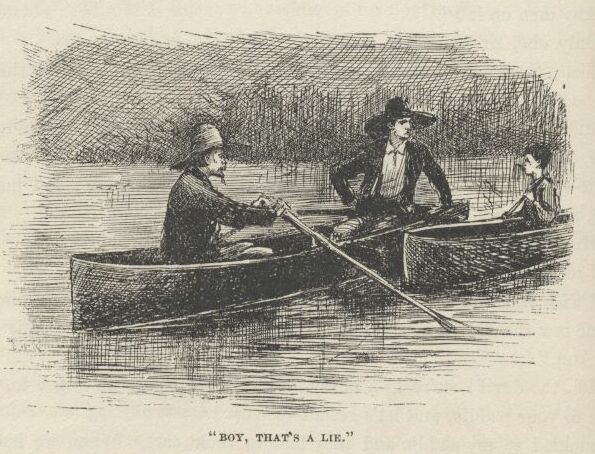
“Boy, that’s a lie. What is the matter with your pap? Answer up square now, and it’ll be the better for you.”
“Boy, that’s a lie. What is wrong with your dad? Tell me straight now, and you’ll be better off.”
“I will, sir, I will, honest—but don’t leave us, please. It’s the—the—gentlemen, if you’ll only pull ahead, and let me heave you the headline, you won’t have to come a-near the raft—please do.”
“I will, sir, I will, honest. But don’t leave us, please. It’s the... the... Gentlemen, if you’ll just pull ahead and let me throw you the front rope, you won’t have to come near the raft. Please do.”
“Set her back, John, set her back!” says one. They backed water. “Keep away, boy—keep to looard. Confound it, I just expect the wind has blowed it to us. Your pap’s got the small-pox, and you know it precious well. Why didn’t you come out and say so? Do you want to spread it all over?”
“Back her up, John, back her up!” says one. They rowed backward. “Keep away, boy. Keep downwind. Confound it, I just expect the wind has blowed it to us. Your pap’s got smallpox, and you know it precious well. Why didn’t you come out and say so? Do you want to spread it all over?”
“Well,” says I, a-blubbering, “I’ve told everybody before, and they just went away and left us.”
“Well,” says I, sobbing, “I’ve told everybody before, and they just went away and left us.”
“Poor devil, there’s something in that. We are right down sorry for you, but we—well, hang it, we don’t want the small-pox, you see. Look here, I’ll tell you what to do. Don’t you try to land by yourself, or you’ll smash everything to pieces. You float along down about twenty miles, and you’ll come to a town on the left-hand side of the river. It will be long after sun-up then, and when you ask for help you tell them your folks are all down with chills and fever. Don’t be a fool again, and let people guess what is the matter. Now we’re trying to do you a kindness; so you just put twenty miles between us, that’s a good boy. It wouldn’t do any good to land yonder where the light is—it’s only a wood-yard. Say, I reckon your father’s poor, and I’m bound to say he’s in pretty hard luck. Here, I’ll put a twenty-dollar gold piece on this board, and you get it when it floats by. I feel mighty mean to leave you; but my kingdom! it won’t do to fool with small-pox, don’t you see?”
“Poor devil, you’ve got a point. We’re really sorry for you, but we, well, hang it, we don’t want smallpox, you see. Look here, I’ll tell you what to do. Don’t you try to land by yourself, or you’ll smash everything to pieces. You float along downstream about twenty miles, and you’ll come to a town on the river’s left bank. It’ll be long after sunrise by then. When you ask for help, tell them your folks are all down with chills and fever. Don’t be a fool again and let people guess what’s wrong. Now we’re trying to do you a kindness. So you just put twenty miles between us, that’s a good boy. It wouldn’t do any good to land over there where the light is. It’s only a wood yard. Say, I reckon your father’s poor, and I have to say he’s having some pretty hard luck. Here, I’ll put a twenty-dollar gold piece on this board, and you get it when it floats by. I feel mighty bad about leaving you. But my kingdom! You can’t take chances with smallpox, don’t you see?”
“Hold on, Parker,” says the other man, “here’s a twenty to put on the board for me. Good-bye, boy; you do as Mr. Parker told you, and you’ll be all right.”
“Hold on, Parker,” says the other man, “here’s twenty dollars to put on the board for me. Goodbye, boy. You do as Mr. Parker told you, and you’ll be all right.”
“That’s so, my boy—good-bye, good-bye. If you see any runaway you get help and nab them, and you can make some money by it.”
“That’s right, my boy. Goodbye, goodbye. If you see any runaway , get help and catch them, and you can make some money from it.”
“Good-bye, sir,” says I; “I won’t let no runaway get by me if I can help it.”
“Goodbye, sir,” says I. “I won’t let no runaway get by me if I can help it.”
They went off and I got aboard the raft, feeling bad and low, because I knowed very well I had done wrong, and I see it warn’t no use for me to try to learn to do right; a body that don’t get started right when he’s little ain’t got no show—when the pinch comes there ain’t nothing to back him up and keep him to his work, and so he gets beat. Then I thought a minute, and says to myself, hold on; s’pose you’d a done right and give Jim up, would you felt better than what you do now? No, says I, I’d feel bad—I’d feel just the same way I do now. Well, then, says I, what’s the use you learning to do right when it’s troublesome to do right and ain’t no trouble to do wrong, and the wages is just the same? I was stuck. I couldn’t answer that. So I reckoned I wouldn’t bother no more about it, but after this always do whichever come handiest at the time.
They went off, and I got aboard the raft feeling bad and low, because I knowed very well I had done wrong. And I see it wasn’t no use for me to try to learn to do right. A body that don’t get started right when he’s little ain’t got no show. When the pinch comes there ain’t nothing to back him up and keep him to his work, and so he gets beat. Then I thought a minute, and says to myself, hold on. Suppose you’d have done right and give Jim up, would you felt better than what you do now? No, says I, I’d feel bad. I’d feel just the same way I do now. Well, then, says I, what’s the use you learning to do right when it’s troublesome to do right and ain’t no trouble to do wrong, and the wages is just the same? I was stuck. I couldn’t answer that. So I reckoned I wouldn’t bother no more about it, but after this always do whichever come handiest at the time.
I went into the wigwam; Jim warn’t there. I looked all around; he warn’t anywhere. I says:
I went into the wigwam. Jim wasn’t there. I looked all around. He wasn’t anywhere. I says:
“Jim!”
“Jim!”
“Here I is, Huck. Is dey out o’ sight yit? Don’t talk loud.”
“Here I is, Huck. Is they out of sight yet? Don’t talk loud.”
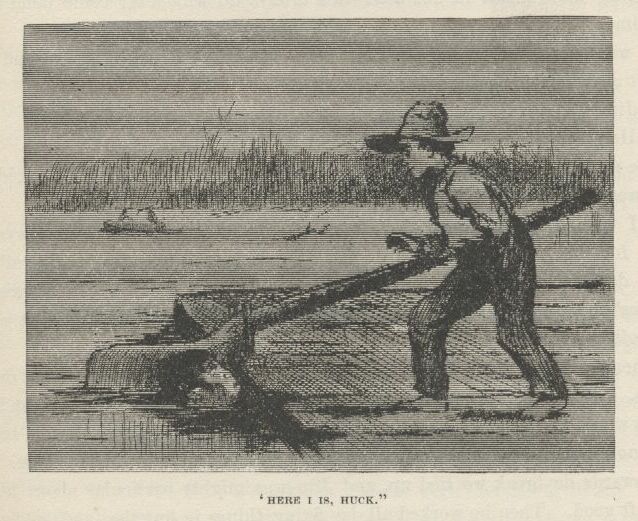
He was in the river under the stern oar, with just his nose out. I told him they were out of sight, so he come aboard. He says:
He was in the river under the oar at the back of the boat, with just his nose sticking out. I told him they were out of sight, so he come aboard. He says:
“I was a-listenin’ to all de talk, en I slips into de river en was gwyne to shove for sho’ if dey come aboard. Den I was gwyne to swim to de raf’ agin when dey was gone. But lawsy, how you did fool ’em, Huck! Dat wuz de smartes’ dodge! I tell you, chile, I ’speck it save’ ole Jim—ole Jim ain’t going to forgit you for dat, honey.”
“I was listening to all the talk, and I slips into the river. I was going to head for shore if they come aboard. Then I was going to swim to the raft again when they was gone. But lawsy, how you did fool them, Huck! That was the smartest trick! I tell you, child, I expect that trick saved old Jim. Old Jim ain’t going to forget you for that, honey.”
Then we talked about the money. It was a pretty good raise—twenty dollars apiece. Jim said we could take deck passage on a steamboat now, and the money would last us as far as we wanted to go in the free States. He said twenty mile more warn’t far for the raft to go, but he wished we was already there.
Then we talked about the money. It was a pretty good haul, twenty dollars apiece. Jim said we could take deck passage on a steamboat now. The money would last us as far as we wanted to go in the free States. He said twenty mile more wasn't far for the raft to go, but he wished we was already there.
Towards daybreak we tied up, and Jim was mighty particular about hiding the raft good. Then he worked all day fixing things in bundles, and getting all ready to quit rafting.
Near daybreak we tied up, and Jim was mighty particular about hiding the raft good. Then he worked all day packing things into bundles and getting everything ready to quit rafting.
That night about ten we hove in sight of the lights of a town away down in a left-hand bend.
Around ten that night, we spotted the lights of a town far downstream, where the river bent left.
I went off in the canoe to ask about it. Pretty soon I found a man out in the river with a skiff, setting a trot-line. I ranged up and says:
I went off in the canoe to ask about it. Pretty soon I found a man out in the river in a small rowboat, setting a fishing line. I pulled up alongside him and says:
“Mister, is that town Cairo?”
“Mister, is that town Cairo?”
“Cairo? no. You must be a blame’ fool.”
“Cairo? No. You must be a blamed fool.”
“What town is it, mister?”
“What town is this, mister?”
“If you want to know, go and find out. If you stay here botherin’ around me for about a half a minute longer you’ll get something you won’t want.”
“If you want to know, go and find out. If you stay here bothering around me for about half a minute longer, you’ll get something you won’t want.”
I paddled to the raft. Jim was awful disappointed, but I said never mind, Cairo would be the next place, I reckoned.
I paddled to the raft. Jim was awful disappointed, but I said never mind. Cairo would be the next place, I reckoned.
We passed another town before daylight, and I was going out again; but it was high ground, so I didn’t go. No high ground about Cairo, Jim said. I had forgot it. We laid up for the day on a tow-head tolerable close to the left-hand bank. I begun to suspicion something. So did Jim. I says:
We passed another town before daylight, and I was going out again. But the town was on high ground, so I didn’t go. No high ground around Cairo, Jim said. I had forgot that. We stopped for the day on a small sandy island pretty close to the left-hand bank. I begun to suspicion something. So did Jim. I says:
“Maybe we went by Cairo in the fog that night.”
“Maybe we passed Cairo in the fog that night.”
He says:
He says:
“Doan’ le’s talk about it, Huck. Po’ can’t have no luck. I awluz ’spected dat rattlesnake-skin warn’t done wid its work.”
“Don't let's talk about it, Huck. Poor can't have no luck. I always suspected that rattlesnake skin wasn't done with its work.”
“I wish I’d never seen that snake-skin, Jim—I do wish I’d never laid eyes on it.”
“I wish I’d never seen that snakeskin, Jim. I really wish I’d never laid eyes on it.”
“It ain’t yo’ fault, Huck; you didn’ know. Don’t you blame yo’self ’bout it.”
“It ain’t your fault, Huck. You didn’t know. Don’t you blame yourself about it.”
When it was daylight, here was the clear Ohio water inshore, sure enough, and outside was the old regular Muddy! So it was all up with Cairo.
When it was daylight, here was the clear Ohio water near shore, sure enough. And farther out was the same old Muddy! So we'd missed Cairo.
We talked it all over. It wouldn’t do to take to the shore; we couldn’t take the raft up the stream, of course. There warn’t no way but to wait for dark, and start back in the canoe and take the chances. So we slept all day amongst the cottonwood thicket, so as to be fresh for the work, and when we went back to the raft about dark the canoe was gone!
We talked it all over. It wouldn’t work to head for shore. We couldn’t take the raft upstream, of course. There wasn’t no way but to wait for dark, then start back in the canoe and take our chances. So we slept all day in the cottonwood thicket, so as to be fresh for the work. And when we went back to the raft around dark, the canoe was gone!
We didn’t say a word for a good while. There warn’t anything to say. We both knowed well enough it was some more work of the rattlesnake-skin; so what was the use to talk about it? It would only look like we was finding fault, and that would be bound to fetch more bad luck—and keep on fetching it, too, till we knowed enough to keep still.
We didn’t say a word for a good while. There wasn’t anything to say. We both knowed well enough it was more of the rattlesnake-skin’s doing. So what was the use of talking about it? Talking would only look like we was finding fault, and that would be bound to bring more bad luck. And the bad luck would keep coming, too, till we knowed enough to keep quiet.
By-and-by we talked about what we better do, and found there warn’t no way but just to go along down with the raft till we got a chance to buy a canoe to go back in. We warn’t going to borrow it when there warn’t anybody around, the way pap would do, for that might set people after us.
After a while we talked about what we better do. We found there wasn't no way but to keep going downriver on the raft. We'd have to wait till we got a chance to buy a canoe to go back in. We wasn't going to borrow one when there wasn't anybody around, the way pap would do. That might send people after us.
So we shoved out after dark on the raft.
So we pushed off on the raft after dark.
Anybody that don’t believe yet that it’s foolishness to handle a snake-skin, after all that that snake-skin done for us, will believe it now if they read on and see what more it done for us.
Anybody that don’t yet believe it’s foolishness to handle a snakeskin, after all that snakeskin done for us, will believe it now. That’s if they read on and see what more that snakeskin done for us.
The place to buy canoes is off of rafts laying up at shore. But we didn’t see no rafts laying up; so we went along during three hours and more. Well, the night got gray and ruther thick, which is the next meanest thing to fog. You can’t tell the shape of the river, and you can’t see no distance. It got to be very late and still, and then along comes a steamboat up the river. We lit the lantern, and judged she would see it. Up-stream boats didn’t generly come close to us; they go out and follow the bars and hunt for easy water under the reefs; but nights like this they bull right up the channel against the whole river.
The place to buy canoes is off of rafts laying up at shore. But we didn’t see no rafts laying up, so we went along for three hours and more. Well, the night got gray and rather thick, which is the next worst thing to fog. You can’t tell the shape of the river, and you can’t see no distance. It got to be very late and still, and then along comes a steamboat up the river. We lit the lantern and figured she would see it. Boats going upstream didn’t generally come close to us. They go out and follow the sandbars and hunt for calmer water below the reefs. But on nights like this, they bull right up the channel against the whole river.
We could hear her pounding along, but we didn’t see her good till she was close. She aimed right for us. Often they do that and try to see how close they can come without touching; sometimes the wheel bites off a sweep, and then the pilot sticks his head out and laughs, and thinks he’s mighty smart. Well, here she comes, and we said she was going to try and shave us; but she didn’t seem to be sheering off a bit. She was a big one, and she was coming in a hurry, too, looking like a black cloud with rows of glow-worms around it; but all of a sudden she bulged out, big and scary, with a long row of wide-open furnace doors shining like red-hot teeth, and her monstrous bows and guards hanging right over us. There was a yell at us, and a jingling of bells to stop the engines, a powwow of cussing, and whistling of steam—and as Jim went overboard on one side and I on the other, she come smashing straight through the raft.
We could hear the steamboat pounding along, but we didn’t see her good till she was close. She aimed right for us. Often steamboats do that and try to see how close they can come without touching. Sometimes the paddle wheel bites off a steering oar. Then the pilot sticks his head out and laughs, and thinks he’s mighty smart. Well, here she comes, and we said she was going to try and just miss us. But she didn’t seem to be turning away a bit. She was a big one, and she was coming in a hurry, too. She looked like a black cloud with rows of glowworms around it. But all of a sudden she loomed up, big and scary. A long row of wide-open furnace doors shone like red-hot teeth. Her monstrous bow and side platforms hung right over us. Someone yelled at us, and bells jingled to stop the engines. There was a racket of cussing and steam whistling. And as Jim went overboard on one side and I on the other, she come smashing straight through the raft.
I dived—and I aimed to find the bottom, too, for a thirty-foot wheel had got to go over me, and I wanted it to have plenty of room. I could always stay under water a minute; this time I reckon I stayed under a minute and a half. Then I bounced for the top in a hurry, for I was nearly busting. I popped out to my armpits and blowed the water out of my nose, and puffed a bit. Of course there was a booming current; and of course that boat started her engines again ten seconds after she stopped them, for they never cared much for raftsmen; so now she was churning along up the river, out of sight in the thick weather, though I could hear her.
I dived, and I aimed to reach the bottom, too. A thirty-foot paddlewheel had to pass over me, and I wanted it to have plenty of room. I could always stay underwater a minute. This time I reckon I stayed under a minute and a half. Then I shot up to the surface in a hurry, because I was nearly bursting. I popped out up to my armpits and blowed the water out of my nose, and puffed a bit. Of course the current was strong. And of course that boat started her engines again ten seconds after she stopped them. They never cared much for raftsmen. So now she was churning along upriver, out of sight in the thick weather, though I could hear her.
I sung out for Jim about a dozen times, but I didn’t get any answer; so I grabbed a plank that touched me while I was “treading water,” and struck out for shore, shoving it ahead of me. But I made out to see that the drift of the current was towards the left-hand shore, which meant that I was in a crossing; so I changed off and went that way.
I sung out for Jim about a dozen times, but I didn’t get any answer. So I grabbed a plank that brushed against me while I was “treading water.” I started swimming for shore, pushing the plank ahead of me. But I could see that the current was drifting toward the left-hand shore. That meant I was where the current crossed the river, so I changed direction and swam toward that shore.
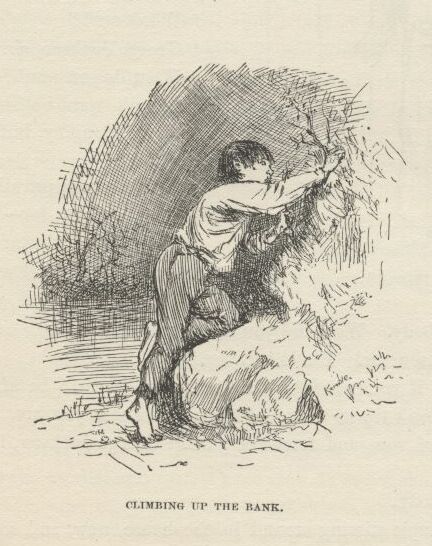
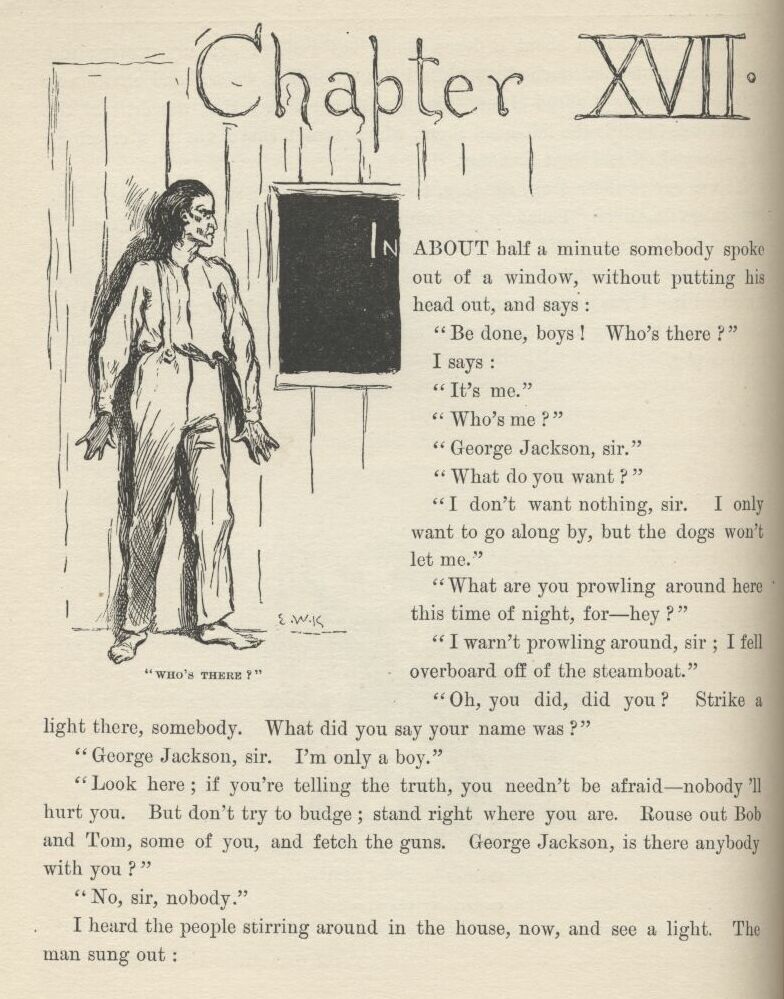
It was one of these long, slanting, two-mile crossings; so I was a good long time in getting over. I made a safe landing, and clumb up the bank. I couldn’t see but a little ways, but I went poking along over rough ground for a quarter of a mile or more, and then I run across a big old-fashioned double log-house before I noticed it. I was going to rush by and get away, but a lot of dogs jumped out and went to howling and barking at me, and I knowed better than to move another peg.
It was one of those long, slanting, two-mile crossings, so I took a good long time getting over. I landed safely and clumb up the bank. I couldn’t see very far, but I went poking along over rough ground for a quarter mile or more. Then I run across a big, old-fashioned double log house before I noticed it. I was going to rush past and get away, but a lot of dogs jumped out, howling and barking at me. I knowed better than to move another inch.