Chapter 14
By-and-by, when we got up, we turned over the truck the gang had stole off of the wreck, and found boots, and blankets, and clothes, and all sorts of other things, and a lot of books, and a spyglass, and three boxes of seegars. We hadn’t ever been this rich before in neither of our lives. The seegars was prime. We laid off all the afternoon in the woods talking, and me reading the books, and having a general good time. I told Jim all about what happened inside the wreck and at the ferry-boat, and I said these kinds of things was adventures; but he said he didn’t want no more adventures. He said that when I went in the texas and he crawled back to get on the raft and found her gone, he nearly died; because he judged it was all up with him, anyway it could be fixed; for if he didn’t get saved he would get drownded; and if he did get saved, whoever saved him would send him back home so as to get the reward, and then Miss Watson would sell him South, sure. Well, he was right; he was most always right; he had an uncommon level head, for a .
By-and-by, when we got up, we turned over the truck the gang had stole off of the wreck. We found boots, and blankets, and clothes, and all sorts of other things, and a lot of books, and a spyglass, and three boxes of cigars. We hadn’t ever been this rich before in neither of our lives. The cigars was prime. We laid off all the afternoon in the woods talking, and me reading the books, and having a general good time. I told Jim all about what happened inside the wreck and at the ferryboat, and I said these kinds of things was adventures. But he said he didn’t want no more adventures. He said that when I went in the texas, he crawled back meaning to get on the raft, and found her gone. He nearly died, because he judged it was all up with him, any way it could be fixed. If he didn’t get saved he would get drowned. And if he did get saved, whoever saved him would send him back home so as to get the reward, and then Miss Watson would sell him South, sure. Well, he was right. He was most always right. He had an uncommon level head, for a .
I read considerable to Jim about kings and dukes and earls and such, and how gaudy they dressed, and how much style they put on, and called each other your majesty, and your grace, and your lordship, and so on, ’stead of mister; and Jim’s eyes bugged out, and he was interested. He says:
I read considerable to Jim about kings and dukes and earls and such. I read about how flashy they dressed and how much style they put on. They called each other your majesty, and your grace, and your lordship, and so on, instead of mister. And Jim’s eyes bugged out, and he was interested. He says:
“I didn’ know dey was so many un um. I hain’t hearn ’bout none un um, skasely, but ole King Sollermun, onless you counts dem kings dat’s in a pack er k’yards. How much do a king git?”
“I didn't know they was so many of them. I ain't heard about scarcely none of them but old King Sollermun, unless you counts them kings that's in a pack of cards. How much do a king get?”
“Get?” I says; “why, they get a thousand dollars a month if they want it; they can have just as much as they want; everything belongs to them.”
“Get?” I says. “Why, they get a thousand dollars a month if they want it. They can have just as much as they want. Everything belongs to them.”
“Ain’ dat gay? En what dey got to do, Huck?”
“Ain’t that grand? And what they got to do, Huck?”
“They don’t do nothing! Why, how you talk! They just set around.”
“They don’t do nothing! Why, how you talk! They just set around.”
“No; is dat so?”
“No, is that so?”
“Of course it is. They just set around—except, maybe, when there’s a war; then they go to the war. But other times they just lazy around; or go hawking—just hawking and sp— Sh!—d’ you hear a noise?”
“Of course it is. They just set around, except, maybe, when there’s a war. Then they go to the war. But other times they just lazy around, or go hawking. Just hawking and sp... Sh! Did you hear a noise?”
We skipped out and looked; but it warn’t nothing but the flutter of a steamboat’s wheel away down, coming around the point; so we come back.
We hurried out and looked. But it wasn't nothing but the flutter of a steamboat's wheel far off, as the boat rounded the point. So we come back.
“Yes,” says I, “and other times, when things is dull, they fuss with the parlyment; and if everybody don’t go just so he whacks their heads off. But mostly they hang round the harem.”
“Yes,” says I, “and other times, when things is dull, they fuss with the parliament. And if everybody don’t do just what he wants, he whacks their heads off. But mostly they hang around the harem.”
“Roun’ de which?”
“Around the which?”
“Harem.”
“Harem.”
“What’s de harem?”
“What’s the harem?”
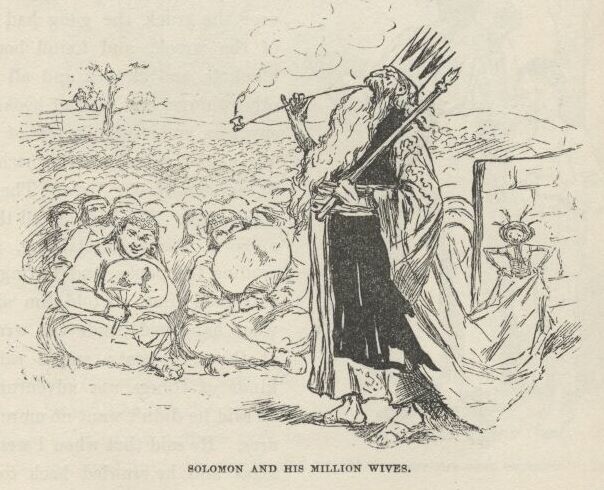
“The place where he keeps his wives. Don’t you know about the harem? Solomon had one; he had about a million wives.”
“The place where he keeps his wives. Don’t you know about the harem? Solomon had one. He had about a million wives.”
“Why, yes, dat’s so; I—I’d done forgot it. A harem’s a bo’d’n-house, I reck’n. Mos’ likely dey has rackety times in de nussery. En I reck’n de wives quarrels considable; en dat ’crease de racket. Yit dey say Sollermun de wises’ man dat ever live’. I doan’ take no stock in dat. Bekase why: would a wise man want to live in de mids’ er sich a blim-blammin’ all de time? No—’deed he wouldn’t. A wise man ’ud take en buil’ a biler-factry; en den he could shet down de biler-factry when he want to res’.”
“Why, yes, that’s so. I, I’d done forgot it. A harem’s a boardinghouse, I reckon. Most likely they has noisy times in the nursery. And I reckon the wives quarrels considerable, and that increases the racket. Yet they say Sollermun the wisest man that ever lived. I don’t take no stock in that. Because why: would a wise man want to live in the midst of such a blim-blamming all the time? No, indeed he wouldn’t. A wise man would take and build a boiler factory. And then he could shut down the boiler factory when he want to rest.”
“Well, but he was the wisest man, anyway; because the widow she told me so, her own self.”
“Well, but he was the wisest man, anyway. Because the widow she told me so, her own self.”
“I doan k’yer what de widder say, he warn’t no wise man nuther. He had some er de dad-fetchedes’ ways I ever see. Does you know ’bout dat chile dat he ’uz gwyne to chop in two?”
“I don't care what the widow say, he wasn't no wise man neither. He had some of the dad-fetchedest ways I ever see. Does you know about that child that he was going to chop in two?”
“Yes, the widow told me all about it.”
“Yes, the widow told me all about it.”
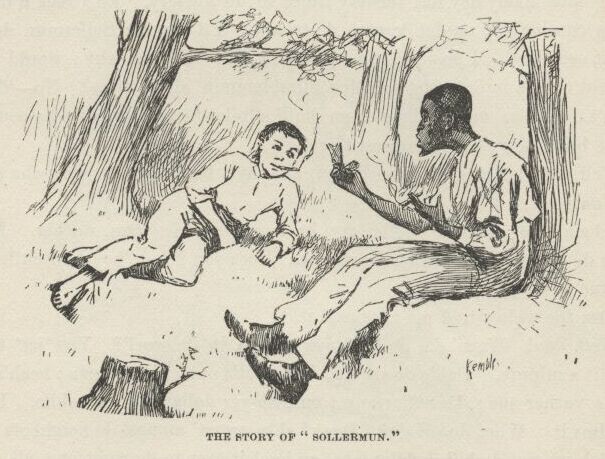
“Well, den! Warn’ dat de beatenes’ notion in de worl’? You jes’ take en look at it a minute. Dah’s de stump, dah—dat’s one er de women; heah’s you—dat’s de yuther one; I’s Sollermun; en dish yer dollar bill’s de chile. Bofe un you claims it. What does I do? Does I shin aroun’ mongs’ de neighbors en fine out which un you de bill do b’long to, en han’ it over to de right one, all safe en soun’, de way dat anybody dat had any gumption would? No; I take en whack de bill in two, en give half un it to you, en de yuther half to de yuther woman. Dat’s de way Sollermun was gwyne to do wid de chile. Now I want to ast you: what’s de use er dat half a bill?—can’t buy noth’n wid it. En what use is a half a chile? I wouldn’ give a dern for a million un um.”
“Well, then! Wasn't that the beatenest notion in the world? You just take and look at it a minute. There's the stump, there. That's one of the women. Here's you. That's the other one. I is Sollermun, and this here dollar bill's the child. Both of you claims it. What does I do? Does I run around among the neighbors and find out which one of you the bill do belong to? And hand it over to the right one, all safe and sound, the way anybody with any gumption would? No. I take and whack the bill in two. I give half of it to you, and the other half to the other woman. That's the way Sollermun was going to do with the child. Now I want to ask you: what's the use of that half a bill? Can't buy nothing with it. And what use is a half a child? I wouldn't give a darn for a million of them.”
“But hang it, Jim, you’ve clean missed the point—blame it, you’ve missed it a thousand mile.”
“But hang it, Jim, you’ve completely missed the point. Blame it, you’ve missed it a thousand mile.”
“Who? Me? Go ’long. Doan’ talk to me ’bout yo’ pints. I reck’n I knows sense when I sees it; en dey ain’ no sense in sich doin’s as dat. De ’spute warn’t ’bout a half a chile, de ’spute was ’bout a whole chile; en de man dat think he kin settle a ’spute ’bout a whole chile wid a half a chile doan’ know enough to come in out’n de rain. Doan’ talk to me ’bout Sollermun, Huck, I knows him by de back.”
“Who? Me? Go along. Don’t talk to me about your points. I reckon I knows sense when I sees it, and there ain’t no sense in such doings as that. The dispute wasn’t about a half a child, the dispute was about a whole child. And the man that think he can settle a dispute about a whole child with a half a child don’t know enough to come in out of the rain. Don’t talk to me about Solomon, Huck. I knows him by the back.”
“But I tell you you don’t get the point.”
“But I’m telling you, you don’t get the point.”
“Blame de point! I reck’n I knows what I knows. En mine you, de real pint is down furder—it’s down deeper. It lays in de way Sollermun was raised. You take a man dat’s got on’y one or two chillen; is dat man gwyne to be waseful o’ chillen? No, he ain’t; he can’t ’ford it. He know how to value ’em. But you take a man dat’s got ’bout five million chillen runnin’ roun’ de house, en it’s diffunt. He as soon chop a chile in two as a cat. Dey’s plenty mo’. A chile er two, mo’ er less, warn’t no consekens to Sollermun, dad fatch him!”
“Blame the point! I reckon I knows what I knows. And mind you, the real point is down further. It’s down deeper. It lays in the way Solomon was raised. You take a man that’s got only one or two children. Is that man going to be wasteful of children? No, he ain’t. He can’t afford it. He know how to value them. But you take a man that’s got about five million children running round the house, and it’s different. He as soon chop a child in two as a cat. There’s plenty more. A child or two, more or less, wasn’t no consequence to Solomon, dad fetch him!”
I never see such a . If he got a notion in his head once, there warn’t no getting it out again. He was the most down on Solomon of any I ever see. So I went to talking about other kings, and let Solomon slide. I told about Louis Sixteenth that got his head cut off in France long time ago; and about his little boy the dolphin, that would a been a king, but they took and shut him up in jail, and some say he died there.
I never see such a . If he got an idea in his head once, there wasn't no getting it out again. He was the most down on Solomon of any I ever see. So I went to talking about other kings and let Solomon drop. I told about Louis Sixteenth that got his head cut off in France a long time ago. And I told about his little boy, the dolphin, that would have been a king. But they took and shut him up in jail, and some say he died there.
“Po’ little chap.”
“Poor little chap.”
“But some says he got out and got away, and come to America.”
“But some says he got out and got away, and come to America.”
“Dat’s good! But he’ll be pooty lonesome—dey ain’ no kings here, is dey, Huck?”
“That’s good! But he’ll be pretty lonesome. They ain’t no kings here, is they, Huck?”
“No.”
“No.”
“Den he cain’t git no situation. What he gwyne to do?”
“Then he can’t get no job. What he going to do?”
“Well, I don’t know. Some of them gets on the police, and some of them learns people how to talk French.”
“Well, I don’t know. Some of them gets on the police force. And some of them learns people how to talk French.”
“Why, Huck, doan’ de French people talk de same way we does?”
“Why, Huck, don't the French people talk the same way we does?”
“No, Jim; you couldn’t understand a word they said—not a single word.”
“No, Jim, you couldn’t understand a word they said. Not a single word.”
“Well, now, I be ding-busted! How do dat come?”
“Well, now, I be ding-busted! How do that come?”
“I don’t know; but it’s so. I got some of their jabber out of a book. S’pose a man was to come to you and say Polly-voo-franzy—what would you think?”
“I don’t know, but it’s so. I got some of their jabber out of a book. Suppose a man was to come to you and say Polly-voo-franzy. What would you think?”
“I wouldn’ think nuff’n; I’d take en bust him over de head—dat is, if he warn’t white. I wouldn’t ’low no to call me dat.”
“I wouldn’t think nothing. I’d take and bust him over the head. That is, if he weren’t white. I wouldn’t allow no to call me that.”
“Shucks, it ain’t calling you anything. It’s only saying, do you know how to talk French?”
“Shucks, it ain’t calling you anything. It’s only asking, do you know how to speak French?”
“Well, den, why couldn’t he say it?”
“Well, then, why couldn’t he say it?”
“Why, he is a-saying it. That’s a Frenchman’s way of saying it.”
“Why, he is saying it. That’s a Frenchman’s way of saying it.”
“Well, it’s a blame ridicklous way, en I doan’ want to hear no mo’ ’bout it. Dey ain’ no sense in it.”
“Well, it’s a blame ridiculous way, and I don’t want to hear no more about it. They ain’t no sense in it.”
“Looky here, Jim; does a cat talk like we do?”
“Look here, Jim, does a cat talk like we do?”
“No, a cat don’t.”
“No, a cat don’t.”
“Well, does a cow?”
“Well, does a cow?”
“No, a cow don’t, nuther.”
“No, a cow don't, neither.”
“Does a cat talk like a cow, or a cow talk like a cat?”
“Does a cat talk like a cow, or a cow talk like a cat?”
“No, dey don’t.”
“No, they don’t.”
“It’s natural and right for ’em to talk different from each other, ain’t it?”
“It’s natural and right for them to talk different from each other, ain’t it?”
“’Course.”
“Of course.”
“And ain’t it natural and right for a cat and a cow to talk different from us?”
“And ain’t it natural and right for a cat and a cow to talk different from us?”
“Why, mos’ sholy it is.”
“Why, most surely it is.”
“Well, then, why ain’t it natural and right for a Frenchman to talk different from us? You answer me that.”
“Well, then, why ain’t it natural and right for a Frenchman to talk different from us? You answer me that.”
“Is a cat a man, Huck?”
“Is a cat a man, Huck?”
“No.”
“No.”
“Well, den, dey ain’t no sense in a cat talkin’ like a man. Is a cow a man?—er is a cow a cat?”
“Well, then, they ain't no sense in a cat talking like a man. Is a cow a man? Or is a cow a cat?”
“No, she ain’t either of them.”
“No, she ain’t either of them.”
“Well, den, she ain’t got no business to talk like either one er the yuther of ’em. Is a Frenchman a man?”
“Well, then, she ain’t got no business to talk like either one or the other of them. Is a Frenchman a man?”
“Yes.”
“Yes.”
“Well, den! Dad blame it, why doan’ he talk like a man? You answer me dat!”
“Well, then! Dad blame it, why don’t he talk like a man? You answer me that!”
I see it warn’t no use wasting words—you can’t learn a to argue. So I quit.
I see it wasn't no use wasting words. You can't learn a to argue. So I quit.