Chapter 35
A Pitiful Incident
It’s a world of surprises. The king brooded; this was natural. What would he brood about, should you say? Why, about the prodigious nature of his fall, of course—from the loftiest place in the world to the lowest; from the most illustrious station in the world to the obscurest; from the grandest vocation among men to the basest. No, I take my oath that the thing that graveled him most, to start with, was not this, but the price he had fetched! He couldn’t seem to get over that seven dollars. Well, it stunned me so, when I first found it out, that I couldn’t believe it; it didn’t seem natural. But as soon as my mental sight cleared and I got a right focus on it, I saw I was mistaken; it was natural. For this reason: a king is a mere artificiality, and so a king’s feelings, like the impulses of an automatic doll, are mere artificialities; but as a man, he is a reality, and his feelings, as a man, are real, not phantoms. It shames the average man to be valued below his own estimate of his worth, and the king certainly wasn’t anything more than an average man, if he was up that high.
It’s a world full of surprises. The king brooded, which was natural. What would you say he brooded about? Why, his enormous fall, of course. He had fallen from the highest place in the world to the lowest. He had gone from the most famous position in the world to the most obscure. He had gone from the grandest occupation among men to the lowest. No, I swear, what bothered him most at first was not his fall, but the price he had brought! He couldn’t seem to get over those seven dollars. Well, when I first discovered that, I was so stunned I couldn’t believe it. It didn’t seem natural. But once my mind cleared and I saw things properly, I realized I was mistaken. It was natural. Here’s why: a king is an artificial creation. So a king’s feelings are artificial too, like the impulses of a mechanical doll. But as a man, he is real, and his feelings as a man are real, not illusions. The average man feels ashamed when others value him below what he thinks he is worth. And the king certainly wasn’t more than an average man, if he was even that.
Confound him, he wearied me with arguments to show that in anything like a fair market he would have fetched twenty-five dollars, sure—a thing which was plainly nonsense, and full of the baldest conceit; I wasn’t worth it myself. But it was tender ground for me to argue on. In fact, I had to simply shirk argument and do the diplomatic instead. I had to throw conscience aside, and brazenly concede that he ought to have brought twenty-five dollars; whereas I was quite well aware that in all the ages, the world had never seen a king that was worth half the money, and during the next thirteen centuries wouldn’t see one that was worth the fourth of it. Yes, he tired me. If he began to talk about the crops; or about the recent weather; or about the condition of politics; or about dogs, or cats, or morals, or theology—no matter what—I sighed, for I knew what was coming; he was going to get out of it a palliation of that tiresome seven-dollar sale. Wherever we halted where there was a crowd, he would give me a look which said plainly: “if that thing could be tried over again now, with this kind of folk, you would see a different result.” Well, when he was first sold, it secretly tickled me to see him go for seven dollars; but before he was done with his sweating and worrying I wished he had fetched a hundred. The thing never got a chance to die, for every day, at one place or another, possible purchasers looked us over, and, as often as any other way, their comment on the king was something like this:
Confound him, he wore me out arguing that he would surely have fetched twenty-five dollars in a reasonably fair market. That was plainly nonsense and the height of conceit. I wasn’t worth twenty-five dollars myself. But it was a touchy subject for me to argue about. In fact, I had to avoid arguing and be diplomatic instead. I had to put my conscience aside and brazenly agree that he should have brought twenty-five dollars. I knew perfectly well that, in all the ages, the world had never seen a king worth half that amount. And it wouldn’t see one worth a quarter of it in the next thirteen centuries. Yes, he tired me out. He might start talking about crops, the recent weather, politics, dogs, cats, morals, or theology. No matter what the subject was, I sighed, because I knew what was coming. He would find some excuse in it for that tiresome seven-dollar sale. Whenever we stopped where there was a crowd, he would give me a look that plainly said: “If that sale could be tried again now, with this kind of crowd, you would see a different result.” Well, when he was first sold, I was secretly delighted to see him go for seven dollars. But before he was done sweating and worrying over it, I wished he had fetched a hundred. The matter never had a chance to die. Every day, somewhere or other, potential buyers looked us over. About half the time, their comment on the king went something like this:
“Here’s a two-dollar-and-a-half chump with a thirty-dollar style. Pity but style was marketable.”
“Here’s a two-dollar-and-fifty-cent fool with thirty-dollar style. Too bad he can’t sell his style.”
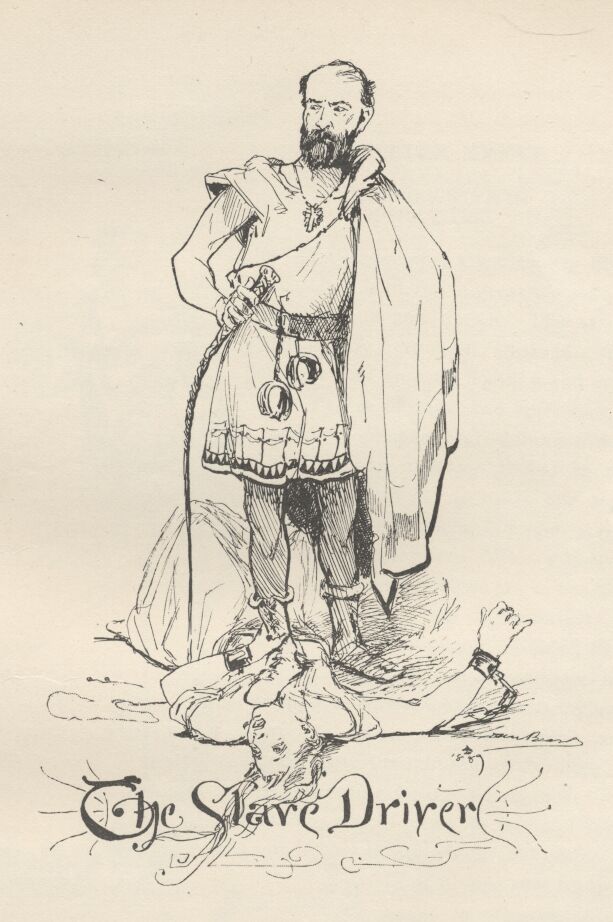
At last this sort of remark produced an evil result. Our owner was a practical person and he perceived that this defect must be mended if he hoped to find a purchaser for the king. So he went to work to take the style out of his sacred majesty. I could have given the man some valuable advice, but I didn’t; you mustn’t volunteer advice to a slave-driver unless you want to damage the cause you are arguing for. I had found it a sufficiently difficult job to reduce the king’s style to a peasant’s style, even when he was a willing and anxious pupil; now then, to undertake to reduce the king’s style to a slave’s style—and by force—go to! it was a stately contract. Never mind the details—it will save me trouble to let you imagine them. I will only remark that at the end of a week there was plenty of evidence that lash and club and fist had done their work well; the king’s body was a sight to see—and to weep over; but his spirit?—why, it wasn’t even phased. Even that dull clod of a slave-driver was able to see that there can be such a thing as a slave who will remain a man till he dies; whose bones you can break, but whose manhood you can’t. This man found that from his first effort down to his latest, he couldn’t ever come within reach of the king, but the king was ready to plunge for him, and did it. So he gave up at last, and left the king in possession of his style unimpaired. The fact is, the king was a good deal more than a king, he was a man; and when a man is a man, you can’t knock it out of him.
At last, remarks like this had a bad result. Our owner was a practical man. He saw that he had to fix this flaw if he hoped to find a buyer for the king. So he set about knocking the royal manner out of his sacred majesty. I could have given the man some valuable advice, but I didn’t. You mustn’t offer advice to a slave-driver unless you want to hurt the cause you’re arguing for. I had found it hard enough to make the king act like a peasant. And that was when he was a willing and eager pupil. But to make him act like a slave, and by force? What a grand undertaking! Never mind the details. It will save me trouble if you imagine them. I’ll only say that, after a week, there was plenty of evidence that lash, club, and fist had done their work well. The king’s body was a sight to see and weep over. But his spirit? Why, it wasn’t even shaken. Even that dull clod of a slave-driver could see that a slave can remain a man until he dies. You can break his bones, but you can’t break his manhood. From the first attempt to the last, the slave-driver could never get within reach of the king. The king was always ready to lunge at him, and he did. So the man finally gave up and left the king with his manner unchanged. The fact is, the king was much more than a king. He was a man, and when a man is a man, you can’t knock it out of him.
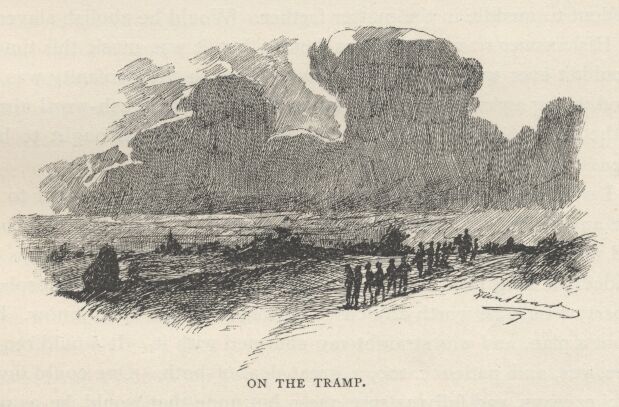
We had a rough time for a month, tramping to and fro in the earth, and suffering. And what Englishman was the most interested in the slavery question by that time? His grace the king! Yes; from being the most indifferent, he was become the most interested. He was become the bitterest hater of the institution I had ever heard talk. And so I ventured to ask once more a question which I had asked years before and had gotten such a sharp answer that I had not thought it prudent to meddle in the matter further. Would he abolish slavery?
We had a rough month, trudging back and forth across the country and suffering. And which Englishman was most interested in the slavery question by then? His grace the king! Yes, he had gone from being the most indifferent to being the most interested. He hated slavery more bitterly than anyone I had ever heard speak about it. So I dared to ask him a question I had asked years before. His answer then had been so sharp that I hadn't thought it wise to bring up the matter again. Would he abolish slavery?
His answer was as sharp as before, but it was music this time; I shouldn’t ever wish to hear pleasanter, though the profanity was not good, being awkwardly put together, and with the crash-word almost in the middle instead of at the end, where, of course, it ought to have been.
His answer was as sharp as before, but this time it was music to my ears. I could never wish to hear anything nicer. Though the swearing wasn't good. It was awkwardly put together, with the strongest word almost in the middle instead of at the end, where it obviously belonged.
I was ready and willing to get free now; I hadn’t wanted to get free any sooner. No, I cannot quite say that. I had wanted to, but I had not been willing to take desperate chances, and had always dissuaded the king from them. But now—ah, it was a new atmosphere! Liberty would be worth any cost that might be put upon it now. I set about a plan, and was straightway charmed with it. It would require time, yes, and patience, too, a great deal of both. One could invent quicker ways, and fully as sure ones; but none that would be as picturesque as this; none that could be made so dramatic. And so I was not going to give this one up. It might delay us months, but no matter, I would carry it out or break something.
I was ready and willing to get free now. I hadn’t wanted to get free any sooner. No, that’s not quite true. I had wanted to, but I hadn’t been willing to take desperate risks. I had always talked the king out of taking them, too. But now, ah, everything had changed! Freedom would be worth any price now. I began working on a plan and immediately fell in love with it. It would take time and patience, a great deal of both. I could think of faster ways that were just as sure. But none would be as colorful or as dramatic as this one. So I wasn’t going to give up my plan. It might delay us for months, but never mind. I would carry it out or break something.
Now and then we had an adventure. One night we were overtaken by a snow-storm while still a mile from the village we were making for. Almost instantly we were shut up as in a fog, the driving snow was so thick. You couldn’t see a thing, and we were soon lost. The slave-driver lashed us desperately, for he saw ruin before him, but his lashings only made matters worse, for they drove us further from the road and from likelihood of succor. So we had to stop at last and slump down in the snow where we were. The storm continued until toward midnight, then ceased. By this time two of our feebler men and three of our women were dead, and others past moving and threatened with death. Our master was nearly beside himself. He stirred up the living, and made us stand, jump, slap ourselves, to restore our circulation, and he helped as well as he could with his whip.
Now and then we had an adventure. One night a snowstorm caught us a mile from the village we were headed for. Almost at once, the driving snow was so thick that it closed around us like fog. We couldn’t see a thing, and we were soon lost. The slave-driver whipped us desperately because he saw ruin ahead. But his whipping only made things worse. It drove us farther from the road and made help less likely. So at last we had to stop and slump down in the snow where we were. The storm continued until nearly midnight, then stopped. By then, two of our weaker men and three of our women were dead. Others could no longer move and were close to death. Our master was nearly out of his mind. He roused those still alive and made us stand, jump, and slap ourselves to get our blood moving again. He helped as best he could with his whip.
Now came a diversion. We heard shrieks and yells, and soon a woman came running and crying; and seeing our group, she flung herself into our midst and begged for protection. A mob of people came tearing after her, some with torches, and they said she was a witch who had caused several cows to die by a strange disease, and practiced her arts by help of a devil in the form of a black cat. This poor woman had been stoned until she hardly looked human, she was so battered and bloody. The mob wanted to burn her.
Now something interrupted us. We heard shrieks and yells, and soon a woman came running toward us, crying. When she saw our group, she rushed into our midst and begged for protection. A mob came rushing after her, some carrying torches. They said she was a witch who had caused several cows to die of a strange disease. They also said she practiced witchcraft with the help of a devil in the form of a black cat. The poor woman had been stoned until she hardly looked human, she was so battered and bloody. The mob wanted to burn her.
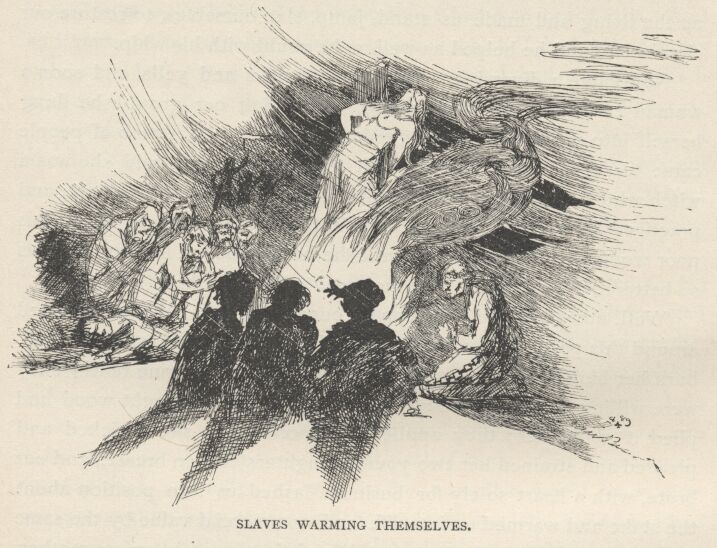
Well, now, what do you suppose our master did? When we closed around this poor creature to shelter her, he saw his chance. He said, burn her here, or they shouldn’t have her at all. Imagine that! They were willing. They fastened her to a post; they brought wood and piled it about her; they applied the torch while she shrieked and pleaded and strained her two young daughters to her breast; and our brute, with a heart solely for business, lashed us into position about the stake and warmed us into life and commercial value by the same fire which took away the innocent life of that poor harmless mother. That was the sort of master we had. I took his number. That snow-storm cost him nine of his flock; and he was more brutal to us than ever, after that, for many days together, he was so enraged over his loss.
Well, what do you suppose our master did? When we gathered around this poor woman to shelter her, he saw his chance. He said they had to burn her there, or they couldn’t have her at all. Imagine that! They agreed. They tied her to a post, brought wood, and piled it around her. Then they set it on fire. She shrieked and pleaded, clutching her two young daughters to her breast. Our brute of a master cared only about business. He whipped us into place around the stake. The fire that killed that poor, harmless, innocent mother also warmed us back to life and made us valuable for sale again. That was the kind of master we had. I took his number. That snowstorm cost him nine of his flock. He was so furious over his loss that he treated us even more brutally for many days afterward.
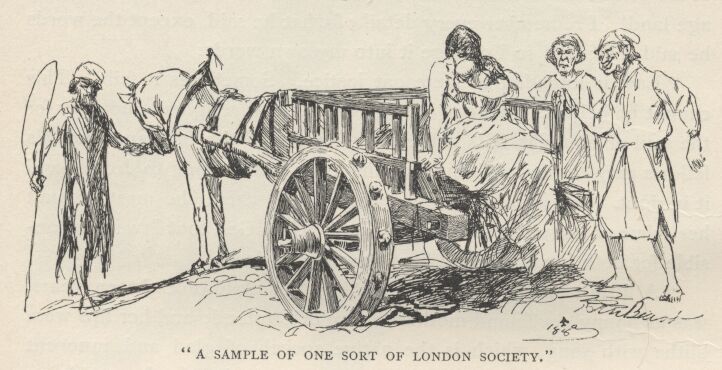
We had adventures all along. One day we ran into a procession. And such a procession! All the riffraff of the kingdom seemed to be comprehended in it; and all drunk at that. In the van was a cart with a coffin in it, and on the coffin sat a comely young girl of about eighteen suckling a baby, which she squeezed to her breast in a passion of love every little while, and every little while wiped from its face the tears which her eyes rained down upon it; and always the foolish little thing smiled up at her, happy and content, kneading her breast with its dimpled fat hand, which she patted and fondled right over her breaking heart.
We had adventures all along the way. One day we came across a procession. And what a procession it was! All the riffraff of the kingdom seemed to be in it, and they were all drunk. At the front was a cart carrying a coffin. A pretty young girl of about eighteen sat on the coffin, nursing a baby. Every little while she squeezed the baby to her breast in a rush of love. Every little while she wiped the tears that rained from her eyes onto its face. All the while, the foolish little thing smiled up at her, happy and content. It kneaded her breast with its dimpled, chubby hand. She patted and caressed that hand right over her breaking heart.
Men and women, boys and girls, trotted along beside or after the cart, hooting, shouting profane and ribald remarks, singing snatches of foul song, skipping, dancing—a very holiday of hellions, a sickening sight. We had struck a suburb of London, outside the walls, and this was a sample of one sort of London society. Our master secured a good place for us near the gallows. A priest was in attendance, and he helped the girl climb up, and said comforting words to her, and made the under-sheriff provide a stool for her. Then he stood there by her on the gallows, and for a moment looked down upon the mass of upturned faces at his feet, then out over the solid pavement of heads that stretched away on every side occupying the vacancies far and near, and then began to tell the story of the case. And there was pity in his voice—how seldom a sound that was in that ignorant and savage land! I remember every detail of what he said, except the words he said it in; and so I change it into my own words:
Men and women, boys and girls, trotted alongside or behind the cart. They hooted, shouted obscene and vulgar remarks, sang bits of filthy songs, skipped, and danced. It was a holiday for hellions, a sickening sight. We had reached a suburb of London, outside the walls. This was a sample of one kind of London society. Our master secured a good place for us near the gallows. A priest was there, and he helped the girl climb up. He spoke comforting words to her and made the under-sheriff provide her with a stool. Then he stood beside her on the gallows. For a moment he looked down at the crowd of upturned faces at his feet. Then he looked out over the solid pavement of heads. It stretched away in every direction, filling every open space, near and far. Then he began to tell the story of the case. There was pity in his voice. How seldom one heard that sound in that ignorant and savage land! I remember every detail of what he said, but not his exact words. So I put it in my own words:
“Law is intended to mete out justice. Sometimes it fails. This cannot be helped. We can only grieve, and be resigned, and pray for the soul of him who falls unfairly by the arm of the law, and that his fellows may be few. A law sends this poor young thing to death—and it is right. But another law had placed her where she must commit her crime or starve with her child—and before God that law is responsible for both her crime and her ignominious death!
“Law is meant to deliver justice. Sometimes it fails. This cannot be helped. We can only grieve, accept it, and pray for the soul of anyone unjustly put to death by the law. We can also pray that few others suffer the same fate. A law condemns this poor young woman to death, and that is right. But another law had put her in a position where she had to commit her crime or starve with her child. Before God, that law is responsible for both her crime and her shameful death!
“A little while ago this young thing, this child of eighteen years, was as happy a wife and mother as any in England; and her lips were blithe with song, which is the native speech of glad and innocent hearts. Her young husband was as happy as she; for he was doing his whole duty, he worked early and late at his handicraft, his bread was honest bread well and fairly earned, he was prospering, he was furnishing shelter and sustenance to his family, he was adding his mite to the wealth of the nation. By consent of a treacherous law, instant destruction fell upon this holy home and swept it away! That young husband was waylaid and impressed, and sent to sea. The wife knew nothing of it. She sought him everywhere, she moved the hardest hearts with the supplications of her tears, the broken eloquence of her despair. Weeks dragged by, she watching, waiting, hoping, her mind going slowly to wreck under the burden of her misery. Little by little all her small possessions went for food. When she could no longer pay her rent, they turned her out of doors. She begged, while she had strength; when she was starving at last, and her milk failing, she stole a piece of linen cloth of the value of a fourth part of a cent, thinking to sell it and save her child. But she was seen by the owner of the cloth. She was put in jail and brought to trial. The man testified to the facts. A plea was made for her, and her sorrowful story was told in her behalf. She spoke, too, by permission, and said she did steal the cloth, but that her mind was so disordered of late by trouble that when she was overborne with hunger all acts, criminal or other, swam meaningless through her brain and she knew nothing rightly, except that she was so hungry! For a moment all were touched, and there was disposition to deal mercifully with her, seeing that she was so young and friendless, and her case so piteous, and the law that robbed her of her support to blame as being the first and only cause of her transgression; but the prosecuting officer replied that whereas these things were all true, and most pitiful as well, still there was much small theft in these days, and mistimed mercy here would be a danger to property—oh, my God, is there no property in ruined homes, and orphaned babes, and broken hearts that British law holds precious!—and so he must require sentence.
“A little while ago, this young girl, this child of eighteen, was as happy a wife and mother as any in England. She sang joyfully, as happy and innocent hearts naturally do. Her young husband was as happy as she was. He was doing his full duty, working early and late at his craft. His bread was honestly and fairly earned. He was prospering, providing shelter and food for his family, and adding his small share to the nation’s wealth. Then, with the permission of a treacherous law, sudden destruction fell upon this sacred home and swept it away! The young husband was ambushed, seized for naval service, and sent to sea. His wife knew nothing of it. She searched for him everywhere. Her tearful pleas and the broken eloquence of her despair moved even the hardest hearts. Weeks dragged by as she watched, waited, and hoped. Her mind slowly broke down under the weight of her misery. Little by little, she sold all her few possessions for food. When she could no longer pay her rent, she was turned out of her home. She begged as long as she had the strength. At last, starving and with her milk failing, she stole a piece of linen worth a quarter of a cent. She thought she could sell it and save her child. But the owner saw her take the cloth. She was jailed and brought to trial. The man testified to the facts. Someone pleaded on her behalf and told her sorrowful story. She was also allowed to speak. She said she had stolen the cloth, but that trouble had lately so disturbed her mind that, when hunger overcame her, all acts, criminal or otherwise, swam meaninglessly through her mind. She could understand nothing clearly except that she was so hungry! For a moment, everyone was moved and inclined to show her mercy. She was so young and friendless, and her case was so pitiful. The law that had robbed her of her support was to blame, since it was the first and only cause of her offense. But the prosecutor replied that, although all this was true and most pitiful, there was a great deal of petty theft these days. Showing mercy at the wrong time would endanger property. Oh, my God, is there no property in ruined homes, orphaned babies, and broken hearts that British law holds precious! And so he had to demand sentence.
“When the judge put on his black cap, the owner of the stolen linen rose trembling up, his lip quivering, his face as gray as ashes; and when the awful words came, he cried out, ‘Oh, poor child, poor child, I did not know it was death!’ and fell as a tree falls. When they lifted him up his reason was gone; before the sun was set, he had taken his own life. A kindly man; a man whose heart was right, at bottom; add his murder to this that is to be now done here; and charge them both where they belong—to the rulers and the bitter laws of Britain. The time is come, my child; let me pray over thee—not for thee, dear abused poor heart and innocent, but for them that be guilty of thy ruin and death, who need it more.”
“When the judge put on his black cap, the owner of the stolen linen rose, trembling. His lip quivered, and his face was as gray as ashes. When the terrible words came, he cried, ‘Oh, poor child, poor child, I didn't know it meant death!’ Then he fell like a tree. When they lifted him up, he had lost his reason. Before sunset, he had taken his own life. He was a kind man, a man whose heart was right at its core. Add his murder to the one about to be committed here. Blame both murders on those responsible: the rulers and the cruel laws of Britain. The time has come, my child. Let me pray over you. Not for you, dear, innocent heart, so cruelly treated, but for those guilty of your ruin and death. They need it more.”
After his prayer they put the noose around the young girl’s neck, and they had great trouble to adjust the knot under her ear, because she was devouring the baby all the time, wildly kissing it, and snatching it to her face and her breast, and drenching it with tears, and half moaning, half shrieking all the while, and the baby crowing, and laughing, and kicking its feet with delight over what it took for romp and play. Even the hangman couldn’t stand it, but turned away. When all was ready the priest gently pulled and tugged and forced the child out of the mother’s arms, and stepped quickly out of her reach; but she clasped her hands, and made a wild spring toward him, with a shriek; but the rope—and the under-sheriff—held her short. Then she went on her knees and stretched out her hands and cried:
After his prayer, they put the noose around the young girl’s neck. They had great trouble adjusting the knot under her ear. She kept clutching the baby, kissing it wildly and pulling it to her face and breast. She drenched it with tears, half moaning and half shrieking all the while. The baby crowed and laughed and kicked its feet in delight, thinking it was all a game. Even the hangman couldn’t stand it and turned away. When everything was ready, the priest gently pulled and tugged until he forced the child out of the mother’s arms. He quickly stepped out of her reach, but she clasped her hands and leaped wildly toward him with a shriek. The rope and the under-sheriff held her back. Then she fell to her knees, stretched out her hands, and cried:
“One more kiss—oh, my God, one more, one more,—it is the dying that begs it!”
“One more kiss. Oh, my God, one more, one more. A dying person is begging for it!”
She got it; she almost smothered the little thing. And when they got it away again, she cried out:
She got it and almost smothered the little thing. When they took it away from her again, she cried out:
“Oh, my child, my darling, it will die! It has no home, it has no father, no friend, no mother—”
“Oh, my child, my darling, it will die! It has no home, no father, no friend, no mother.”
“It has them all!” said that good priest. “All these will I be to it till I die.”
“It has them all!” said the good priest. “I will be all these things to it until I die.”
You should have seen her face then! Gratitude? Lord, what do you want with words to express that? Words are only painted fire; a look is the fire itself. She gave that look, and carried it away to the treasury of heaven, where all things that are divine belong.
You should have seen her face then! Gratitude? Lord, what words could express it? Words are only a picture of fire. A look is the fire itself. She gave me that look, then carried it away to heaven's treasury, where all divine things belong.