Chapter 44
A Postscript by Clarence
I, Clarence, must write it for him. He proposed that we two go out and see if any help could be accorded the wounded. I was strenuous against the project. I said that if there were many, we could do but little for them; and it would not be wise for us to trust ourselves among them, anyway. But he could seldom be turned from a purpose once formed; so we shut off the electric current from the fences, took an escort along, climbed over the enclosing ramparts of dead knights, and moved out upon the field. The first wounded man who appealed for help was sitting with his back against a dead comrade. When The Boss bent over him and spoke to him, the man recognized him and stabbed him. That knight was Sir Meliagraunce, as I found out by tearing off his helmet. He will not ask for help any more.
I, Clarence, must write it for him. He suggested that we go out and see if we could help the wounded. I strongly opposed the idea. I said that if there were many wounded men, we could do little for them. Besides, it would not be wise to go among them. But once he had made up his mind, he could seldom be persuaded to change it. So we turned off the electric current in the fences and took an escort with us. We climbed over the enclosing walls of dead knights and went out onto the field. The first wounded man to ask for help was sitting with his back against a dead comrade. When The Boss bent over and spoke to him, the man recognized him and stabbed him. I tore off the knight's helmet and discovered that he was Sir Meliagraunce. He will not ask for help again.
We carried The Boss to the cave and gave his wound, which was not very serious, the best care we could. In this service we had the help of Merlin, though we did not know it. He was disguised as a woman, and appeared to be a simple old peasant goodwife. In this disguise, with brown-stained face and smooth shaven, he had appeared a few days after The Boss was hurt and offered to cook for us, saying her people had gone off to join certain new camps which the enemy were forming, and that she was starving. The Boss had been getting along very well, and had amused himself with finishing up his record.
We carried The Boss to the cave and gave his wound the best care we could. It was not very serious. Merlin helped us care for him, though we did not know it. He was disguised as a woman and seemed to be an ordinary old peasant woman. A few days after The Boss was hurt, Merlin had appeared in this disguise and offered to cook for us. His face was stained brown and clean-shaven. He said her people had left to join some new camps the enemy were forming, and she was starving. The Boss had been recovering well and had kept himself amused by finishing his record.
We were glad to have this woman, for we were short handed. We were in a trap, you see—a trap of our own making. If we stayed where we were, our dead would kill us; if we moved out of our defenses, we should no longer be invincible. We had conquered; in turn we were conquered. The Boss recognized this; we all recognized it. If we could go to one of those new camps and patch up some kind of terms with the enemy—yes, but The Boss could not go, and neither could I, for I was among the first that were made sick by the poisonous air bred by those dead thousands. Others were taken down, and still others. To-morrow—
We were glad to have this woman because we were short-handed. You see, we were in a trap of our own making. If we stayed where we were, our dead would kill us. If we left our defenses, we would no longer be invincible. We had conquered, and in turn we were conquered. The Boss recognized this, and so did the rest of us. If we could go to one of those new camps and work out some kind of terms with the enemy. Yes, but The Boss could not go, and neither could I. I was among the first to fall sick from the poisonous air produced by those thousands of dead bodies. Others fell sick, and then still more. Tomorrow...
To-morrow. It is here. And with it the end. About midnight I awoke, and saw that hag making curious passes in the air about The Boss’s head and face, and wondered what it meant. Everybody but the dynamo-watch lay steeped in sleep; there was no sound. The woman ceased from her mysterious foolery, and started tip-toeing toward the door. I called out:
Tomorrow. It is here. And with it, the end. Around midnight, I woke and saw that hag making strange movements in the air around The Boss’s head and face. I wondered what she was doing. Everyone except the dynamo-watch was sound asleep. There was no sound. The woman stopped her mysterious fooling and began tiptoeing toward the door. I called out:
“Stop! What have you been doing?”
“Stop! What have you been doing?”
She halted, and said with an accent of malicious satisfaction:
She stopped and said with malicious satisfaction:
“Ye were conquerors; ye are conquered! These others are perishing—you also. Ye shall all die in this place—every one—except him. He sleepeth now—and shall sleep thirteen centuries. I am Merlin!”
“You were conquerors. Now you are conquered! These others are dying, and so are you. You will all die here, every one of you, except him. He is sleeping now and will sleep for thirteen centuries. I am Merlin!”
Then such a delirium of silly laughter overtook him that he reeled about like a drunken man, and presently fetched up against one of our wires. His mouth is spread open yet; apparently he is still laughing. I suppose the face will retain that petrified laugh until the corpse turns to dust.
Then he was overcome by a fit of silly laughter. He staggered around like a drunk and soon ended up against one of our wires. His mouth is still wide open. Apparently, he is still laughing. I suppose his face will keep that frozen laugh until his body turns to dust.
The Boss has never stirred—sleeps like a stone. If he does not wake to-day we shall understand what kind of a sleep it is, and his body will then be borne to a place in one of the remote recesses of the cave where none will ever find it to desecrate it. As for the rest of us—well, it is agreed that if any one of us ever escapes alive from this place, he will write the fact here, and loyally hide this Manuscript with The Boss, our dear good chief, whose property it is, be he alive or dead.
The Boss has not moved. He sleeps like a stone. If he does not wake today, we will know what kind of sleep this is. Then his body will be carried deep into the cave, where no one will ever find it to desecrate it. As for the rest of us, well, we have agreed on what to do if any of us escapes alive. The one who escapes will record that fact here. He will also faithfully hide this Manuscript with The Boss, our dear, good chief. It belongs to him, whether he is alive or dead.
THE END OF THE MANUSCRIPT
THE END OF THE MANUSCRIPT
FINAL P.S. BY M.T.
FINAL P.S. BY M.T.
The dawn was come when I laid the Manuscript aside. The rain had almost ceased, the world was gray and sad, the exhausted storm was sighing and sobbing itself to rest. I went to the stranger’s room, and listened at his door, which was slightly ajar. I could hear his voice, and so I knocked. There was no answer, but I still heard the voice. I peeped in. The man lay on his back in bed, talking brokenly but with spirit, and punctuating with his arms, which he thrashed about, restlessly, as sick people do in delirium. I slipped in softly and bent over him. His mutterings and ejaculations went on. I spoke—merely a word, to call his attention. His glassy eyes and his ashy face were alight in an instant with pleasure, gratitude, gladness, welcome:
Dawn had come when I put the manuscript aside. The rain had almost stopped, and the world was gray and sad. The exhausted storm was sighing and sobbing itself to rest. I went to the stranger’s room and listened at his door, which was slightly open. I could hear his voice, so I knocked. There was no answer, but I could still hear him speaking. I peeked inside. The man lay on his back in bed, speaking in broken phrases but with energy. He waved his arms to emphasize his words, thrashing them about restlessly, as sick people do when delirious. I slipped in quietly and bent over him. He continued to mutter and cry out. I spoke just one word to get his attention. His glassy eyes and ashen face lit up at once with pleasure, gratitude, joy, and welcome:
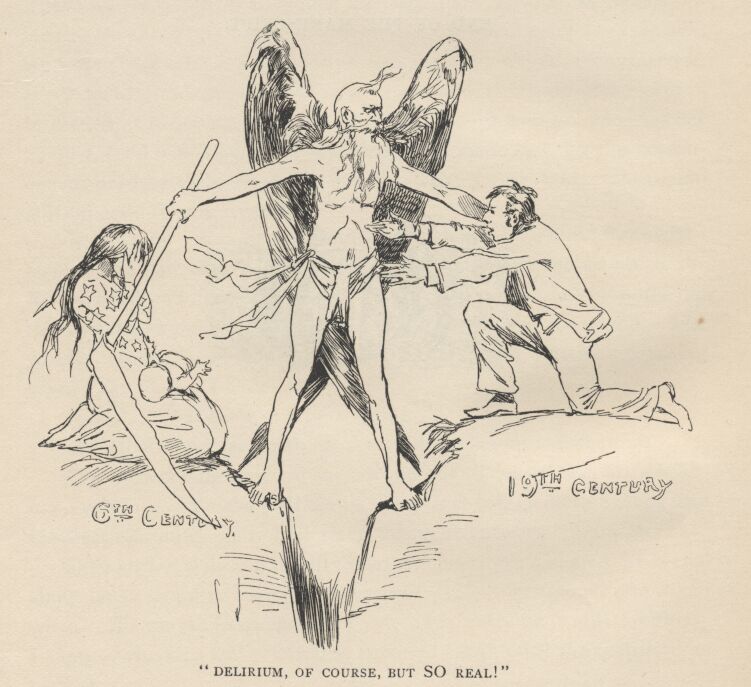
“Oh, Sandy, you are come at last—how I have longed for you! Sit by me—do not leave me—never leave me again, Sandy, never again. Where is your hand?—give it me, dear, let me hold it—there—now all is well, all is peace, and I am happy again—we are happy again, isn’t it so, Sandy? You are so dim, so vague, you are but a mist, a cloud, but you are here, and that is blessedness sufficient; and I have your hand; don’t take it away—it is for only a little while, I shall not require it long.... Was that the child?... Hello-Central!... she doesn’t answer. Asleep, perhaps? Bring her when she wakes, and let me touch her hands, her face, her hair, and tell her good-bye.... Sandy! Yes, you are there. I lost myself a moment, and I thought you were gone.... Have I been sick long? It must be so; it seems months to me. And such dreams! such strange and awful dreams, Sandy! Dreams that were as real as reality—delirium, of course, but so real! Why, I thought the king was dead, I thought you were in Gaul and couldn’t get home, I thought there was a revolution; in the fantastic frenzy of these dreams, I thought that Clarence and I and a handful of my cadets fought and exterminated the whole chivalry of England! But even that was not the strangest. I seemed to be a creature out of a remote unborn age, centuries hence, and even that was as real as the rest! Yes, I seemed to have flown back out of that age into this of ours, and then forward to it again, and was set down, a stranger and forlorn in that strange England, with an abyss of thirteen centuries yawning between me and you! between me and my home and my friends! between me and all that is dear to me, all that could make life worth the living! It was awful—awfuler than you can ever imagine, Sandy. Ah, watch by me, Sandy—stay by me every moment—don’t let me go out of my mind again; death is nothing, let it come, but not with those dreams, not with the torture of those hideous dreams—I cannot endure that again.... Sandy?...”
“Oh, Sandy, you’ve come at last. How I’ve longed for you! Sit beside me. Don’t leave me. Never leave me again, Sandy, never again. Where is your hand? Give it to me, dear. Let me hold it. There, now all is well, all is peaceful, and I’m happy again. We’re happy again, aren’t we, Sandy? You’re so dim, so vague. You’re only a mist, a cloud. But you’re here, and that alone is enough to make me happy. And I have your hand. Don’t take it away. It’s only for a little while. I won’t need it for long.... Was that the child? Hello-Central!... She doesn’t answer. Asleep, perhaps? Bring her when she wakes, and let me touch her hands, her face, her hair, and say good-bye to her.... Sandy! Yes, you’re there. I lost track of things for a moment, and I thought you were gone.... Have I been sick long? I must have been. It feels like months to me. And such dreams! Such strange and awful dreams, Sandy! Dreams that were as real as reality. Delirium, of course, but so real! Why, I thought the king was dead. I thought you were in Gaul and couldn’t get home. I thought there was a revolution. In the wild frenzy of those dreams, I thought Clarence and I and a handful of my cadets fought and wiped out all the knights of England! But even that wasn’t the strangest part. I seemed to be a creature from a distant age that hadn’t yet come, centuries in the future. And even that was as real as the rest! Yes, I seemed to have flown back from that age into our own, and then forward to it again. I was left there, a lonely stranger in that strange England. A gulf of thirteen centuries stretched between me and you! Between me and my home and my friends! Between me and all that is dear to me, all that could make life worth living! It was awful, more awful than you can ever imagine, Sandy. Ah, watch over me, Sandy. Stay beside me every moment. Don’t let me lose my mind again. Death is nothing, let it come, but not with those dreams. Not with the torture of those hideous dreams. I can’t bear that again.... Sandy?...”
He lay muttering incoherently some little time; then for a time he lay silent, and apparently sinking away toward death. Presently his fingers began to pick busily at the coverlet, and by that sign I knew that his end was at hand. With the first suggestion of the death-rattle in his throat he started up slightly, and seemed to listen: then he said:
He lay muttering incoherently for a little while. Then he fell silent and seemed to be slipping toward death. Soon his fingers began to pick busily at the bedspread, and I knew from this sign that his end was near. At the first sound of the death rattle in his throat, he sat up slightly and seemed to listen. Then he said:
“A bugle?... It is the king! The drawbridge, there! Man the battlements!—turn out the—”
“A bugle?... It’s the king! Lower the drawbridge! Man the battlements! Call out the...”
He was getting up his last “effect”; but he never finished it.
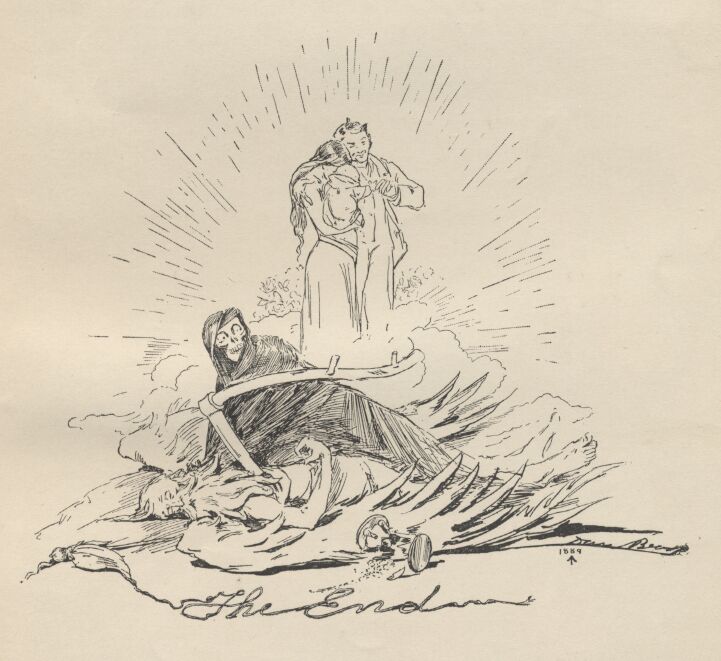
He was preparing his last “effect,” but he never finished it.
The end